17th Century Jacobean-Style Barley Twist Side Table
Antique Furniture / Tables

17th Century Jacobean-Style Barley Twist Side Table

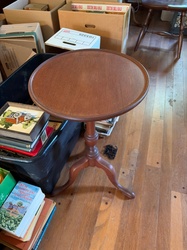
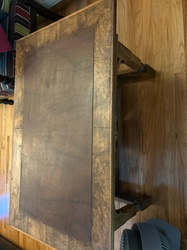
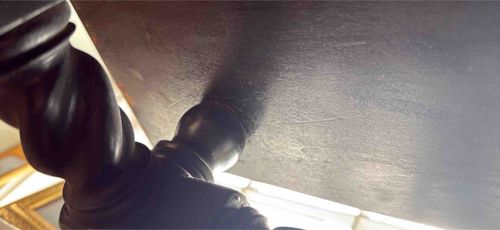
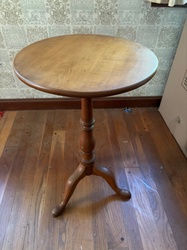
This is a fine example of a 17th-century (late Jacobean or William and Mary period) side table, characterized by its distinctive barley-twist or 'solomonic' turned legs. The image highlights the intricate spiral craftsmanship of the legs, which meet a thick, rectangular stretcher base via robust, hand-turned bulbous joints. Constructed primarily of solid oak or walnut, the wood displays a deep, rich ebony-toned patina consistent with aged fruitwood or heavily waxed oak. The underside of the tabletop reveals a thick, hand-planed surface attached to the frame with traditional joinery, likely mortise and tenon. Notable condition issues include historical surface abrasions, minor edge wear, and a fine layer of dust within the deep recesses of the spiral carvings, indicating authentic age rather than a modern reproduction. The construction features heavy, substantial proportions typical of 1600s furniture, designed for longevity. The sheen on the flat surfaces suggests centuries of polishing, which has softened the sharp edges of the grain. This piece represents the high-quality craftsmanship of the late English Renaissance or early Baroque period, where structural stability was paired with decorative turning to create a sense of movement and elegance in domestic furniture.
Estimated Value

$1,800 - $3,500 USD

Basic Information

Category

Antique Furniture / Tables

Appraised On

March 15, 2026

Estimated Value

$1,800 - $3,500 USD

Additional Details Provided By Owner

User Provided Information

Table from the 1600s

Item Description

This is a fine example of a 17th-century (late Jacobean or William and Mary period) side table, characterized by its distinctive barley-twist or 'solomonic' turned legs. The image highlights the intricate spiral craftsmanship of the legs, which meet a thick, rectangular stretcher base via robust, hand-turned bulbous joints. Constructed primarily of solid oak or walnut, the wood displays a deep, rich ebony-toned patina consistent with aged fruitwood or heavily waxed oak. The underside of the tabletop reveals a thick, hand-planed surface attached to the frame with traditional joinery, likely mortise and tenon. Notable condition issues include historical surface abrasions, minor edge wear, and a fine layer of dust within the deep recesses of the spiral carvings, indicating authentic age rather than a modern reproduction. The construction features heavy, substantial proportions typical of 1600s furniture, designed for longevity. The sheen on the flat surfaces suggests centuries of polishing, which has softened the sharp edges of the grain. This piece represents the high-quality craftsmanship of the late English Renaissance or early Baroque period, where structural stability was paired with decorative turning to create a sense of movement and elegance in domestic furniture.
Get Your Items Appraised

Instant estimates of your treasures with AI-powered instant appraisals

Browse More Appraisals