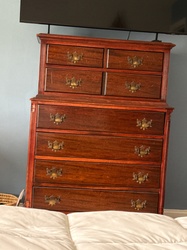
Custom wood dining chair made in Santa Fe, New Mexico
These notes were written by the person who submitted this item. Appraiser.AI has not verified them, and the AI's identification and estimate may rely on them.
AI Estimated Value
Not an official valuation
$600 - $900
AI estimate as of November 11, 2025 · verify with a professional before acting
AI-Generated · Verify before acting
Everything on this page is generated by AI for informational purposes only. AI can make mistakes — the AI may misidentify items or misattribute them (artist, maker, brand, designer, origin, era). This is not an official valuation and should not be used for insurance, sale, tax, estate, legal, or lending purposes — or any decision requiring a certified appraisal. It is not an authoritative claim about any person, brand, or rights holder — do not share or rely on it as a factual statement about a third party. Always consult qualified professionals before making financial decisions.
This analysis also relies on unverified notes provided by the user, which may be incomplete or inaccurate and could affect the result.
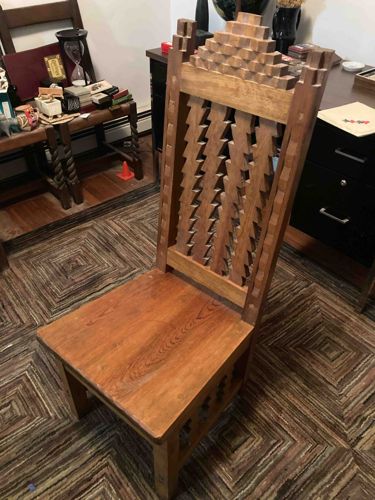
This is a custom-made wooden dining chair, exhibiting a distinctive Southwestern or New Mexican architectural aesthetic, likely crafted in Santa Fe, New Mexico. The chair is constructed entirely from a medium-toned hardwood, possibly oak or a similar dense wood, finished with a warm, natural stain that highlights the wood grain. Its coloration is a consistent reddish-brown with lighter areas where the grain is more pronounced. The overall design features robust, square-cut components. The most striking characteristic is the tall backrest, which is divided into two primary sections. The upper section features a stepped, pyramidal design composed of multiple rectangular blocks of wood, creating a distinctive sierra or mesa-like profile reminiscent of pueblo architecture. Below this, the main backrest panel comprises several vertical slats, each intricately cut into a repetitive, serrated or zigzag pattern that creates an engaging interplay of light and shadow when viewed from different angles. This openwork design adds both visual interest and a sense of lightness to the otherwise solid construction. The joinery appears solid and traditional, with visible mortise and tenon joints or similar robust construction methods evidenced by the clean lines and sturdy appearance. The seat is a solid, rectangular plank of the same wood, showing some signs of use consistent with a dining chair, with a slight sheen from wear. The chair stands on four sturdy, square legs, with a simple stretcher visible between the front and back legs on at least one side. There are no obvious signs of significant damage such as large cracks or repairs, but surface wear, minor scratches, and a consistent patina from age and use are visible, particularly on the seat and edges. The craftsmanship appears to be of high quality, emphasizing durability and traditional techniques rather than ornate carving. The chair's design strongly suggests a style period reflecting early 20th-century New Mexican arts and crafts or a more contemporary revival of this regional aesthetic.
AI Appraisal Report
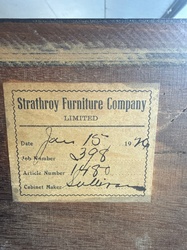
I have examined the provided image of this Southwestern Style Custom Wood Dining Chair. The chair presents as a robust, custom-made piece, likely from Santa Fe, New Mexico, consistent with the owner's description. The medium-toned hardwood, possibly oak, displays a warm natural stain, highlighting its grain and overall reddish-brown coloration. The unique stepped, pyramidal backrest and serrated vertical slats are distinctive design elements reminiscent of Pueblo architecture, indicative of a regional aesthetic. Condition appears good vintage, with a consistent patina, minor scratches, and surface wear on the seat and edges, which are expected for a used dining chair. No significant damage such as large cracks or repairs are visible from the image. The craftsmanship appears high quality, emphasizing traditional joinery and durability. My assessment of authenticity as a Santa Fe custom piece is based purely on the stylistic clues, which are strongly suggestive. However, without in-person examination, I cannot definitively confirm its exact origin or age. A physical inspection would allow for examination of joinery details, wood species identification, and closer assessment of the wear patterns and finish, which could further confirm its authenticity and period. Provenance documentation or maker's marks would be ideal for full authentication. Market demand for well-crafted regional Southwestern furniture is steady, particularly for unique, custom pieces like this. Due to its distinctive design and apparent quality, I would place its appraisal value at $600 - $900.