Collection of Antique Salt-Glazed Stoneware Vessels
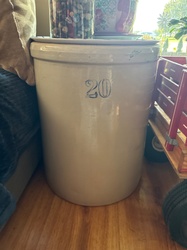
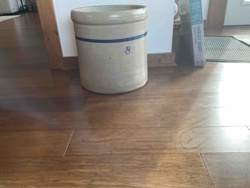
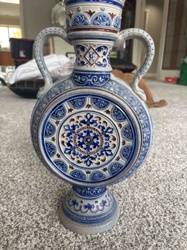
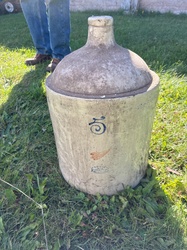
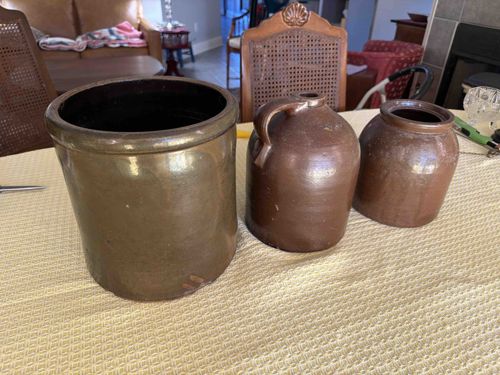
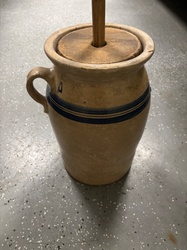
This set consists of three antique stoneware pieces, likely dating from the late 19th to early 20th century. The largest item is a cylindrical storage crock with a prominent rolled rim, finished in a brownish-olive salt glaze that exhibits a semi-glossy sheen. Beside it sits a rounded jug featuring a narrow neck and an integrated loop strap handle, common for liquid storage. The third piece is a wide-mouthed ovoid jar or humidor. All three pieces are crafted from heavy, durable earthenware and exhibit the characteristic 'orange peel' texture associated with salt-glazing processes. The colors range from deep umber to a mustard-brown, suggesting variations in kiln temperature or slip composition. Condition-wise, the pieces show evidence of use and age, including minor surface abrasions, small chips near the base of the largest crock, and typical glaze pops or kiln scars. There are no immediately visible maker's marks from this angle, though such marks are often located on the bottom or near the shoulder. The craftsmanship reflects traditional utilitarian pottery techniques where functionality and durability were prioritized over ornate decoration, representative of American or European primitive country decor.
AI-Generated Appraisal Disclaimer
Estimated Value
$175-275
Basic Information
Category
Antiques & Collectibles - Pottery & Stoneware
Appraised On
February 6, 2026
Estimated Value
$175-275
Additional Details Provided By Owner
User Provided Information
Old crocks
Item Description
This set consists of three antique stoneware pieces, likely dating from the late 19th to early 20th century. The largest item is a cylindrical storage crock with a prominent rolled rim, finished in a brownish-olive salt glaze that exhibits a semi-glossy sheen. Beside it sits a rounded jug featuring a narrow neck and an integrated loop strap handle, common for liquid storage. The third piece is a wide-mouthed ovoid jar or humidor. All three pieces are crafted from heavy, durable earthenware and exhibit the characteristic 'orange peel' texture associated with salt-glazing processes. The colors range from deep umber to a mustard-brown, suggesting variations in kiln temperature or slip composition. Condition-wise, the pieces show evidence of use and age, including minor surface abrasions, small chips near the base of the largest crock, and typical glaze pops or kiln scars. There are no immediately visible maker's marks from this angle, though such marks are often located on the bottom or near the shoulder. The craftsmanship reflects traditional utilitarian pottery techniques where functionality and durability were prioritized over ornate decoration, representative of American or European primitive country decor.
Get Your Items Appraised
Instant estimates of your treasures with AI-powered instant appraisals