Peach-Tinted Glass Cullet Specimen
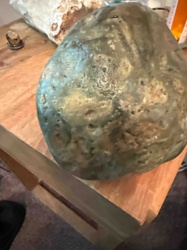
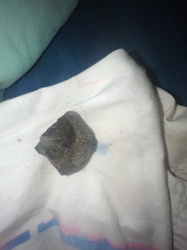
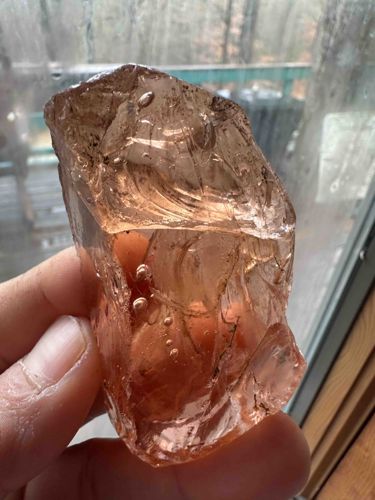
This item is a large, hand-held specimen of translucent cullet, which is waste glass from the industrial manufacturing process. The specimen displays a soft peach or light champagne hue. Physically, it exhibits classic conchoidal fracturing, with distinctive curved, shell-like ripples along several planes that indicate its amorphous, non-crystalline structure. The piece is approximately three to four inches in length. A defining feature is the presence of several visible rounded air bubbles or 'seeds' trapped within the interior, which are characteristic of glass rather than natural quartz. The surface is irregular with sharp, jagged edges typical of a broken fragment. There are no signs of intentional polishing or lapidary work; the finish is entirely raw and industrial. Some dark, particulate inclusions or surface debris can be seen embedded near the top and side edges. It lacks any maker's marks or signatures, as it is a byproduct of production. Based on the color and clarity, it likely dates from the mid-20th century to the present and was likely salvaged from a glass manufacturing furnace or factory site.
AI-Generated Appraisal Disclaimer
Estimated Value
$15.00 - $35.00
Basic Information
Category
Industrial Glass Artifacts
Appraised On
January 26, 2026
Estimated Value
$15.00 - $35.00
Item Description
This item is a large, hand-held specimen of translucent cullet, which is waste glass from the industrial manufacturing process. The specimen displays a soft peach or light champagne hue. Physically, it exhibits classic conchoidal fracturing, with distinctive curved, shell-like ripples along several planes that indicate its amorphous, non-crystalline structure. The piece is approximately three to four inches in length. A defining feature is the presence of several visible rounded air bubbles or 'seeds' trapped within the interior, which are characteristic of glass rather than natural quartz. The surface is irregular with sharp, jagged edges typical of a broken fragment. There are no signs of intentional polishing or lapidary work; the finish is entirely raw and industrial. Some dark, particulate inclusions or surface debris can be seen embedded near the top and side edges. It lacks any maker's marks or signatures, as it is a byproduct of production. Based on the color and clarity, it likely dates from the mid-20th century to the present and was likely salvaged from a glass manufacturing furnace or factory site.
Get Your Items Appraised
Instant estimates of your treasures with AI-powered instant appraisals