Paleo-Indian Chert Core Scraper Tool
Prehistoric Artifacts / Lithics

Paleo-Indian Chert Core Scraper Tool

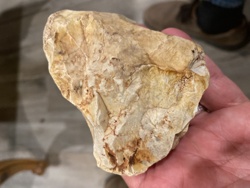
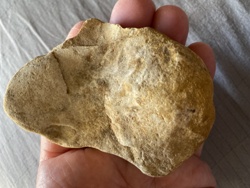
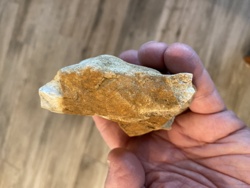
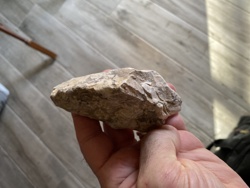
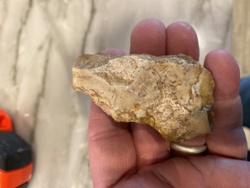
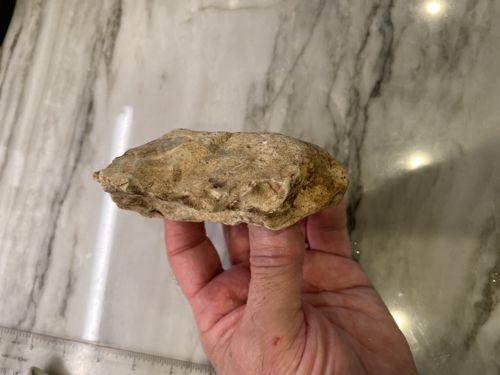
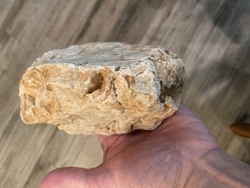
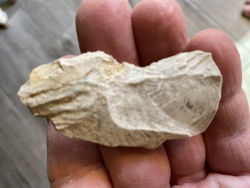
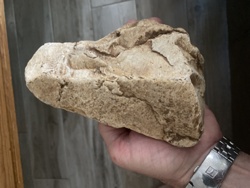
This is a prehistoric lithic tool, specifically identified as a core scraper or hand axe fragment, originating from Guthrie, Oklahoma. Measuring approximately 3.25 inches by 3 inches, the artifact is crafted from a silicate-rich chert or microcrystalline quartz, featuring a characteristically weathered tan and buff-colored patina. The item displays evidence of intentional knapping, including percussion flaking along the edges to create a functional, steep-angled scraping surface. The body of the stone shows significant thickness, or 'cortex,' which provided the user with a sturdy grip for heavy-duty tasks such as hide scraping or wood processing. Physically, the surface demonstrates a matte, calcareous texture with some mineral staining consistent with long-term burial in Oklahoma soil. Notable features include several concave flake scars that indicate secondary retouching, which refined the tool's sharpness. There is visible edge-wear and minor ancient chipping along the primary working face, though the overall structural integrity remains excellent. The craftsmanship reflects a utilitarian Neolithic or Paleo-Indian style, likely dating back several thousand years. This piece serves as a significant example of early human tool-making technology, showing how natural stone was modified into ergonomic implements.
Estimated Value

$45.00 - $75.00

Basic Information

Category

Prehistoric Artifacts / Lithics

Appraised On

February 18, 2026

Estimated Value

$45.00 - $75.00

Additional Details Provided By Owner

User Provided Information

Stone age hand axe core scraper tool found in Guthrie OK measuring 3.25" x 3"

Item Description

This is a prehistoric lithic tool, specifically identified as a core scraper or hand axe fragment, originating from Guthrie, Oklahoma. Measuring approximately 3.25 inches by 3 inches, the artifact is crafted from a silicate-rich chert or microcrystalline quartz, featuring a characteristically weathered tan and buff-colored patina. The item displays evidence of intentional knapping, including percussion flaking along the edges to create a functional, steep-angled scraping surface. The body of the stone shows significant thickness, or 'cortex,' which provided the user with a sturdy grip for heavy-duty tasks such as hide scraping or wood processing. Physically, the surface demonstrates a matte, calcareous texture with some mineral staining consistent with long-term burial in Oklahoma soil. Notable features include several concave flake scars that indicate secondary retouching, which refined the tool's sharpness. There is visible edge-wear and minor ancient chipping along the primary working face, though the overall structural integrity remains excellent. The craftsmanship reflects a utilitarian Neolithic or Paleo-Indian style, likely dating back several thousand years. This piece serves as a significant example of early human tool-making technology, showing how natural stone was modified into ergonomic implements.
Related Tags

Get Your Items Appraised

Instant estimates of your treasures with AI-powered instant appraisals

Browse More Appraisals