Ancient Roman or Hellenistic Bronze Coin depicting Zeus or Antoninus Pius
Ancient Numismatics

Ancient Roman or Hellenistic Bronze Coin depicting Zeus or Antoninus Pius

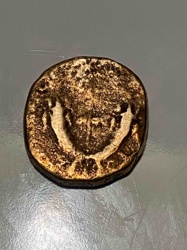
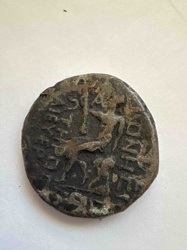
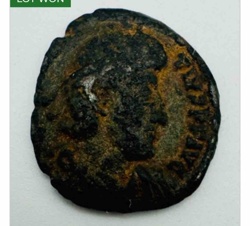
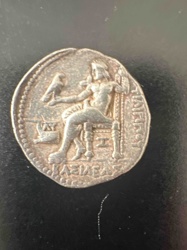
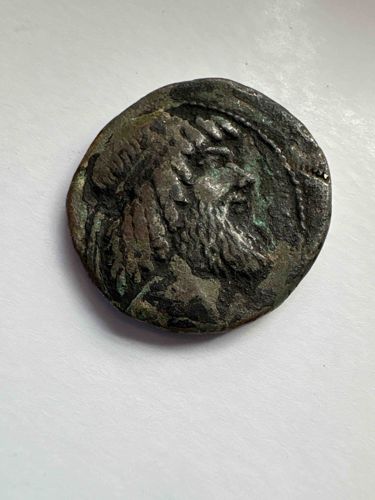
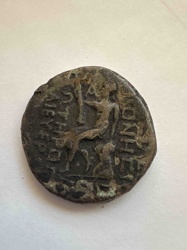
This is a heavily patinated ancient bronze coin, likely dating from the Hellenistic period to the middle of the Roman Empire (circa 2nd century BC to 2nd century AD). The obverse features a right-facing profile of a bearded male figure, which stylized features suggest could be Zeus/Jupiter or a bearded Roman Emperor like Antoninus Pius. The coin is circular but exhibits an irregular edge common for hand-struck ancient coinage. It is composed of a copper-based alloy, commonly referred to as bronze or orichalcum. The surface is characterized by a deep, dark brown and black patina with significant areas of green verdigris (copper oxidation), which is a sign of long-term environmental exposure. The high points of the relief show substantial wear, particularly around the hair and beard, while the fields are pitted and encrusted with mineral deposits. Traces of a beaded border can still be seen on the right periphery. The thick flan and high relief are indicators of the striking process of the era. No specific mint marks or inscriptions are fully legible due to the extent of the corrosion and surface wear, which significantly obscures the finer details of the portrait and any potential legends.
Estimated Value

$25 - $45

Basic Information

Category

Ancient Numismatics

Appraised On

February 13, 2026

Estimated Value

$25 - $45

Item Description

This is a heavily patinated ancient bronze coin, likely dating from the Hellenistic period to the middle of the Roman Empire (circa 2nd century BC to 2nd century AD). The obverse features a right-facing profile of a bearded male figure, which stylized features suggest could be Zeus/Jupiter or a bearded Roman Emperor like Antoninus Pius. The coin is circular but exhibits an irregular edge common for hand-struck ancient coinage. It is composed of a copper-based alloy, commonly referred to as bronze or orichalcum. The surface is characterized by a deep, dark brown and black patina with significant areas of green verdigris (copper oxidation), which is a sign of long-term environmental exposure. The high points of the relief show substantial wear, particularly around the hair and beard, while the fields are pitted and encrusted with mineral deposits. Traces of a beaded border can still be seen on the right periphery. The thick flan and high relief are indicators of the striking process of the era. No specific mint marks or inscriptions are fully legible due to the extent of the corrosion and surface wear, which significantly obscures the finer details of the portrait and any potential legends.
Get Your Items Appraised

Instant estimates of your treasures with AI-powered instant appraisals

Browse More Appraisals