AI Appraisal Estimate

AI-generated estimates · not official valuations

From the user

What was submitted

Photo and notes provided by the user — not generated by AI

Submitted item photo
Submitted photo · May 24, 2026

User's notes

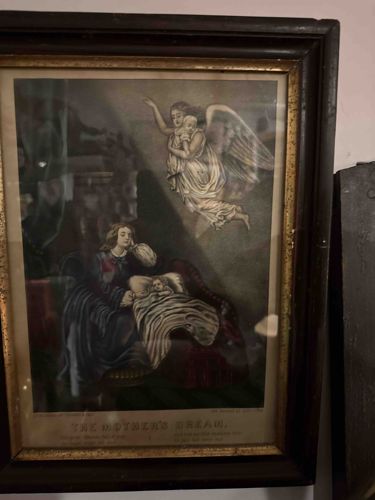
The mother‘s dream published by courier and knives New York

AI analysis below

AI appraisal

AI analysis & estimate

AI-Generated · Verify before acting

Everything below is generated by AI for informational purposes only. AI can make mistakes — the AI may misidentify items or misattribute them (artist, maker, brand, designer, origin, era). This is not an official valuation and should not be used for insurance, sale, tax, estate, legal, or lending purposes — or any decision requiring a certified appraisal. It is not an authoritative claim about any person, brand, or rights holder — do not share or rely on it as a factual statement about a third party. Always consult qualified professionals before making financial decisions.

Note

This analysis also relies on unverified notes provided by the user, which may be incomplete or inaccurate and could affect the result.

Read the full disclaimer

AI Identification

·Not independently authenticated·Verify before acting

The Mother's Dream, Currier & Ives Lithograph

Antique Prints & Art

AI Estimated Value

·Not an official valuation·Verify before acting

$40–$80

As of May 24, 2026

AI Item Analysis

·AI can make mistakes·Verify before acting
This is a 19th-century hand-colored lithograph titled 'The Mother’s Dream', produced by the prominent American printmaking firm Currier & Ives (often colloquially referred to as 'Courier and Knives'). The artwork depicts a sentimental Victorian scene where a sleeping mother sits by a cradle, while an angel carrying a small child ascends into the light above her, symbolizing a spiritual vision or the loss of a child. The piece is housed in a contemporary period wooden frame with a dark finish and a gilded inner liner. Physically, the print shows signs of significant age, including notable foxing, browning of the paper (acidification), and moisture staining particularly visible along the upper margins. The colors appear somewhat muted, which is typical for hand-applied watercolors of this era. The bottom of the print features the title in a stylized serif font, flanked by poetic verses and the publisher's imprint at 152 Nassau St., New York. Despite the visible condition issues like surface grime and paper toning, the lithograph retains its narrative clarity and historical charm as a piece of Americana folk art from the mid-to-late 1800s.

AI Appraisal Report

·AI can make mistakes·Verify before acting
This hand-colored lithograph, titled 'The Mother’s Dream' and published by Currier & Ives at 152 Nassau Street, New York, is an authentic example of mid-to-late 19th-century commercial American printmaking. The image, depicting a mother's spiritual vision of an angel, is a classic sentimental Victorian subject designed to appeal to the domestic market of the era. However, the value is heavily constrained by condition. My visual examination reveals significant foxing (reddish-brown fungal spots) scattered throughout the surface, severe paper toning (acidification), and distinct moisture staining, particularly along the top edge. The colors, while present, are faded, indicating long-term light exposure. While the frame appears to be vintage, potentially even original to the era, it does not add significant value in this state. Historically, 'small folio' religious and sentimental prints by Currier & Ives were produced in large quantities, making them relatively common today compared to their large folio landscapes or sporting scenes. In pristine condition, a print of this subject might fetch considerably more, but the restorative work required to stabilize and clean this paper would likely exceed its final market value. Comparables in similar 'fair' to 'poor' condition frequently sell in the low double digits at auction or in antique malls. Therefore, the value lies primarily in its decorative folk art appeal and historical curiosity rather than investment-grade art. For a definitive evaluation, I would need to physically inspect the print out of the frame to check for trimming of the margins—a common issue—and to assess the brittleness of the paper, but based on the visible damage, the appraisal reflects its current 'as-is' decorative status.

Get your items appraised

Instant estimates of your treasures with AI-powered appraisals

Browse More Appraisals