AI Appraisal Estimate

AI-generated estimates · not official valuations

From the user

What was submitted

Photo and notes provided by the user — not generated by AI

Submitted item photo
Submitted photo · June 8, 2026

User's notes

Inushishi

AI analysis below

AI appraisal

AI analysis & estimate

AI-Generated · Verify before acting

Everything below is generated by AI for informational purposes only. AI can make mistakes — the AI may misidentify items or misattribute them (artist, maker, brand, designer, origin, era). This is not an official valuation and should not be used for insurance, sale, tax, estate, legal, or lending purposes — or any decision requiring a certified appraisal. It is not an authoritative claim about any person, brand, or rights holder — do not share or rely on it as a factual statement about a third party. Always consult qualified professionals before making financial decisions.

Note

This analysis also relies on unverified notes provided by the user, which may be incomplete or inaccurate and could affect the result.

Read the full disclaimer

AI Identification

·Not independently authenticated·Verify before acting

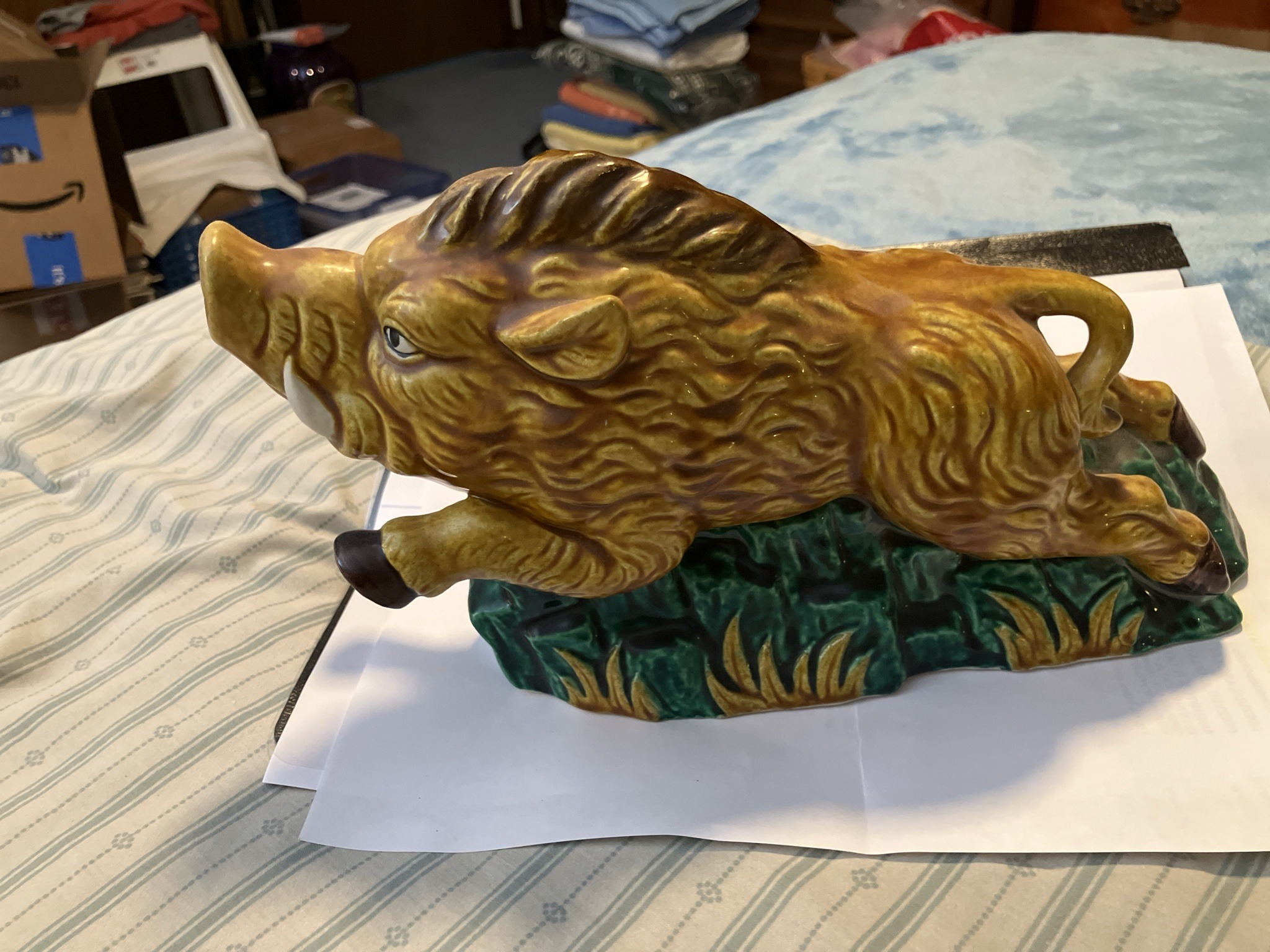
Japanese Ceramic Okimono of a Charging Wild Boar (Inoshishi)

Asian Decorative Arts - Japanese Ceramics

AI Estimated Value

·Not an official valuation·Verify before acting

$450 - $650

As of June 8, 2026

AI Item Analysis

·AI can make mistakes·Verify before acting
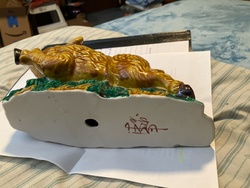
This is a large-scale ceramic okimono or decorative figurine depicting a charging wild boar (inoshishi), a significant animal in the Japanese Zodiac. The piece features dynamic, muscular modeling, showcasing the animal in a full gallop with front and rear legs extended. It is constructed from glazed earthenware, likely high-quality stoneware. The color palette is dominated by ochre and amber-toned slip-glazes that highlight the deeply textured sgraffito-style coat representing thick bristles. The mane and hooves are finished in a contrasting dark chocolate brown glaze, while the base depicts lush green grass and soil with yellow highlights. The boar's expression is fierce, with hand-painted white tusks and focused eyes rimmed in black. This style of ceramic, often associated with Kutani or similar studio production from the mid-20th century (late Showa era), exhibits significant craftsmanship through the balance of its heavy form. Condition appears excellent with a well-preserved high-gloss finish; some minor kiln spotting and surface dust are noted, but there are no visible chips or structural cracks. The underside (though not pictured) likely contains a kiln mark or provenance stamp. This piece combines traditional Japanese symbolic art with realistic mid-century animalier sculpting techniques.
AI Appraisal Report

·AI can make mistakes·Verify before acting
I have virtually examined this large Japanese ceramic okimono of a charging wild boar (Inoshishi). The piece is a fine example of late Showa-era (mid-20th century) studio ceramics, likely originating from the Kutani or Banko traditions given the expressive use of polychrome glazes and the sgraffito technique used to render the coat. The dynamic anatomical modeling and the 'animalier' realism suggest a high-quality production intended for the high-end gift or domestic decorative market. Viewed through high-resolution imagery, the condition appears excellent; the high-gloss ochre glaze remains vibrant, and I see no evidence of crazing, which often plagues earthenware of this scale. The presence of kiln spots is a normal characteristic of manual firing processes and does not detract from the value. Market demand for Zodiac animals remains stable, though boars specifically appeal to collectors of 'Inoshishi' related motifs and those interested in Japanese folk mythology. Comparables for unsigned 20th-century Japanese animalier ceramics of this scale typically sell within the mid-hundreds at boutique galleries. The value is driven by the dynamic pose and the quality of the glaze application rather than a specific artist signature. Please note that this appraisal is based on visual data alone. A physical inspection is required to check for internal structural cracks or professional restorations that may be invisible in photographs. Specifically, viewing the kiln mark or studio stamp on the underside and reviewing any original wooden storage box (tomobako) would be essential to verify the specific kiln and potentially elevate the valuation into the premium studio art category.

Get your items appraised

Instant estimates of your treasures with AI-powered appraisals

Browse More Appraisals