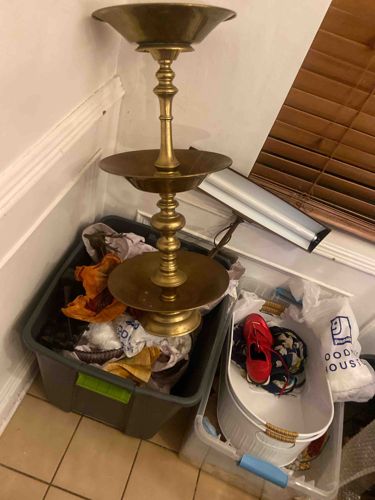
Vintage Solid Brass Three-Tier Tazza Server
This is a substantial vintage three-tier server, often referred to as a tazza or a dumbwaiter stand, constructed from solid cast and turned brass. The piece features three graduated circular trays, with the largest at the base and the smallest at the apex, each supported by a decoratively turned baluster central column. The brass displays a traditional polished finish that has aged into a warm gold tone with visible signs of surface oxidation, tarnishing, and tea-staining, which are characteristic of older brassware. The construction suggests a mid-20th-century origin, likely inspired by Neoclassical or English Regency styles. Each level features a slightly flared rim, and the central shaft is composed of multiple bulbous and ringed turnings that terminate in a weighted, bell-shaped pedestal base for stability. In terms of condition, there are visible surface scratches, small dents on the rim of the middle terrace, and significant patina buildup in the crevices of the turned column. The piece appears to be modular in construction, likely held together by a central threaded rod, which is typical for high-quality vintage brass serving pieces. No maker's marks are immediately visible in the current orientation, but the weight and casting quality indicate professional craftsmanship intended for formal entertaining or decorative display.
AI-Generated Appraisal Disclaimer
Estimated Value
$175 - $250
Basic Information
Category
Antique and Vintage Home Decor / Metalware
Appraised On
February 20, 2026
Estimated Value
$175 - $250
Item Description
This is a substantial vintage three-tier server, often referred to as a tazza or a dumbwaiter stand, constructed from solid cast and turned brass. The piece features three graduated circular trays, with the largest at the base and the smallest at the apex, each supported by a decoratively turned baluster central column. The brass displays a traditional polished finish that has aged into a warm gold tone with visible signs of surface oxidation, tarnishing, and tea-staining, which are characteristic of older brassware. The construction suggests a mid-20th-century origin, likely inspired by Neoclassical or English Regency styles. Each level features a slightly flared rim, and the central shaft is composed of multiple bulbous and ringed turnings that terminate in a weighted, bell-shaped pedestal base for stability. In terms of condition, there are visible surface scratches, small dents on the rim of the middle terrace, and significant patina buildup in the crevices of the turned column. The piece appears to be modular in construction, likely held together by a central threaded rod, which is typical for high-quality vintage brass serving pieces. No maker's marks are immediately visible in the current orientation, but the weight and casting quality indicate professional craftsmanship intended for formal entertaining or decorative display.

Related Tags
Get Your Items Appraised
Instant estimates of your treasures with AI-powered instant appraisals