Silverplate Repoussé Sugar Scuttle with Pedestal Base
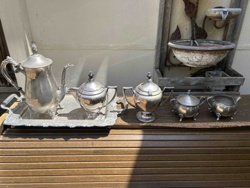
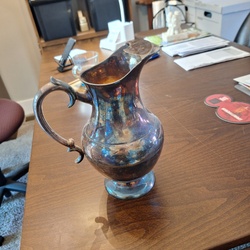
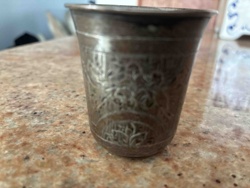
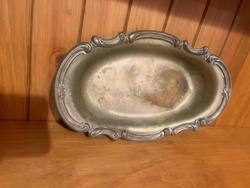
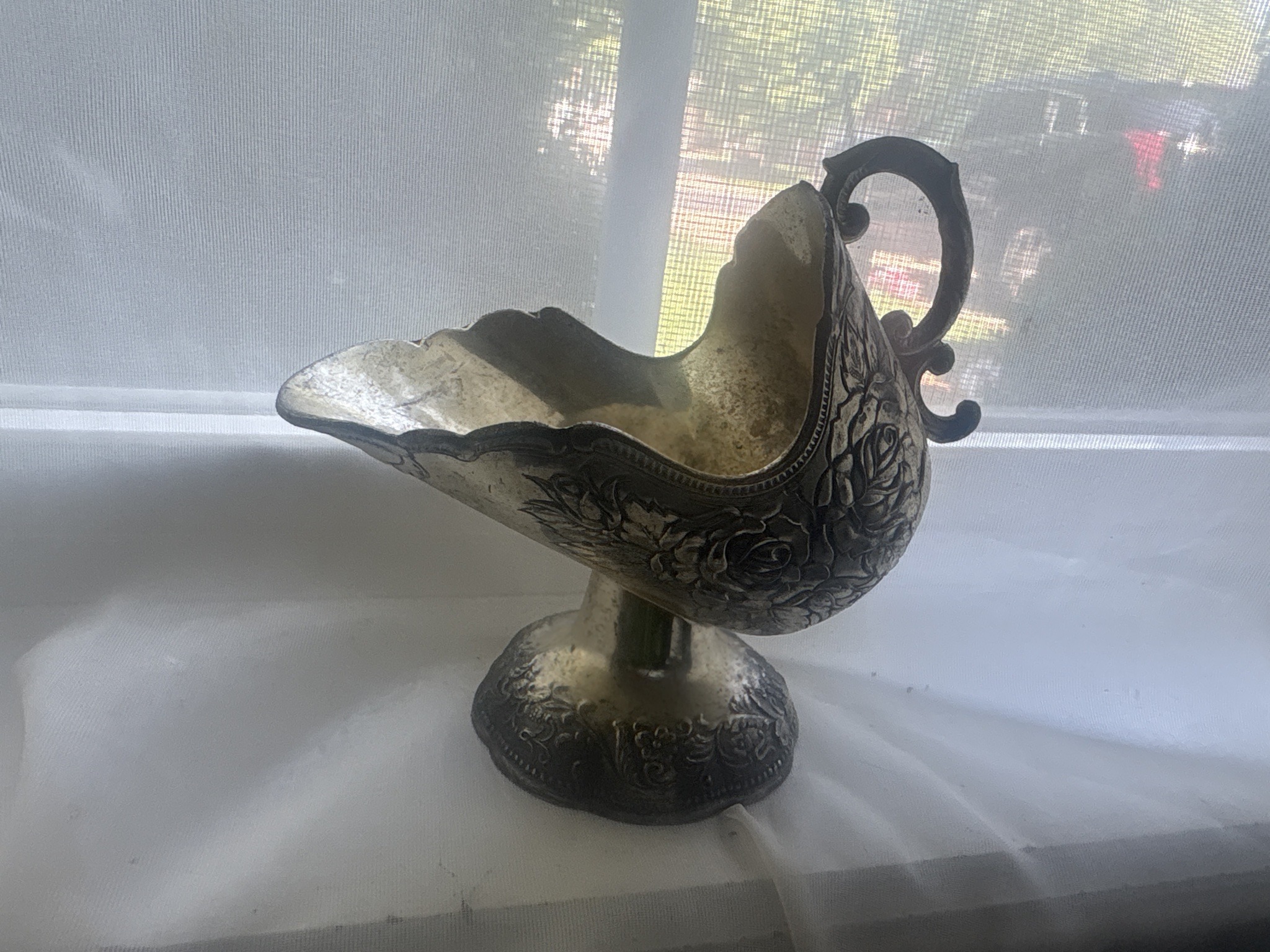
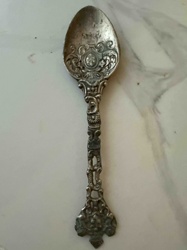
This is a Victorian-style sugar scuttle, crafted from silver-plated metal, likely white metal or copper base. It features a traditional scoop or coal-hod shape commonly used for serving cubed sugar. The exterior is ornately decorated with deep repoussé and chased floral motifs, specifically blooming roses and foliage, which extend across the rounded body. The piece sits on a weighted pedestal foot, also decorated with a matching repoussé border around the base. A scrolled, cast-metal handle is attached to the rear, featuring shell-like or acanthus leaf flourishes at the terminals. Measuring approximately 6 to 8 inches in length, the item shows significant signs of age and wear. There is notable tarnishing throughout, and the interior exhibits 'pitting' and loss of the silver plating, revealing the darker base metal beneath. Such items were popular in the late 19th and early 20th centuries (circa 1880-1910) for formal tea services. The craftsmanship indicates a mid-market mass-produced piece, intended to mimic solid sterling silver but utilizing more affordable electroplating techniques. It would typically be accompanied by a small matching silver scoop which is currently missing.
AI-Generated Appraisal Disclaimer
Estimated Value
$45 - $75
Basic Information
Category
Antiques & Collectibles - Silverware
Appraised On
May 12, 2026
Estimated Value
$45 - $75
Item Description
This is a Victorian-style sugar scuttle, crafted from silver-plated metal, likely white metal or copper base. It features a traditional scoop or coal-hod shape commonly used for serving cubed sugar. The exterior is ornately decorated with deep repoussé and chased floral motifs, specifically blooming roses and foliage, which extend across the rounded body. The piece sits on a weighted pedestal foot, also decorated with a matching repoussé border around the base. A scrolled, cast-metal handle is attached to the rear, featuring shell-like or acanthus leaf flourishes at the terminals. Measuring approximately 6 to 8 inches in length, the item shows significant signs of age and wear. There is notable tarnishing throughout, and the interior exhibits 'pitting' and loss of the silver plating, revealing the darker base metal beneath. Such items were popular in the late 19th and early 20th centuries (circa 1880-1910) for formal tea services. The craftsmanship indicates a mid-market mass-produced piece, intended to mimic solid sterling silver but utilizing more affordable electroplating techniques. It would typically be accompanied by a small matching silver scoop which is currently missing.
Related Tags
Explore similar items and categories:
Get Your Items Appraised
Instant estimates of your treasures with AI-powered instant appraisals