Paleolithic-Style Chert Lithic Tool (Side Scraper/Hand Axe)
Archaeological Artifact / Prehistoric Stone Tool

Paleolithic-Style Chert Lithic Tool (Side Scraper/Hand Axe)

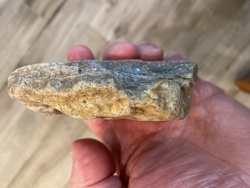
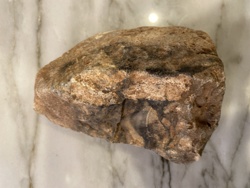
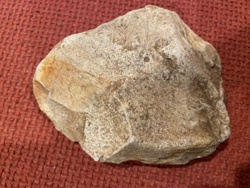
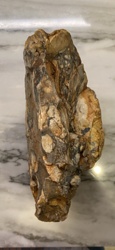
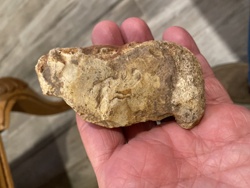
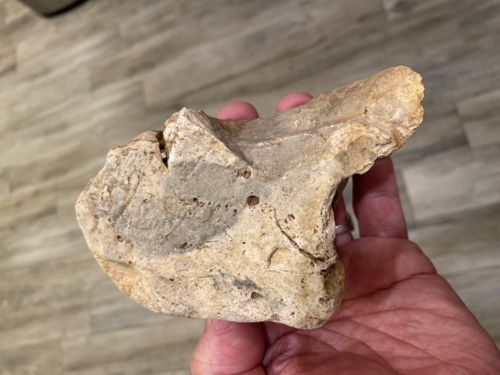
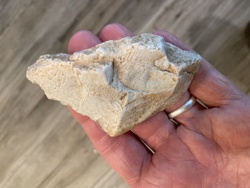
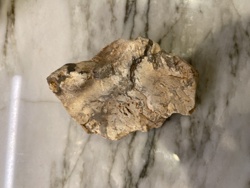
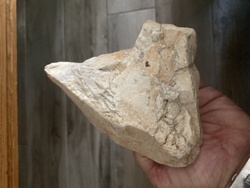
This specimen is a large lithic artifact identified as a chert multi-tool, exhibiting characteristics of both a hand axe and a lateral side scraper. Found in Guthrie, Oklahoma, the piece is composed of a dense, microcrystalline chert material, displaying a variegated color palette ranging from creamy tan and buff to deeper ochre and charcoal grey. The object measures approximately 5 to 6 inches in length, fitting substantially in the palm. Its construction shows clear evidence of conchoidal fracturing and intentional percussion flaking along the margins to create a working edge. Notable features include a prominent bulbous base for a comfortable grip and a tapered, bifacially worked distal end. The surface exhibits a heavy desert varnish or mineralized patina, consistent with long-term exposure to the elements and significant archaeological age. There are several deep concavities and step fractures indicative of prehistoric usage and maintenance. Condition-wise, the tool appears structurally sound but shows significant weathering and rounded edges on the older flake scars, which suggests it may have been tumbled in a fluvial environment or exposed on the surface for millennia. While no formal maker's marks exist on such ancient artifacts, the sophisticated reduction sequence and specific pressure flaking along the side edge demonstrate high-quality craftsmanship typical of North American Paleo-Indian or early Archaic lithic technology.
Estimated Value

$150 - $250

Basic Information

Category

Archaeological Artifact / Prehistoric Stone Tool

Appraised On

February 19, 2026

Estimated Value

$150 - $250

Additional Details Provided By Owner

User Provided Information

Paleolithic chert hand axe side scraper tool found in Guthrie OK

Item Description

This specimen is a large lithic artifact identified as a chert multi-tool, exhibiting characteristics of both a hand axe and a lateral side scraper. Found in Guthrie, Oklahoma, the piece is composed of a dense, microcrystalline chert material, displaying a variegated color palette ranging from creamy tan and buff to deeper ochre and charcoal grey. The object measures approximately 5 to 6 inches in length, fitting substantially in the palm. Its construction shows clear evidence of conchoidal fracturing and intentional percussion flaking along the margins to create a working edge. Notable features include a prominent bulbous base for a comfortable grip and a tapered, bifacially worked distal end. The surface exhibits a heavy desert varnish or mineralized patina, consistent with long-term exposure to the elements and significant archaeological age. There are several deep concavities and step fractures indicative of prehistoric usage and maintenance. Condition-wise, the tool appears structurally sound but shows significant weathering and rounded edges on the older flake scars, which suggests it may have been tumbled in a fluvial environment or exposed on the surface for millennia. While no formal maker's marks exist on such ancient artifacts, the sophisticated reduction sequence and specific pressure flaking along the side edge demonstrate high-quality craftsmanship typical of North American Paleo-Indian or early Archaic lithic technology.
Get Your Items Appraised

Instant estimates of your treasures with AI-powered instant appraisals

Browse More Appraisals