Prehistoric Lithic Hand Axe and Scraper Tool
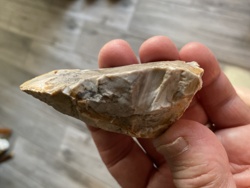
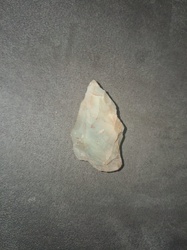
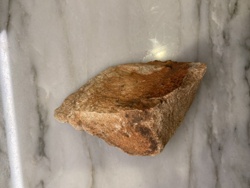
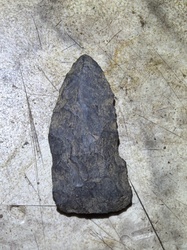
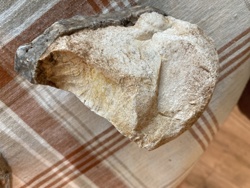
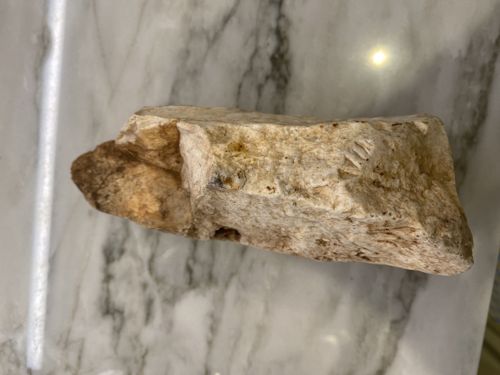
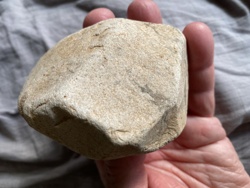
This is a large prehistoric lithic specimen, tentatively identified as a multipurpose hand axe and scraper tool, measuring approximately 7 inches in length and 3 inches in width. The artifact is crafted from a coarse-grained siliceous stone, exhibiting a variegated color palette ranging from light cream and tan to deeper ochre and iron-oxide staining. The tool features significant unifacial and possible bifacial percussion flaking, creating a robust, ridged central spine and a tapered working edge. The construction shows evidence of intentional shaping through large flake removal, typical of early stone tool industries. Notable features include a prominent 'bulb of percussion' area and several step fractures along the primary edge. The surface displays significant geological patina, suggesting long-term environmental exposure since its creation. Condition-wise, the specimen shows heavy weathering and smoothing of flake scars, which is consistent with its found location in Guthrie, OK. There are no modern maker's marks, as is standard for prehistoric artifacts, but the craftsmanship level suggests a functional, utilitarian object from a nomadic Paleo-Indian or Archaic period hunter-gatherer culture. The density of the material and the ergonomics of the grip indicate a high-quality tool designed for heavy-duty tasks like butchering or hide preparation.
AI-Generated Appraisal Disclaimer
Estimated Value
$150 - $350
Basic Information
Category
Archaeological Artifacts / Native American Prehistoric Tools
Appraised On
February 18, 2026
Estimated Value
$150 - $350
Additional Details Provided By Owner
User Provided Information
prospect prehistoric stone hand axe scraper found in Guthrie, OK measuring 7" x 3"
Item Description
This is a large prehistoric lithic specimen, tentatively identified as a multipurpose hand axe and scraper tool, measuring approximately 7 inches in length and 3 inches in width. The artifact is crafted from a coarse-grained siliceous stone, exhibiting a variegated color palette ranging from light cream and tan to deeper ochre and iron-oxide staining. The tool features significant unifacial and possible bifacial percussion flaking, creating a robust, ridged central spine and a tapered working edge. The construction shows evidence of intentional shaping through large flake removal, typical of early stone tool industries. Notable features include a prominent 'bulb of percussion' area and several step fractures along the primary edge. The surface displays significant geological patina, suggesting long-term environmental exposure since its creation. Condition-wise, the specimen shows heavy weathering and smoothing of flake scars, which is consistent with its found location in Guthrie, OK. There are no modern maker's marks, as is standard for prehistoric artifacts, but the craftsmanship level suggests a functional, utilitarian object from a nomadic Paleo-Indian or Archaic period hunter-gatherer culture. The density of the material and the ergonomics of the grip indicate a high-quality tool designed for heavy-duty tasks like butchering or hide preparation.
Get Your Items Appraised
Instant estimates of your treasures with AI-powered instant appraisals