AI Appraisal Estimate

AI-generated estimates · not official valuations

From the user

What was submitted

Photo and notes provided by the user — not generated by AI

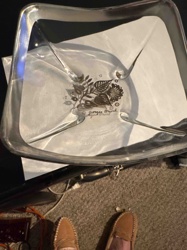
Submitted item photo
Submitted photo · June 28, 2026

User's notes

No additional notes provided.

AI analysis below

AI appraisal

AI analysis & estimate

AI-Generated · Verify before acting

Everything below is generated by AI for informational purposes only. AI can make mistakes — the AI may misidentify items or misattribute them (artist, maker, brand, designer, origin, era). This is not an official valuation and should not be used for insurance, sale, tax, estate, legal, or lending purposes — or any decision requiring a certified appraisal. It is not an authoritative claim about any person, brand, or rights holder — do not share or rely on it as a factual statement about a third party. Always consult qualified professionals before making financial decisions.

Read the full disclaimer

AI Identification

·Not independently authenticated·Verify before acting

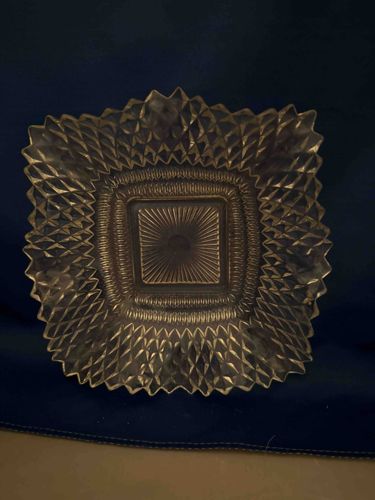
Vintage EAPG Miss America Pattern Square Pressed Glass Bowl

Vintage Glassware and Collectibles

AI Estimated Value

·Not an official valuation·Verify before acting

$25.00 - $45.00

As of June 28, 2026

AI Item Analysis

·AI can make mistakes·Verify before acting
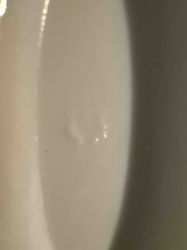
This item is a vintage Early American Pattern Glass (EAPG) square bowl, specifically identified as the 'Miss America' pattern, which was originally produced by the Hocking Glass Company between 1935 and 1938. The piece is crafted from clear, heavy pressed glass, featuring a distinctive diamond point or hobnail texture that radiates outward from a central square motif. The center of the bowl displays a sunburst or 'star' design comprised of finely incised lines contained within a rounded square border. The edges of the bowl are finished with a sharp, tooth-like serrated or 'sawtooth' rim that follows the geometric contours of the exterior diamond pattern. Measuring approximately 8 to 9 inches across, the glass possesses a subtle yellowish or straw-like tint characteristic of older clear glass formulations. In terms of condition, there are no visible large cracks or major chips, although the sharp points of the sawtooth rim are prone to 'flea bites' or minute roughness from use. The overall craftsmanship is representative of the Depression Era mass-production glass movement, showcasing intricate mold work designed to mimic more expensive cut crystal of the period. No specific manufacturer marks are visible, as was common for Hocking Glass products of this era.
AI Appraisal Report

·AI can make mistakes·Verify before acting
I have conducted a visual examination of the square pressed glass bowl in the Miss America pattern, attributed to Hocking Glass Company (1935–1938). The item exhibits the characteristic diamond-point geometry and 'sunburst' base synonymous with Depression-era production. The slight straw tint noted is a common indicator of manganese or arsenic impurities in the glass batch, consistent with 1930s clear-glass manufacturing. In-image inspection suggests the piece is authentic rather than a modern reproduction, as the edges maintain a crispness often lost in later mold remakes. The Miss America pattern remains highly collectible due to its prismatic quality, though market saturation for clear (crystal) variants is high compared to the more sought-after 'Pink' or 'Royal Ruby' colors. Current market demand for clear Miss America serving pieces is stable but modest, with similar 8-9 inch bowls frequently selling at regional auctions and online marketplaces within the stated range. The primary value depressant is the vulnerability of the sawtooth rim; while no major chips are visible, the 'flea bites' mentioned are expected and slightly reduce the premium for 'mint' collectors. Limitations: Authentication via digital image cannot confirm the presence of high-stress mold lines or the 'ring' tone of the glass when struck, which helps differentiate period pieces from high-quality late 20th-century copies. A physical inspection under UV light (to check for fluorescence) and tactile verification of the rim's sharpness would be required for a definitive valuation. Documentation of provenance from the mid-20th century would further solidify its historical standing.

Get your items appraised

Instant estimates of your treasures with AI-powered appraisals

Browse More Appraisals