Société Céramique Maestricht Earthenware Saucer
Antique Ceramics and Pottery

Société Céramique Maestricht Earthenware Saucer

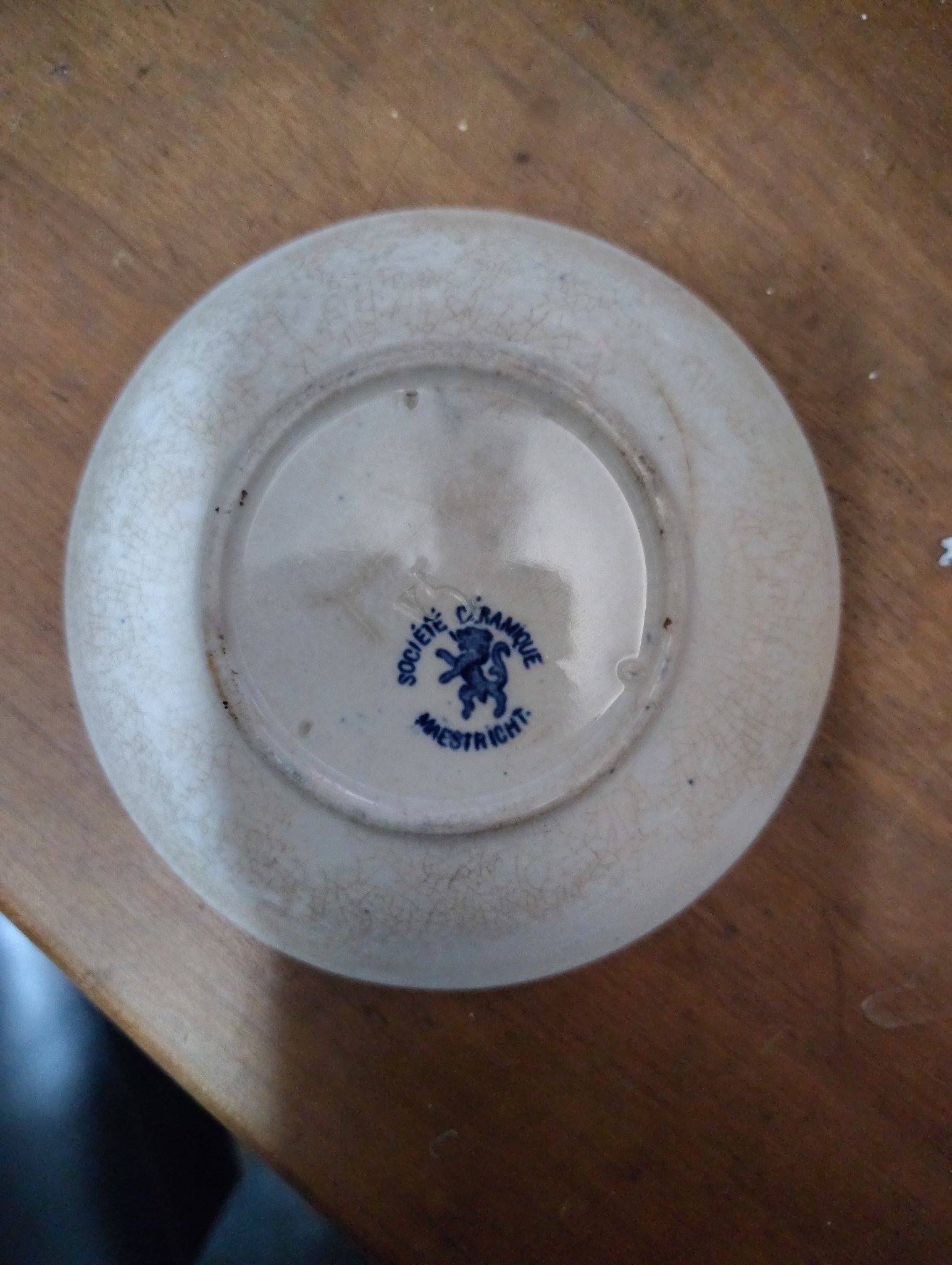
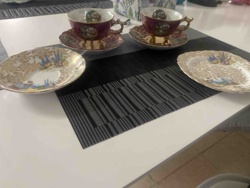
This is a vintage ceramic saucer featuring a circular, shallow form typical of tea or coffee service. The item is constructed from cream-colored earthenware or ironstone. The most prominent feature is the blue underglaze backstamp on the underside which reads 'SOCIÉTÉ CÉRAMIQUE MAESTRICHT' encircling a stylized lion rampant. This mark belongs to the Dutch manufacturer based in Maastricht, Netherlands, active primarily from the mid-19th century until its merger with Royal Sphinx in 1958. Based on the style of the mark and the level of crazing, this piece likely dates from the late 19th century to the early 20th century (circa 1890-1920). Regarding condition, the piece exhibits significant age-related wear, including heavy crazing (a network of fine surface cracks in the glaze) across the entire underside. There is also visible staining and discoloration trapped beneath the glaze, likely from absorbed liquids over time. Small dark pit marks or kiln debris are present on the foot rim, suggesting utilitarian manufacturing standards of the period. No major chips or structural cracks are immediately visible in this view, though the glaze integrity is compromised by the crazing. The craftsmanship is indicative of mass-produced transferware common in European households of the era.
Estimated Value

$10-$25

Basic Information

Category

Antique Ceramics and Pottery

Appraised On

May 14, 2026

Estimated Value

$10-$25

Item Description

This is a vintage ceramic saucer featuring a circular, shallow form typical of tea or coffee service. The item is constructed from cream-colored earthenware or ironstone. The most prominent feature is the blue underglaze backstamp on the underside which reads 'SOCIÉTÉ CÉRAMIQUE MAESTRICHT' encircling a stylized lion rampant. This mark belongs to the Dutch manufacturer based in Maastricht, Netherlands, active primarily from the mid-19th century until its merger with Royal Sphinx in 1958. Based on the style of the mark and the level of crazing, this piece likely dates from the late 19th century to the early 20th century (circa 1890-1920). Regarding condition, the piece exhibits significant age-related wear, including heavy crazing (a network of fine surface cracks in the glaze) across the entire underside. There is also visible staining and discoloration trapped beneath the glaze, likely from absorbed liquids over time. Small dark pit marks or kiln debris are present on the foot rim, suggesting utilitarian manufacturing standards of the period. No major chips or structural cracks are immediately visible in this view, though the glaze integrity is compromised by the crazing. The craftsmanship is indicative of mass-produced transferware common in European households of the era.
Get Your Items Appraised

Instant estimates of your treasures with AI-powered instant appraisals

Browse More Appraisals