Lower Paleolithic Chert Point Scraper / Effigy Stone
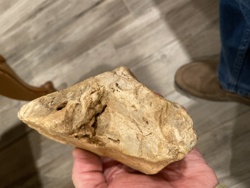
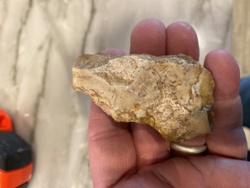
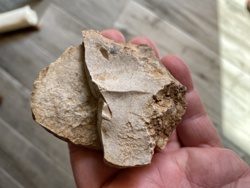
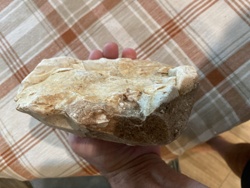
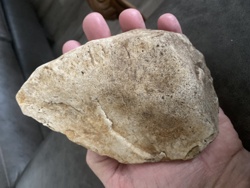
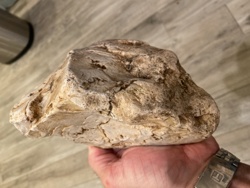
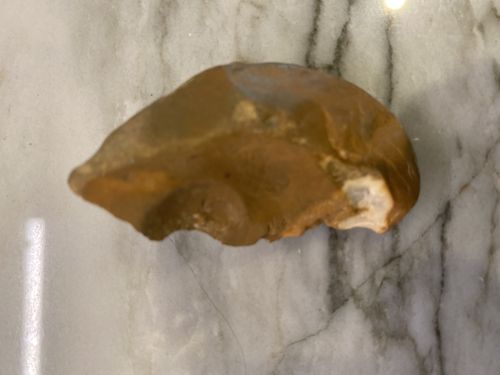
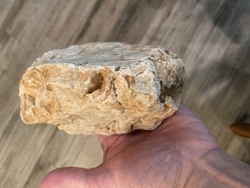
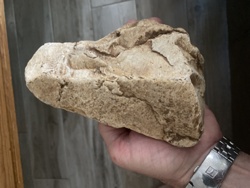
This item is a 2.5-inch by 1.5-inch lithic specimen composed of yellowish-brown chert, consistent with materials found in the Guthrie, Oklahoma region. The object exhibits physical characteristics of a point scraper, featuring a distinct, tapered end that transitions into a broader, knapped body. The tool's construction shows evidence of intentional flaking and retouching along the lateral margins to create a functional scraping edge. The material displays a dull luster with a naturally occurring waxy patina, typical of aged stone subjected to environmental exposure. A notable indentation on the lower center suggest an ergonomic grip for the hand, supporting its classification as a portable tool. The surface shows some micro-chipping and smoothed edges, possibly from prehistoric use wear or post-depositional abrasion. Some enthusiasts identify the silhouette as 'portable rock art' or an effigy, suggesting the shape may represent an animal profile, though this is a subjective interpretation common in lithic analysis. The specimen appears to be in its found state with a heavy mineralized coating in crevices and no signs of modern mechanical alteration. Its craftsmanship demonstrates basic percussion techniques characteristic of early lithic industries, likely dating back to the Lower Paleolithic or Early Archaic period based on the bifacial thinning and general morphological style.
AI-Generated Appraisal Disclaimer
Estimated Value
$40-$75
Basic Information
Category
Prehistoric Artifacts / Lithic Tools
Appraised On
March 19, 2026
Estimated Value
$40-$75
Additional Details Provided By Owner
User Provided Information
Lower Paleolithic chert point scraper portable rock art effigy tool found in Guthrie OK measuring 2.5" x 1.5"
Item Description
This item is a 2.5-inch by 1.5-inch lithic specimen composed of yellowish-brown chert, consistent with materials found in the Guthrie, Oklahoma region. The object exhibits physical characteristics of a point scraper, featuring a distinct, tapered end that transitions into a broader, knapped body. The tool's construction shows evidence of intentional flaking and retouching along the lateral margins to create a functional scraping edge. The material displays a dull luster with a naturally occurring waxy patina, typical of aged stone subjected to environmental exposure. A notable indentation on the lower center suggest an ergonomic grip for the hand, supporting its classification as a portable tool. The surface shows some micro-chipping and smoothed edges, possibly from prehistoric use wear or post-depositional abrasion. Some enthusiasts identify the silhouette as 'portable rock art' or an effigy, suggesting the shape may represent an animal profile, though this is a subjective interpretation common in lithic analysis. The specimen appears to be in its found state with a heavy mineralized coating in crevices and no signs of modern mechanical alteration. Its craftsmanship demonstrates basic percussion techniques characteristic of early lithic industries, likely dating back to the Lower Paleolithic or Early Archaic period based on the bifacial thinning and general morphological style.
Related Tags
Get Your Items Appraised
Instant estimates of your treasures with AI-powered instant appraisals