Chert Multi-Core Scraper Tool
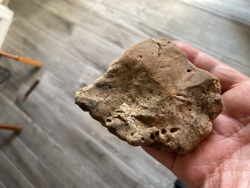
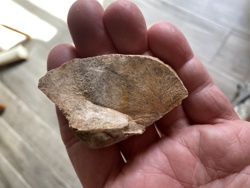
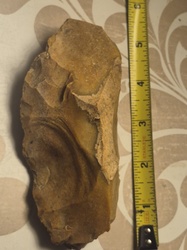
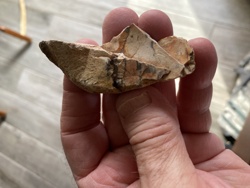
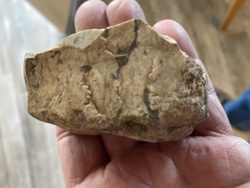
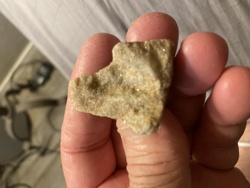
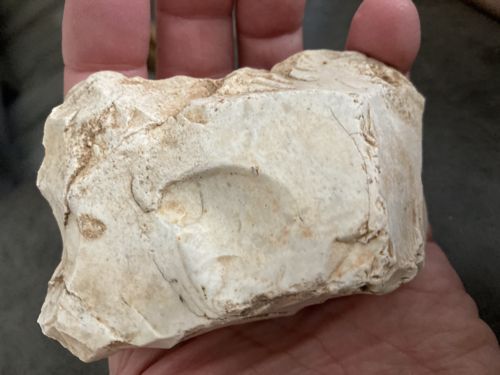
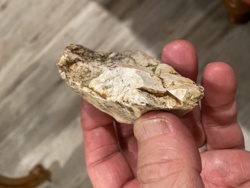
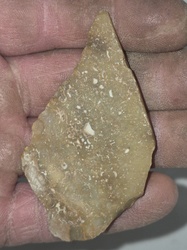
This artifact is an impressively sized lithic specimen, measuring approximately 4 inches by 2.5 inches, identified as a multi-core scraper. It is constructed from a dense, high-quality chert or flint, characterized by a creamy off-white to light tan color with subtle reddish-brown mineral staining and earth-toned patina consistent with long-term burial in Oklahoma soil. The physical construction displays significant lithic reduction through intentional percussion flaking. Multiple negative flake scars are visible across the surface, indicating its dual purpose as a core for harvesting smaller flakes and as a primary tool itself. The edges show secondary retouching, which suggests use-wear or sharpening for scraping tasks. At one end, there is a prominent bulb of percussion and radial fissures stemming from the initial strike. The item is in an ancient, 'as-found' condition, exhibiting expected micro-chipping along the working edges and an overall matte texture typical of prehistoric artifacts. While there are no modern maker's marks, the rhythmic pattern of the flaking indicates skilled human manufacture. Its heavy, ergonomic shape would have allowed for significant leverage during use in hide processing or wood shaping.
AI-Generated Appraisal Disclaimer
Estimated Value
$45.00 - $75.00
Basic Information
Category
Archeological Artifacts - Prehistoric Lithic Tools
Appraised On
February 20, 2026
Estimated Value
$45.00 - $75.00
Additional Details Provided By Owner
User Provided Information
Middle Paleolithic scraper multi core found in Guthrie OK measuring 4" x 2.5"
Item Description
This artifact is an impressively sized lithic specimen, measuring approximately 4 inches by 2.5 inches, identified as a multi-core scraper. It is constructed from a dense, high-quality chert or flint, characterized by a creamy off-white to light tan color with subtle reddish-brown mineral staining and earth-toned patina consistent with long-term burial in Oklahoma soil. The physical construction displays significant lithic reduction through intentional percussion flaking. Multiple negative flake scars are visible across the surface, indicating its dual purpose as a core for harvesting smaller flakes and as a primary tool itself. The edges show secondary retouching, which suggests use-wear or sharpening for scraping tasks. At one end, there is a prominent bulb of percussion and radial fissures stemming from the initial strike. The item is in an ancient, 'as-found' condition, exhibiting expected micro-chipping along the working edges and an overall matte texture typical of prehistoric artifacts. While there are no modern maker's marks, the rhythmic pattern of the flaking indicates skilled human manufacture. Its heavy, ergonomic shape would have allowed for significant leverage during use in hide processing or wood shaping.
Related Tags
Get Your Items Appraised
Instant estimates of your treasures with AI-powered instant appraisals