Chert Hand Axe or Lithic Core Tool
Archeological Artifacts

Chert Hand Axe or Lithic Core Tool

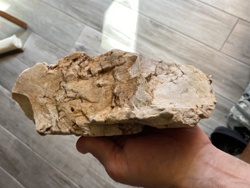
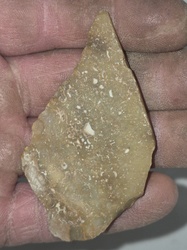
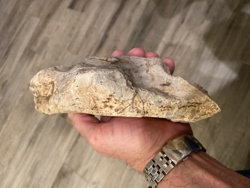
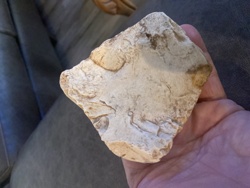
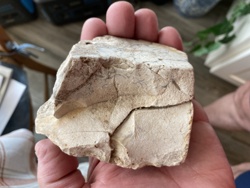
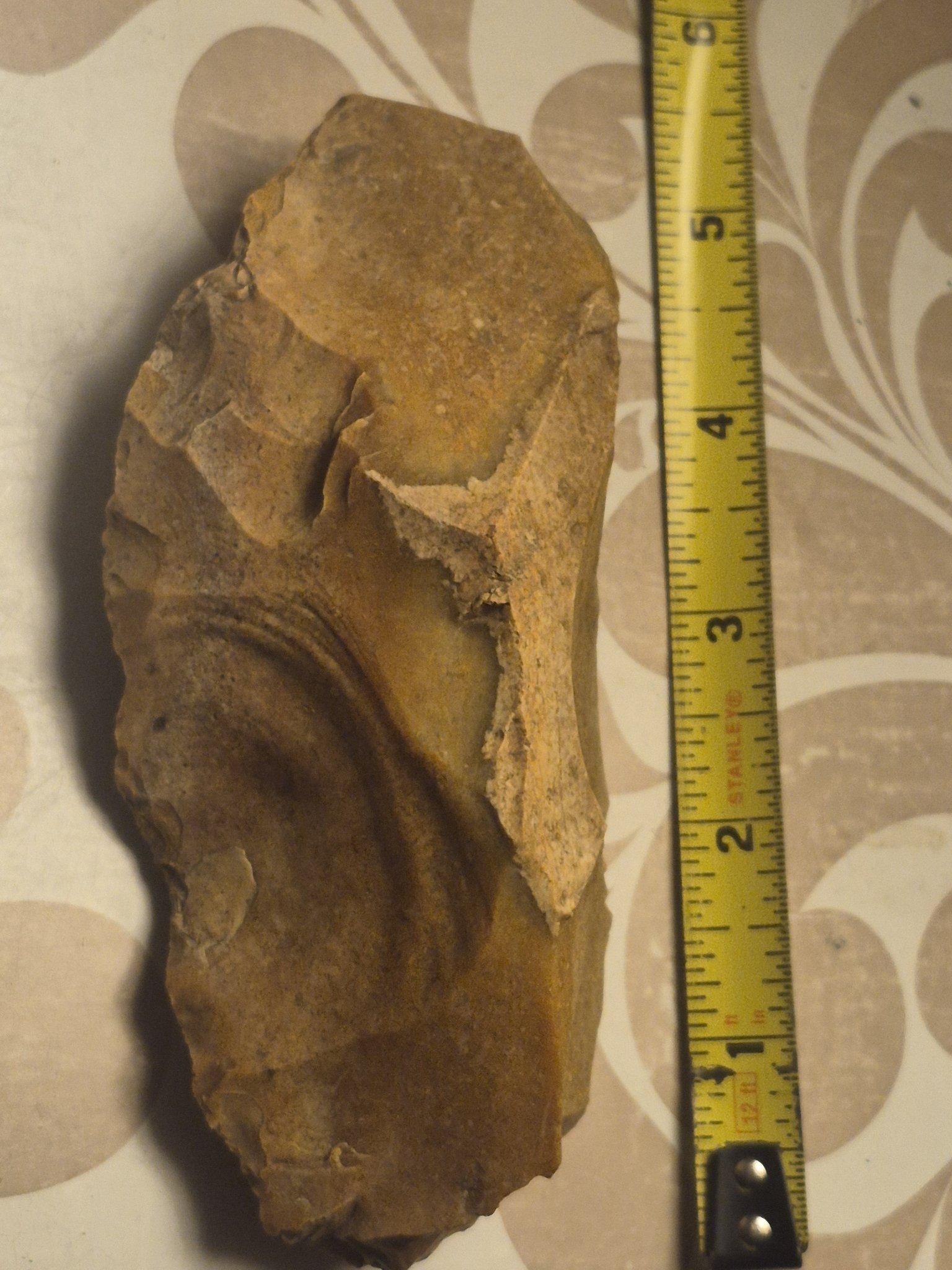
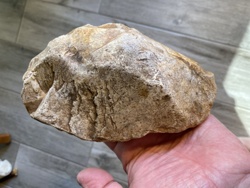
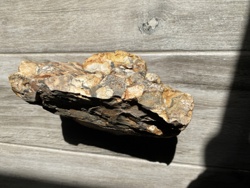
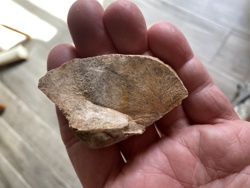
This item is a lithic artifact, likely a hand axe or a large core tool, measuring approximately 5.5 inches in length as indicated by the adjacent Stanley yellow measuring tape. The material appears to be a variety of chert or flint, characterized by its tan to ochre-brown coloration. The item exhibits clear evidence of conchoidal fracturing across its surface, a tell-tale sign of intentional knapping rather than natural weathering. Large flake scars are visible, particularly around the perimeter, used to create a sharpened but robust edge suited for chopping or scraping tasks. There is a prominent area of lighter, textured material on the right side, which likely represents the remaining cortex of the original nodule. The overall construction is thick and bifacial in nature, though it retains an asymmetrical, somewhat crude form typical of early Neolithic or Paleolithic stone tool technology. The condition shows significant age with a dull, weathered patina and some minor recent chips along the edges that expose the slightly more lustrous inner stone. No formal maker's marks or signatures are present, as is standard for prehistoric stone tools. Its craftsmanship indicates a utilitarian purpose, focusing on durability and edge geometry over aesthetic refinement.
Estimated Value

$150 - $250

Basic Information

Category

Archeological Artifacts

Appraised On

May 11, 2026

Estimated Value

$150 - $250

Item Description

This item is a lithic artifact, likely a hand axe or a large core tool, measuring approximately 5.5 inches in length as indicated by the adjacent Stanley yellow measuring tape. The material appears to be a variety of chert or flint, characterized by its tan to ochre-brown coloration. The item exhibits clear evidence of conchoidal fracturing across its surface, a tell-tale sign of intentional knapping rather than natural weathering. Large flake scars are visible, particularly around the perimeter, used to create a sharpened but robust edge suited for chopping or scraping tasks. There is a prominent area of lighter, textured material on the right side, which likely represents the remaining cortex of the original nodule. The overall construction is thick and bifacial in nature, though it retains an asymmetrical, somewhat crude form typical of early Neolithic or Paleolithic stone tool technology. The condition shows significant age with a dull, weathered patina and some minor recent chips along the edges that expose the slightly more lustrous inner stone. No formal maker's marks or signatures are present, as is standard for prehistoric stone tools. Its craftsmanship indicates a utilitarian purpose, focusing on durability and edge geometry over aesthetic refinement.
Get Your Items Appraised

Instant estimates of your treasures with AI-powered instant appraisals

Browse More Appraisals