AI Appraisal Estimate

AI-generated estimates · not official valuations

From the user

What was submitted

Photo and notes provided by the user — not generated by AI

Submitted item photo
Submitted photo · June 25, 2026

User's notes

No additional notes provided.

AI analysis below

AI appraisal

AI analysis & estimate

AI-Generated · Verify before acting

Everything below is generated by AI for informational purposes only. AI can make mistakes — the AI may misidentify items or misattribute them (artist, maker, brand, designer, origin, era). This is not an official valuation and should not be used for insurance, sale, tax, estate, legal, or lending purposes — or any decision requiring a certified appraisal. It is not an authoritative claim about any person, brand, or rights holder — do not share or rely on it as a factual statement about a third party. Always consult qualified professionals before making financial decisions.

Read the full disclaimer

AI Identification

·Not independently authenticated·Verify before acting

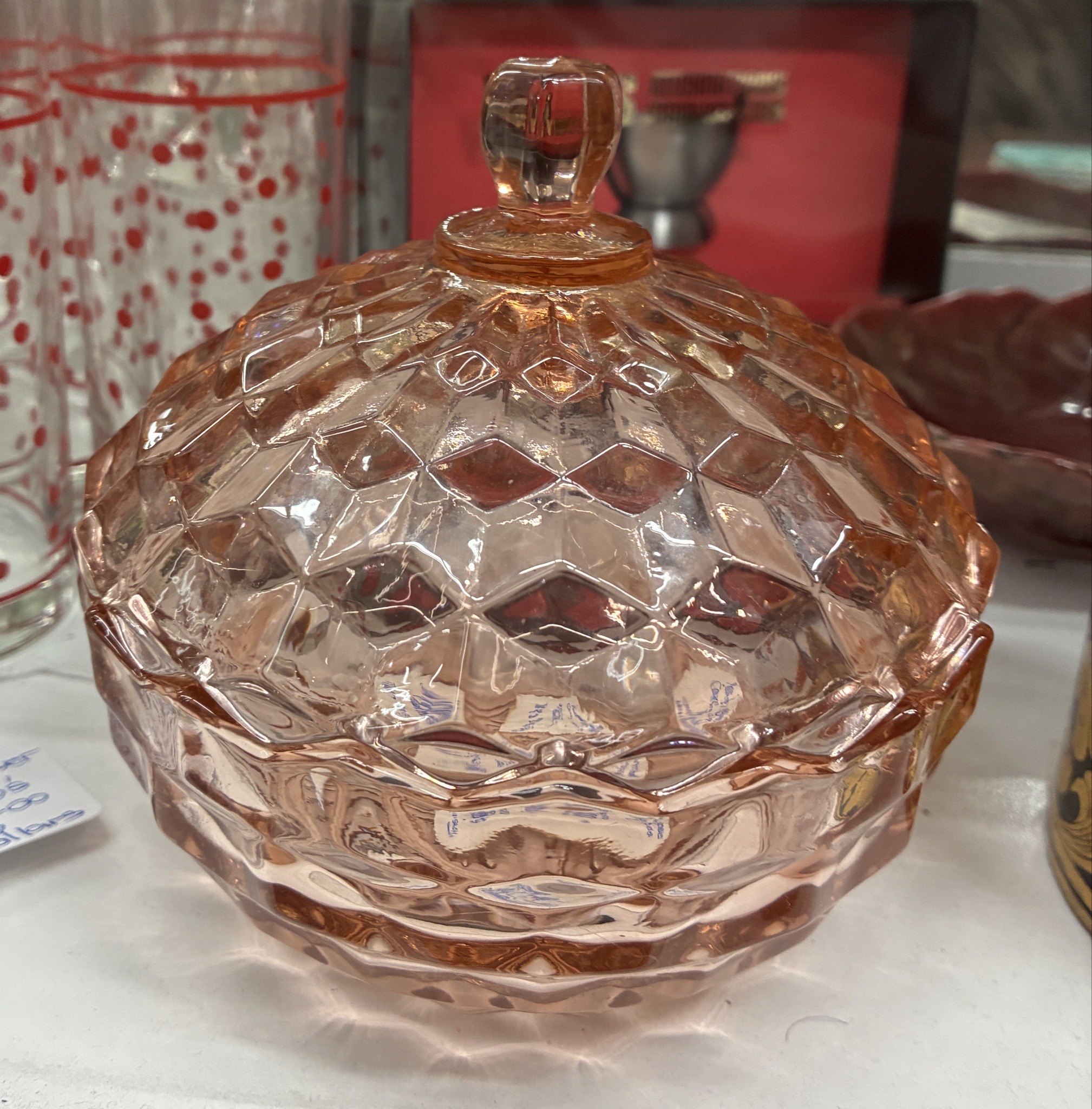
Pink Depression Glass Diamond Point Covered Candy Dish

Vintage Glassware and Collectibles

AI Estimated Value

·Not an official valuation·Verify before acting

$35.00 - $55.00

As of June 25, 2026

AI Item Analysis

·AI can make mistakes·Verify before acting
This item is a two-piece covered candy dish or powder jar crafted from translucent pink pressed glass, frequently referred to as 'Depression Glass.' The dish features an intensive 'Diamond Point' or pineapple-style geometric pattern, consisting of raised, faceted diamond shapes that create a high-relief textured surface designed to catch and refract light. It is approximately 5 to 6 inches in diameter and stands roughly 5 inches tall including the lid. The lid is domed with a matching pattern and is crowned by a smooth, rounded glass finial. The base is shallow with an upright rim that fits the lid securely. Chromatically, the glass showcases a delicate peachy-pink or 'blush' tone, characteristic of mass-produced glassware from the 1930s-1940s. The condition appears excellent with no visible chips or cracks along the faceted edges, which are often prone to flea bites. The glass retains a high luster with no signs of 'sickness' or clouding. While no specific maker's mark is visible, the craftsmanship and design are consistent with major American glass manufacturers of the era such as Indiana Glass, Federal Glass, or Anchor Hocking. The weighted base and precise molding indicate a high-quality production run for American kitchenware of the early 20th century.
AI Appraisal Report

·AI can make mistakes·Verify before acting
I have examined the images of this Pink Depression Glass Diamond Point Covered Candy Dish. The piece exhibits the classic 'blush' hue and geometric relief characteristic of American pressed glass from the Depression era (late 1920s-1940s). The Diamond Point pattern, utilized extensively by manufacturers like Indiana Glass (Pattern #100), remains a staple for collectors of mid-century kitchenware. Visually, the specimen appears to be in excellent condition; the facets of the diamond points are sharp, and the finial lacks the typical chips found on utilitarian pieces of this age. The luster of the glass suggests it has been well-maintained without exposure to harsh dishwasher detergents, which causes glass 'sickness.' The market for common Depression-era patterns is stable but saturated. While pink is a desirable color, the Diamond Point pattern was mass-produced, making this a 'common' find rather than a rarity. Comparables for similar lidded dishes in this size range typically sell in the $30 to $60 bracket at antique malls and online auctions. Value is bolstered by the presence of the original lid, as these components were frequently separated or broken. Note that this appraisal is based on photographic evidence only. A physical inspection is required to check for 'flea bites' along the inner rim and to verify the weight/resonance of the glass to rule out modern reproductions (re-issues). Authentic period glass will often show characteristic straw marks or small cooling bubbles. No scientific testing was performed; final authentication would require UV light testing to observe fluorescence patterns consistent with period-specific glass batches.

Get your items appraised

Instant estimates of your treasures with AI-powered appraisals

Browse More Appraisals