Japanese Kutani Ware Miniature Vase
Antique Asian Ceramics

Japanese Kutani Ware Miniature Vase

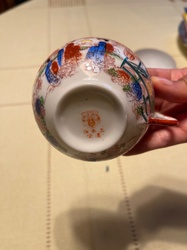
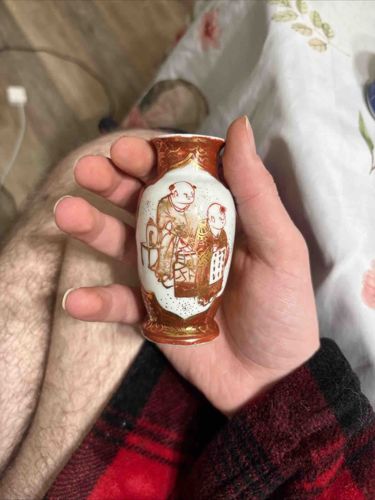
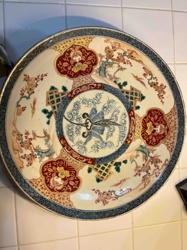
This is a miniature Japanese porcelain vase, likely dating from the Meiji (1868-1912) to the early Taisho period (1912-1926). Measuring approximately 3-4 inches in height, the vessel features the classic 'Aka-e' (red painting) style characteristic of Kutani ware. The primary body displays a creamy white glaze used as a canvas for a figural scene depicting two scholarly or immortal-like figures in traditional robes, rendered with fine iron-red linework and gold gilt accents. The neck and foot of the vase are decorated with a dense iron-red ground overlaid with intricate gold scrolling floral or 'karakusa' patterns. The construction is fine-walled porcelain with a flaring rim and a weighted base. Notable condition issues include visible wear to the gold gilding on the high-contact areas of the rim and base, as well as several small chips or 'nibbles' along the bottom edge of the footring. There is light surface soiling and minor pitting in the glaze, which is common for export ceramics of this age. The craftsmanship suggests a hand-painted piece intended for the export market, showcasing traditional Japanese aesthetic motifs popular during the late 19th and early 20th centuries.
Estimated Value

$150 - $250

Basic Information

Category

Antique Asian Ceramics

Appraised On

March 16, 2026

Estimated Value

$150 - $250

Item Description

This is a miniature Japanese porcelain vase, likely dating from the Meiji (1868-1912) to the early Taisho period (1912-1926). Measuring approximately 3-4 inches in height, the vessel features the classic 'Aka-e' (red painting) style characteristic of Kutani ware. The primary body displays a creamy white glaze used as a canvas for a figural scene depicting two scholarly or immortal-like figures in traditional robes, rendered with fine iron-red linework and gold gilt accents. The neck and foot of the vase are decorated with a dense iron-red ground overlaid with intricate gold scrolling floral or 'karakusa' patterns. The construction is fine-walled porcelain with a flaring rim and a weighted base. Notable condition issues include visible wear to the gold gilding on the high-contact areas of the rim and base, as well as several small chips or 'nibbles' along the bottom edge of the footring. There is light surface soiling and minor pitting in the glaze, which is common for export ceramics of this age. The craftsmanship suggests a hand-painted piece intended for the export market, showcasing traditional Japanese aesthetic motifs popular during the late 19th and early 20th centuries.
Get Your Items Appraised

Instant estimates of your treasures with AI-powered instant appraisals

Browse More Appraisals