Chinese Cast Bronze Sculpture of Qin Gao Riding a Carp
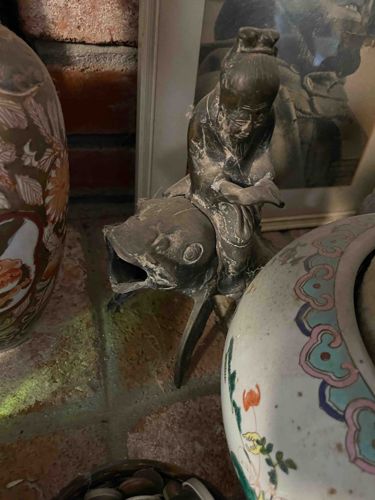
This is a cast bronze figurine depicting the Chinese immortal Qin Gao (Kinko in Japanese mythology) riding a giant carp. The sculpture appears to follow the traditional iconography where the figure is shown seated atop the fish as it leaps through waves. The piece is constructed from a dark-patinated bronze alloy, showing significant age-related wear. Physically, the figure is rendered in a seated posture with flowing robes and a scholar's cap, while the fish is depicted with large, bulging eyes and an open, hollow mouth, which suggests the piece might have originally functioned as a censer or incense burner, allowing smoke to escape through the carp's mouth. The surface is characterized by a heavy, encrusted patina with visible deposits of dust and oxidation, particularly in the recessed areas of the casting and the fish's scales. There are notable condition issues including surface abrasions, white mineral-like deposits, and potential pitting consistent with long-term exposure to the elements or humidity. The style is representative of late Qing Dynasty or early 20th-century Chinese decorative arts, reflecting a folk-style casting quality rather than high imperial court standards. No maker's marks are visible in the current view, but the casting exhibits moderate detail in the facial features and the texture of the hair and robes.
AI-Generated Appraisal Disclaimer
Estimated Value
$400 - $600
Basic Information
Category
Asian Antiques & Decorative Arts
Appraised On
December 18, 2025
Estimated Value
$400 - $600
Item Description
This is a cast bronze figurine depicting the Chinese immortal Qin Gao (Kinko in Japanese mythology) riding a giant carp. The sculpture appears to follow the traditional iconography where the figure is shown seated atop the fish as it leaps through waves. The piece is constructed from a dark-patinated bronze alloy, showing significant age-related wear. Physically, the figure is rendered in a seated posture with flowing robes and a scholar's cap, while the fish is depicted with large, bulging eyes and an open, hollow mouth, which suggests the piece might have originally functioned as a censer or incense burner, allowing smoke to escape through the carp's mouth. The surface is characterized by a heavy, encrusted patina with visible deposits of dust and oxidation, particularly in the recessed areas of the casting and the fish's scales. There are notable condition issues including surface abrasions, white mineral-like deposits, and potential pitting consistent with long-term exposure to the elements or humidity. The style is representative of late Qing Dynasty or early 20th-century Chinese decorative arts, reflecting a folk-style casting quality rather than high imperial court standards. No maker's marks are visible in the current view, but the casting exhibits moderate detail in the facial features and the texture of the hair and robes.
Get Your Items Appraised
Instant estimates of your treasures with AI-powered instant appraisals