AI Appraisal Estimate

AI-generated estimates · not official valuations

From the user

What was submitted

Photo and notes provided by the user — not generated by AI

Submitted item photo
Submitted photo · June 19, 2026

User's notes

No additional notes provided.

AI analysis below

AI appraisal

AI analysis & estimate

AI-Generated · Verify before acting

Everything below is generated by AI for informational purposes only. AI can make mistakes — the AI may misidentify items or misattribute them (artist, maker, brand, designer, origin, era). This is not an official valuation and should not be used for insurance, sale, tax, estate, legal, or lending purposes — or any decision requiring a certified appraisal. It is not an authoritative claim about any person, brand, or rights holder — do not share or rely on it as a factual statement about a third party. Always consult qualified professionals before making financial decisions.

Read the full disclaimer

AI Identification

·Not independently authenticated·Verify before acting

Yixing Zisha Clay Teapot Lid

Antique/Vintage Ceramics and Tea Equipment

AI Estimated Value

·Not an official valuation·Verify before acting

$45.00 - $75.00

As of June 19, 2026

AI Item Analysis

·AI can make mistakes·Verify before acting
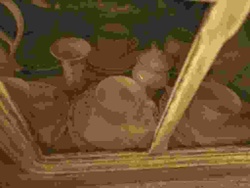
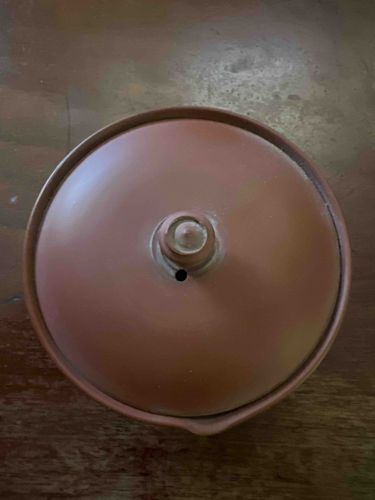
This item is a circular lid for a Yixing zisha (purple clay) teapot, viewed from an overhead perspective. It is crafted from a matte, unglazed terracotta-colored clay, characteristic of stoneware from the Yixing region of China, likely Zini or Hongni clay. The lid features a rounded, dome-like profile with a central finial or knob used for lifting. Adjacent to the finial is a small, precision-drilled steam ventilation hole, which is a standard functional element in traditional Chinese tea vessels. The craftsmanship appears to be hand-finished, evidenced by the clean transitions around the finial base. The color is a consistent reddish-brown with a subtle, silky texture suggesting high-fired stoneware. Regarding condition, there is visible residue or light-colored mineral buildup around the base of the finial and along the outer rim, likely from dried tea or water minerals. A minor chip or irregularity is visible on the very tip of the finial. There are no large cracks visible, though the surface shows a slight patina from handling. While the specific maker cannot be identified from the top view alone (as marks are typically on the underside), the style suggests a late 20th-century to contemporary production intended for Yuzhou or Gongfu tea ceremonies.
AI Appraisal Report

·AI can make mistakes·Verify before acting
I have conducted a visual examination of the Yixing Zisha clay teapot lid. The item exhibits the characteristic 'pear-skin' texture and deep reddish-brown hue typical of high-quality Zini or Hongni clay. The craftsmanship indicates a factory-produced or semi-handcrafted origin from the late 20th century. While the clay quality is respectable, the lid is currently separated from its body, which fundamentally limits its value to that of a replacement part or a study piece. Condition-wise, I noted mineral calcification around the finial and rim, suggesting significant use in Gongfu tea service. There is a minor chip on the finial tip and slight surface abrasions, which are common for utility-grade stoneware but detract from 'collector grade' status. The market for orphaned Yixing components is niche; most value in Zisha ware is derived from the integrity of the full set (pot and lid) and the artist’s 'Chop' (seal), which is not visible here. Comparables for individual mid-to-late 20th-century lids range from $30 to $100 depending on the clay purity. Rarity is low, as this form follows standard 'Xi Shi' or 'Level' pot geometries produced in high volumes. Limitations: This appraisal is based strictly on visual data. To fully authenticate the clay's purity and the piece's age, I would need to perform a tactile inspection to feel the 'sandiness' of the clay, an acoustic test (listening for the metallic ring of high-fired stoneware), and an inspection of the underside for the maker's mark. Provenance documentation or a matching teapot body would significantly increase the valuation.

Get your items appraised

Instant estimates of your treasures with AI-powered appraisals

Browse More Appraisals