Pair of Satsuma Moriage Immortals Vases
Asian Antiques / Japanese Ceramics

Pair of Satsuma Moriage Immortals Vases

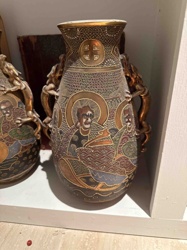
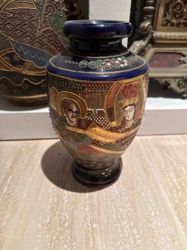
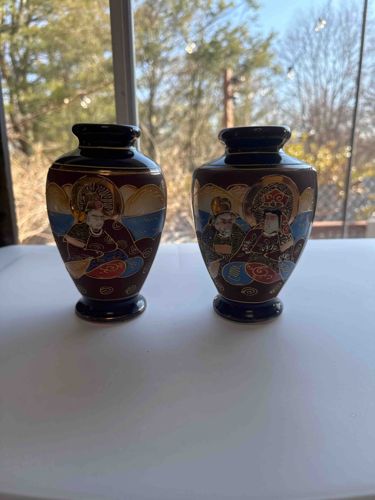
This is a matching pair of small Japanese porcelain vases, likely dating from the mid-20th century (Showa period). Each vase measures approximately 4 to 5 inches in height and features a classic ovoid shape with a flared rim and pedestal base. The body is finished in a deep matte chocolate brown or black glaze, providing a high-contrast backdrop for the 'moriage' technique—a process where slip is built up to create a raised, three-dimensional effect. The central motif depicts Buddhist figures, likely Luohan or Arhats (known as Rakans in Japan), identified by their golden halos, traditional robes, and stern expressions. The color palette includes vibrant primary tones of blue, red, and gold, accented with heavy gilding that outlines the mountains in the background and the intricate patterns on the garments. The texture of the moriage is highly tactile, featuring swirls, dots, and thick lines. Regarding condition, there is visible wear to the gold leaf detailing along the rims and bases, which is typical for items of this age. One vase shows slight fading in the blue pigments compared to its pair. No major chips or cracks are visible in the photograph, though fine crazing of the glaze may be present upon closer inspection. These vases were popular export items, often mass-produced but still showcasing significant hand-decoration skills. They represent a style of ceramic art that became globally popularized in the post-WWII era.
Estimated Value

$45.00 - $75.00

Basic Information

Category

Asian Antiques / Japanese Ceramics

Appraised On

March 25, 2026

Estimated Value

$45.00 - $75.00

Item Description

This is a matching pair of small Japanese porcelain vases, likely dating from the mid-20th century (Showa period). Each vase measures approximately 4 to 5 inches in height and features a classic ovoid shape with a flared rim and pedestal base. The body is finished in a deep matte chocolate brown or black glaze, providing a high-contrast backdrop for the 'moriage' technique—a process where slip is built up to create a raised, three-dimensional effect. The central motif depicts Buddhist figures, likely Luohan or Arhats (known as Rakans in Japan), identified by their golden halos, traditional robes, and stern expressions. The color palette includes vibrant primary tones of blue, red, and gold, accented with heavy gilding that outlines the mountains in the background and the intricate patterns on the garments. The texture of the moriage is highly tactile, featuring swirls, dots, and thick lines. Regarding condition, there is visible wear to the gold leaf detailing along the rims and bases, which is typical for items of this age. One vase shows slight fading in the blue pigments compared to its pair. No major chips or cracks are visible in the photograph, though fine crazing of the glaze may be present upon closer inspection. These vases were popular export items, often mass-produced but still showcasing significant hand-decoration skills. They represent a style of ceramic art that became globally popularized in the post-WWII era.

Get Your Items Appraised

Instant estimates of your treasures with AI-powered instant appraisals

Browse More Appraisals