AI Appraisal Estimate

AI-generated estimates · not official valuations

From the user

What was submitted

Photo and notes provided by the user — not generated by AI

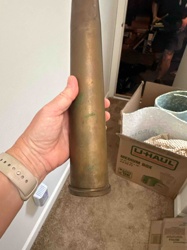
Submitted item photo
Submitted photo · June 10, 2026

User's notes

No additional notes provided.

AI analysis below

AI appraisal

AI analysis & estimate

AI-Generated · Verify before acting

Everything below is generated by AI for informational purposes only. AI can make mistakes — the AI may misidentify items or misattribute them (artist, maker, brand, designer, origin, era). This is not an official valuation and should not be used for insurance, sale, tax, estate, legal, or lending purposes — or any decision requiring a certified appraisal. It is not an authoritative claim about any person, brand, or rights holder — do not share or rely on it as a factual statement about a third party. Always consult qualified professionals before making financial decisions.

Read the full disclaimer

AI Identification

·Not independently authenticated·Verify before acting

Antiaircraft or Anti-tank Artillery Projectile

Military Memorabilia / Ordnance

AI Estimated Value

·Not an official valuation·Verify before acting

$40 - $75

As of June 10, 2026

AI Item Analysis

·AI can make mistakes·Verify before acting
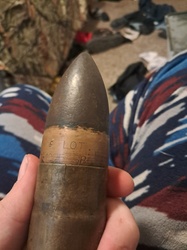
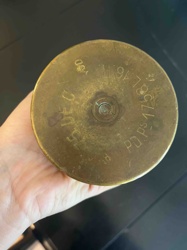
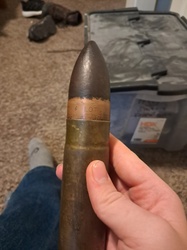
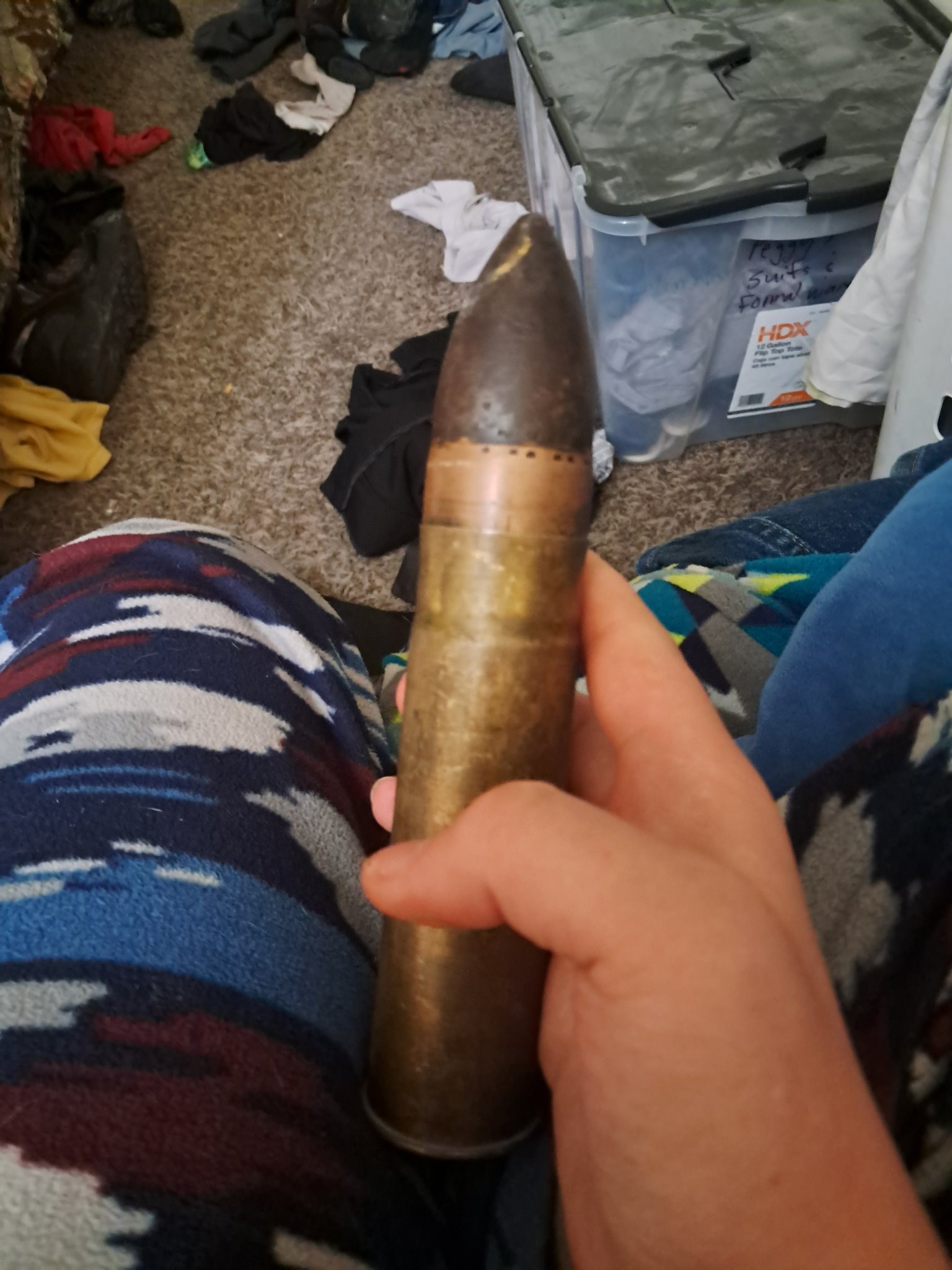
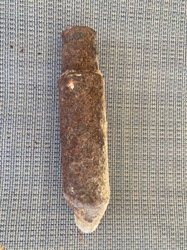
This item is a discarded artillery shell, likely from a 37mm or similar small-caliber autocannon or anti-tank gun, dating from the mid-20th century (World War II era). The object consists of a brass cartridge case and a steel projectile (warhead). The brass casing exhibits a heavy, darkened patina and significant surface oxidation typical for its age. The projectile itself appears to be made of solid steel or iron with a blunt, conical nose, showing signs of severe pitting and localized corrosion. Notably, the copper driving band (the ring near the base of the projectile) shows clear 'rifling' marks, which indicate the shell has been fired through a rifled barrel. The presence of these marks, combined with the fact that the projectile is still seated in a casing, suggests this could be a 'reconstructed' relic or, more dangerously, a misfired round (dud) that failed to separate. The overall condition is aged with visible wear, scratches, and a lack of original polished finish. There are no clearly visible maker's marks or stamps in the current photo, though these would typically be found on the base of the brass casing. Caution: Because the projectile is still attached to the casing, it cannot be visually confirmed as inert, posing a significant safety risk until verified by a professional.
AI Appraisal Report

·AI can make mistakes·Verify before acting
I have carefully examined the provided images of this small-caliber artillery projectile, likely a 37mm variation from the WWII era. My visual assessment confirms the item is a 'relic condition' piece. The brass casing shows heavy oxidation and a darkened patina, while the steel projectile exhibits deep pitting and loss of surface integrity. The most critical observation is the presence of rifling marks on the copper rotating band; this proves the projectile has passed through a barrel. Because the projectile is seated in the casing despite being fired, this is either a 'battlefield find' where the shell was re-inserted for display, or a hazardous misfired round. Market demand for such ordnances remains steady among history enthusiasts, but the condition here is poor. High-quality, inert, and polished examples with clear headstamps can fetch over $150. However, the severe corrosion and the safety uncertainty regarding the filler (HE versus solid shot) significantly suppress the value of this specific unit. Potential buyers would view this as a low-tier relic. Furthermore, without a physical inspection or an EOD (Explosive Ordnance Disposal) certification of 'Inert/Empty,' this item cannot be legally or safely sold on most public platforms. A physical examination is required to check for primer percussion and the presence of a fuse. My appraisal assumes the item is inert; if it contains active explosives, it is a liability rather than a collectible. Verification of stamps on the base would be necessary to confirm the exact year and factory of origin, which could marginally improve the value if linked to a specific rare conflict locus.

Get your items appraised

Instant estimates of your treasures with AI-powered appraisals

Browse More Appraisals