Vintage Aquamarine and Silver-Toned Solitaire Ring
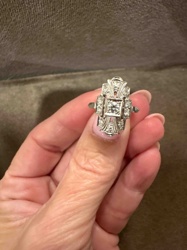
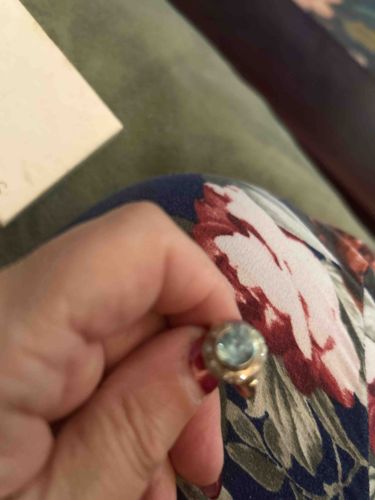
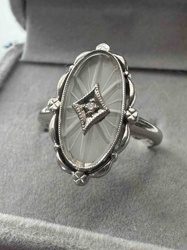
This item is an estate-style solitaire ring featuring a round-cut, light blue gemstone, likely an aquamarine or a blue topaz. The stone is held in a substantial bezel setting that appears to be made of a silver-toned metal, possibly sterling silver based on the slight tarnishing and patina visible around the setting edges. The ring's design is characterized by a high-profile gallery and a tapered band. Physically, the piece shows signs of age-related wear, including soft micro-scratches on the metal surface and a dulling of the polish, which is consistent with mid-20th-century vintage jewelry. The central stone exhibits high clarity and a pale, watery hue, though a slight abrasion is visible on the table facet. The craftsmanship suggests a commercial production rather than a bespoke artisan piece, as evidenced by the thickness of the shank and the utilitarian nature of the setting. There are no visible maker's marks or hallmarks from this angle, but the overall aesthetic aligns with late Art Deco or early Retro periods (circa 1940s-1950s). The condition is fair to good, with the stone remaining securely set despite the expected signs of surface oxidation and historical use.
AI-Generated Appraisal Disclaimer
Estimated Value
$40-80
Basic Information
Category
Antique and Vintage Jewelry
Appraised On
February 1, 2026
Estimated Value
$40-80
Item Description
This item is an estate-style solitaire ring featuring a round-cut, light blue gemstone, likely an aquamarine or a blue topaz. The stone is held in a substantial bezel setting that appears to be made of a silver-toned metal, possibly sterling silver based on the slight tarnishing and patina visible around the setting edges. The ring's design is characterized by a high-profile gallery and a tapered band. Physically, the piece shows signs of age-related wear, including soft micro-scratches on the metal surface and a dulling of the polish, which is consistent with mid-20th-century vintage jewelry. The central stone exhibits high clarity and a pale, watery hue, though a slight abrasion is visible on the table facet. The craftsmanship suggests a commercial production rather than a bespoke artisan piece, as evidenced by the thickness of the shank and the utilitarian nature of the setting. There are no visible maker's marks or hallmarks from this angle, but the overall aesthetic aligns with late Art Deco or early Retro periods (circa 1940s-1950s). The condition is fair to good, with the stone remaining securely set despite the expected signs of surface oxidation and historical use.
Get Your Items Appraised
Instant estimates of your treasures with AI-powered instant appraisals