Pressed Glass Knife Rest
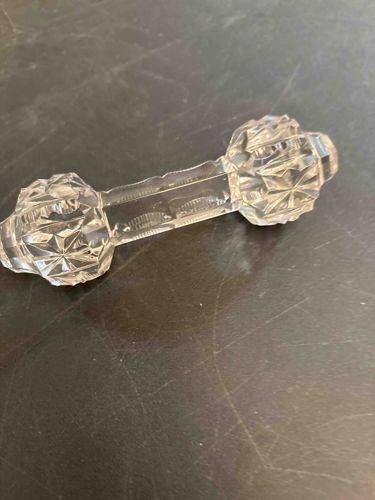
This object is a vintage clear glass knife rest, a functional dining accessory designed to prevent used cutlery from touching and staining a tablecloth. The piece features a central horizontal bar connecting two multi-faceted, starburst-patterned end supports. It is constructed from colorless pressed glass, measuring approximately 3 to 4 inches in length. The ends are shaped into heavy, geometric knobs with deep-cut facets that catch and refract light, a style reminiscent of early to mid-20th-century American or European glassware. The central shank exhibits a rectangular cross-section with subtle serration or molding along the top edge to provide traction for a knife blade. In terms of condition, the glass appears bright with no major yellowing or cloudiness, though minor flea bites or edge wear consistent with utility and age may be present upon microscopic inspection. The craftsmanship indicates a mass-produced but high-quality pressed mold process, likely dating from the 1920s to the 1950s. While the user provided context regarding a 'Yellow rose of capodimonte,' this specific image displays a clear glass utensil rest, not porcelain, and contains no visible maker's marks or signatures.
AI-Generated Appraisal Disclaimer
Estimated Value
$10 - $25
Basic Information
Category
Vintage Tableware & Glassware
Appraised On
December 20, 2025
Estimated Value
$10 - $25
Additional Details Provided By Owner
User Provided Information
Yellow rose of capodimonte
Item Description
This object is a vintage clear glass knife rest, a functional dining accessory designed to prevent used cutlery from touching and staining a tablecloth. The piece features a central horizontal bar connecting two multi-faceted, starburst-patterned end supports. It is constructed from colorless pressed glass, measuring approximately 3 to 4 inches in length. The ends are shaped into heavy, geometric knobs with deep-cut facets that catch and refract light, a style reminiscent of early to mid-20th-century American or European glassware. The central shank exhibits a rectangular cross-section with subtle serration or molding along the top edge to provide traction for a knife blade. In terms of condition, the glass appears bright with no major yellowing or cloudiness, though minor flea bites or edge wear consistent with utility and age may be present upon microscopic inspection. The craftsmanship indicates a mass-produced but high-quality pressed mold process, likely dating from the 1920s to the 1950s. While the user provided context regarding a 'Yellow rose of capodimonte,' this specific image displays a clear glass utensil rest, not porcelain, and contains no visible maker's marks or signatures.
Related Tags
Get Your Items Appraised
Instant estimates of your treasures with AI-powered instant appraisals