Series 1957A $1 Silver Certificate
Numismatics / US Paper Currency

Series 1957A $1 Silver Certificate

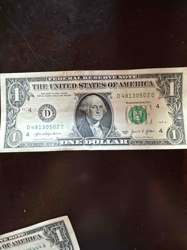
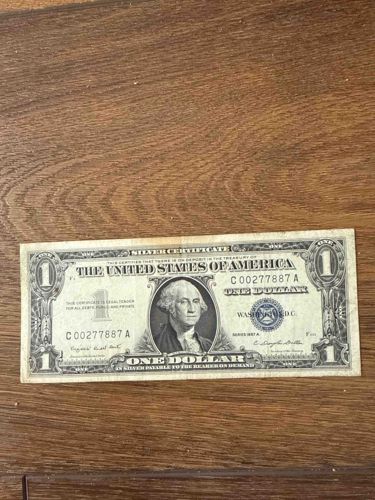
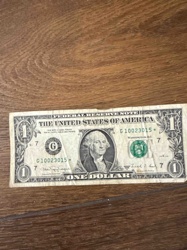
This is a United States $1 Silver Certificate, specifically the Series of 1957A. It features the standard portrait of George Washington in the center, characteristic of mid-20th-century small-size US currency. Unlike modern Federal Reserve notes, this bill displays a distinctive blue Treasury seal on the right side and blue serial numbers (C00277887A). The top border clearly states 'SILVER CERTIFICATE,' and the bottom edge includes the historic obligation 'IN SILVER PAYABLE TO THE BEARER ON DEMAND.' The note shows signatures from Elizabeth Rudel Smith (Treasurer of the United States) and C. Douglas Dillon (Secretary of the Treasury). Physically, the bill exhibits signs of circulation, including vertical and horizontal folds, rounding of the corners, and minor edge wear. The paper appears slightly toned or discolored from age, which is typical for a note of this era. There are visible creases and some surface dirt, but the central imagery and denominations remain clear. This specific series was produced during a transition period in American monetary history before the redemption for silver bullion was halted in the 1960s.
Estimated Value

$2.50 - $4.00

Basic Information

Category

Numismatics / US Paper Currency

Appraised On

March 28, 2026

Estimated Value

$2.50 - $4.00

Item Description

This is a United States $1 Silver Certificate, specifically the Series of 1957A. It features the standard portrait of George Washington in the center, characteristic of mid-20th-century small-size US currency. Unlike modern Federal Reserve notes, this bill displays a distinctive blue Treasury seal on the right side and blue serial numbers (C00277887A). The top border clearly states 'SILVER CERTIFICATE,' and the bottom edge includes the historic obligation 'IN SILVER PAYABLE TO THE BEARER ON DEMAND.' The note shows signatures from Elizabeth Rudel Smith (Treasurer of the United States) and C. Douglas Dillon (Secretary of the Treasury). Physically, the bill exhibits signs of circulation, including vertical and horizontal folds, rounding of the corners, and minor edge wear. The paper appears slightly toned or discolored from age, which is typical for a note of this era. There are visible creases and some surface dirt, but the central imagery and denominations remain clear. This specific series was produced during a transition period in American monetary history before the redemption for silver bullion was halted in the 1960s.
Get Your Items Appraised

Instant estimates of your treasures with AI-powered instant appraisals

Browse More Appraisals