Lower Paleolithic Style Chert Biface Hand Axe / Scraper
Prehistoric Artifacts / Archaeological Lithics

Lower Paleolithic Style Chert Biface Hand Axe / Scraper

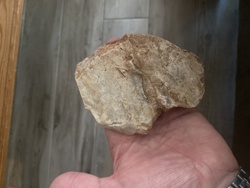
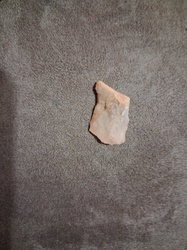
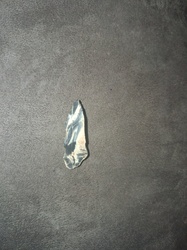
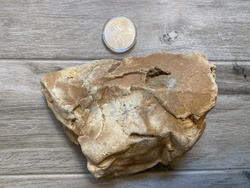
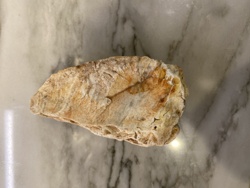
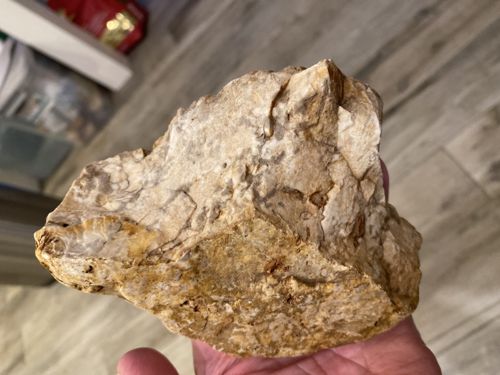
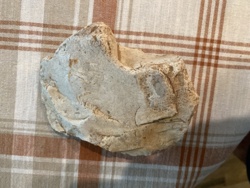
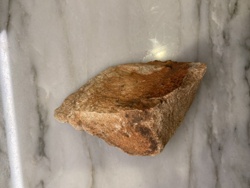
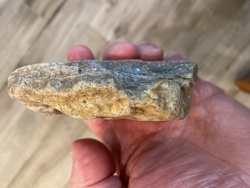
This is a substantial lithic artifact measuring approximately 5 inches by 4.25 inches, identified as a bifacial hand axe or scraper tool. The item is fashionedจาก chert, a hard, sedimentary cryptocrystalline rock. Physically, the object displays a mix of earthy tones, including tans, beiges, and deeper ochre or mustard yellows, likely resulting from long-term mineral staining or soil patina common in older lithic specimens. The construction shows evidence of percussion flaking, with visible flake scars across both faces (bifacial) to create a tapered, workable edge. The shape is roughly cordiform or ovate, with a thicker butt end for gripping and a thinned edge for cutting or scraping. Notable features include the uneven, weathered surface texture and the presence of conchoidal fracture patterns characteristic of intentional knapping rather than natural water wear. Regarding condition, the artifact shows significant age with softened edges and surface pitting. No modern crush marks or fresh breaks are visible, suggesting these modifications are ancient. While no maker's marks exist on prehistoric tools, the style is consistent with Lower Paleolithic technology, characterized by core-tool production. The craftsmanship is functional rather than refined, indicating a utilitarian purpose for local butchery or hide processing in the Guthrie, Oklahoma region.
Estimated Value

$40 - $75

Basic Information

Category

Prehistoric Artifacts / Archaeological Lithics

Appraised On

February 19, 2026

Estimated Value

$40 - $75

Additional Details Provided By Owner

User Provided Information

Lower Paleolithic chert bi face hand axe scraper tool found in Guthrie OK measuring 5" x 4.25

Item Description

This is a substantial lithic artifact measuring approximately 5 inches by 4.25 inches, identified as a bifacial hand axe or scraper tool. The item is fashionedจาก chert, a hard, sedimentary cryptocrystalline rock. Physically, the object displays a mix of earthy tones, including tans, beiges, and deeper ochre or mustard yellows, likely resulting from long-term mineral staining or soil patina common in older lithic specimens. The construction shows evidence of percussion flaking, with visible flake scars across both faces (bifacial) to create a tapered, workable edge. The shape is roughly cordiform or ovate, with a thicker butt end for gripping and a thinned edge for cutting or scraping. Notable features include the uneven, weathered surface texture and the presence of conchoidal fracture patterns characteristic of intentional knapping rather than natural water wear. Regarding condition, the artifact shows significant age with softened edges and surface pitting. No modern crush marks or fresh breaks are visible, suggesting these modifications are ancient. While no maker's marks exist on prehistoric tools, the style is consistent with Lower Paleolithic technology, characterized by core-tool production. The craftsmanship is functional rather than refined, indicating a utilitarian purpose for local butchery or hide processing in the Guthrie, Oklahoma region.
Get Your Items Appraised

Instant estimates of your treasures with AI-powered instant appraisals

Browse More Appraisals