AI Appraisal Estimate

AI-generated estimates · not official valuations

From the user

What was submitted

Photo and notes provided by the user — not generated by AI

Submitted item photo
Submitted photo · June 12, 2026

User's notes

Colonial fish knife

AI analysis below

AI appraisal

AI analysis & estimate

AI-Generated · Verify before acting

Everything below is generated by AI for informational purposes only. AI can make mistakes — the AI may misidentify items or misattribute them (artist, maker, brand, designer, origin, era). This is not an official valuation and should not be used for insurance, sale, tax, estate, legal, or lending purposes — or any decision requiring a certified appraisal. It is not an authoritative claim about any person, brand, or rights holder — do not share or rely on it as a factual statement about a third party. Always consult qualified professionals before making financial decisions.

Note

This analysis also relies on unverified notes provided by the user, which may be incomplete or inaccurate and could affect the result.

Read the full disclaimer

AI Identification

·Not independently authenticated·Verify before acting

Colonial Fish Knife

Pocket Knife / Utility Knife

AI Estimated Value

·Not an official valuation·Verify before acting

$15-30

As of June 12, 2026

AI Item Analysis

·AI can make mistakes·Verify before acting
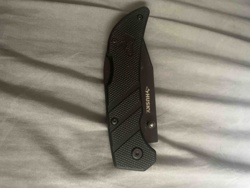
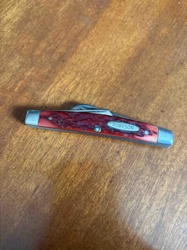
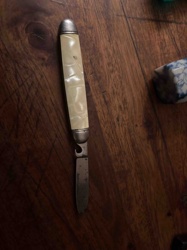
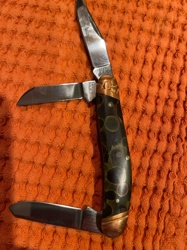
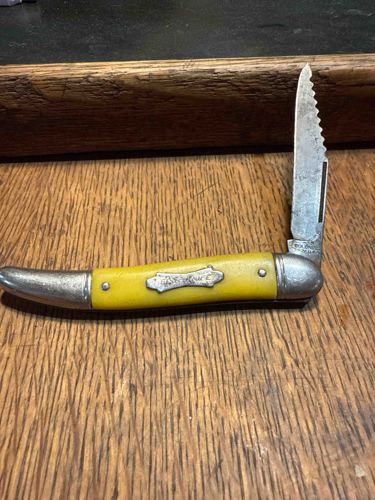
This is a vintage Colonial fish knife, characterized by its bright yellow handle and single serrated blade. The knife features a handle made of what appears to be a durable plastic or celluloid material in a vibrant, almost neon yellow color. The handle is accented by two polished metal bolsters, one at each end, and three metal pins securing the handle scales. A distinguishing feature is an embossed metal shield-shaped inlay on one side of the handle, which appears to bear text, possibly "FISH KNIFE" or a similar designation, though it is somewhat worn. The blade, extended in the image, is made of a silver-toned metal, likely stainless steel or carbon steel with a silvery patina. It is approximately 2-3 inches in length and features a prominent serrated edge along the majority of its length, ending in a pointed tip, characteristic of a fish scaler or gutting blade. The tang of the blade shows signs of a maker's mark or stamp, though it is not clearly legible from the image, possibly showing "COLONIAL U.S.A." The overall condition of the knife suggests age and use, with some visible scratches and minor tarnishing on the metal components. The yellow handle exhibits minor surface wear but retains its original color. The craftsmanship appears to be industrial in nature, consistent with mass-produced utility knives from the mid-20th century. This specific style of knife, often referred to as a 'fish knife' or 'fishing knife,' was popular for outdoorsmen and anglers.
AI Appraisal Report

·AI can make mistakes·Verify before acting
Upon examining the provided images and description, I have appraised this vintage Colonial fish knife. The knife appears to be an authentic, mass-produced utility item from the mid-20th century. Its condition is what I would classify as 'used' or 'fair,' showing signs of regular use and age, including scratches on the handle, wear on the shield inlay, and some tarnishing on the metal components. The vibrant yellow celluloid or plastic handle is a notable feature, and while showing surface wear, it appears to be free of major cracks or chips. The blade's serrations and tip seem intact. Colonial was a prolific American manufacturer, and this fish knife model was a common tool for anglers. Consequently, these knives are not particularly rare. The current market for vintage, user-grade pocket knives of this type is modest. Comparable sales for similar Colonial fish knives in similar condition typically fall within a consistent and accessible price range. The primary value driver is its function as a collectible piece of Americana and a nostalgic item for fishing enthusiasts, rather than its material composition or rarity. The 'USA' stamp, if confirmed, adds to its appeal for some collectors. A key factor limiting its value is its mass-produced nature and used condition. For a definitive authentication, an in-person examination would be required to clearly read the tang stamp, assess the blade's sharpness and snap, check for handle material degradation, and confirm the originality of all parts. Without this physical inspection, my assessment of authenticity is based solely on the visual characteristics presented.

Get your items appraised

Instant estimates of your treasures with AI-powered appraisals

Browse More Appraisals