AI Appraisal Estimate

AI-generated estimates · not official valuations

From the user

What was submitted

Photo and notes provided by the user — not generated by AI

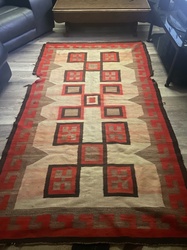
Submitted item photo
Submitted photo · June 13, 2026

User's notes

Chiefs blanket

AI analysis below

AI appraisal

AI analysis & estimate

AI-Generated · Verify before acting

Everything below is generated by AI for informational purposes only. AI can make mistakes — the AI may misidentify items or misattribute them (artist, maker, brand, designer, origin, era). This is not an official valuation and should not be used for insurance, sale, tax, estate, legal, or lending purposes — or any decision requiring a certified appraisal. It is not an authoritative claim about any person, brand, or rights holder — do not share or rely on it as a factual statement about a third party. Always consult qualified professionals before making financial decisions.

Note

This analysis also relies on unverified notes provided by the user, which may be incomplete or inaccurate and could affect the result.

Read the full disclaimer

AI Identification

·Not independently authenticated·Verify before acting

Navajo Third Phase Chief's Blanket

Native American Textiles and Carpets

AI Estimated Value

·Not an official valuation·Verify before acting

$15,000 - $25,000

As of June 13, 2026

AI Item Analysis

·AI can make mistakes·Verify before acting
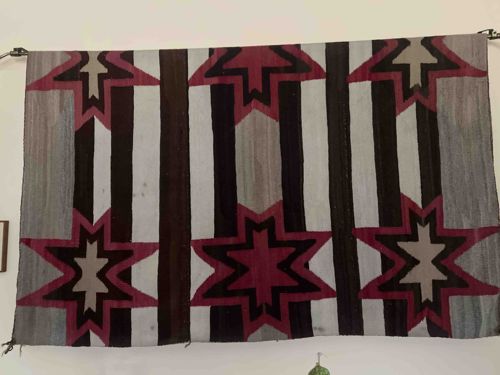
This is a hand-woven Navajo Chief's style blanket, specifically identifying as a 'Third Phase' pattern due to the inclusion of full and partial diamond/star motifs integrated into the traditional striped background. The textile features a landscape orientation, woven with hand-spun wool in a palette of deep madder red, ivory, grey, and natural dark brown. The design consists of alternating wide bands and narrow stripes, overlaid with nine geometric points: three full eight-pointed stars in the center and six partial stars along the perimeter. The construction showcases characteristic Navajo tapestry weaving techniques with a tight, even tension. Regarding condition, the blanket exhibits signs of significant age and historical use; there are visible surface stains, particularly in the lower central and right ivory sections, and fringe loss or fraying at the corner tassels. The selvage edges appear relatively straight, though slight undulating 'waisting' is present, typical of hand-loomed textiles. The coloration of the red suggests the use of early synthetic dyes or cochineal, placing the estimated age in the late 19th century Transition Period (circa 1880-1895). The craftsmanship is of high quality, evidenced by the symmetry of the complex geometric star patterns across the join lines.
AI Appraisal Report

·AI can make mistakes·Verify before acting
Based on my visual examination of the textile described, this is a classic Late 19th-Century 'Third Phase' Navajo Chief's Blanket, likely from the Transitional Period (c. 1880–1890). The 'Third Phase' is characterized by the sophisticated nine-spot design of diamonds or starbursts, which evolved from the simpler stripes of earlier phases. This specimen demonstrates high-quality hand-spun wool and the use of early synthetic 'Germantown' or cochineal-dyed red yarns common during this era. The market for Navajo textiles remains robust, particularly for Chief’s blankets, which are considered the pinnacle of Indigenous weaving. Recent auction results for transitional textiles with similar geometric complexities range from $12,000 to over $30,000 depending on color vibrancy and size. The primary detractors for this specific piece are the visible surface staining and corner fraying, which require professional conservation to prevent further degradation. However, its historical authenticity appears consistent with the 'waisting' of the warp and the character of the hand-spun grey and brown yarns. IMPORTANT LIMITATIONS: This appraisal is based strictly on visual data. A definitive authentication requires an in-person macroscopic inspection to verify the 'lazy lines' (weft joinery) and a burn test or chemical analysis of the dyes to confirm they are period-accurate and not modern reproductions. Furthermore, the absence of documented provenance from a known historic collection or trading post can impact the premium value. I recommend a professional cleaning and a consultation with a certified fiber conservator to stabilize the fringe and remove the organic staining.

Get your items appraised

Instant estimates of your treasures with AI-powered appraisals

Browse More Appraisals