Early American Pattern Glass (EAPG) 'Three Face' Covered Biscuit Jar
Antique Glassware / EAPG (Early American Pattern Glass)

Early American Pattern Glass (EAPG) 'Three Face' Covered Biscuit Jar

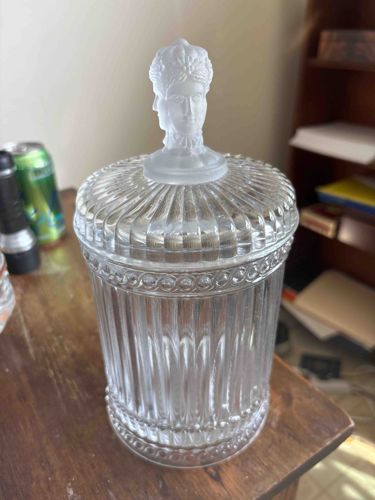
This is an exquisite example of Early American Pattern Glass (EAPG) featuring the highly collectible 'Three Face' pattern, originally designed by George Duncan & Sons in the late 1870s. The item is a cylindrical biscuit or apothecary jar made of high-clarity pressed glass. The body of the jar is decorated with deep vertical fluting and a coin-dot or beaded trim at the shoulder and base. The most prominent feature is the frosted (acid-etched) figural finial on the lid, which depicts three identical, serene female faces (often interpreted as The Three Graces or a depiction of the 'Sisters' of the Victorian era) joined at the back in a classical style. The frosted texture of the lid finial contrasts beautifully with the transparent, brilliantly polished glass of the jar's body. The glass exhibits the characteristic weight and slight greyish cast typical of antique flint glass or leaded compositions from the late Victorian era. There are no visible chips or cracks in the primary body, though minor flea bites may exist on the inner rim where the lid meets the jar. The molding is crisp, indicating an early press of the mold, which is a key indicator of quality for this specific pattern. This piece dates approximately to 1878-1885, representing a peak period of American glass manufacturing craftsmanship and aesthetic design.
Estimated Value

$450 - $650

Basic Information

Category

Antique Glassware / EAPG (Early American Pattern Glass)

Appraised On

March 10, 2026

Estimated Value

$450 - $650

Item Description

This is an exquisite example of Early American Pattern Glass (EAPG) featuring the highly collectible 'Three Face' pattern, originally designed by George Duncan & Sons in the late 1870s. The item is a cylindrical biscuit or apothecary jar made of high-clarity pressed glass. The body of the jar is decorated with deep vertical fluting and a coin-dot or beaded trim at the shoulder and base. The most prominent feature is the frosted (acid-etched) figural finial on the lid, which depicts three identical, serene female faces (often interpreted as The Three Graces or a depiction of the 'Sisters' of the Victorian era) joined at the back in a classical style. The frosted texture of the lid finial contrasts beautifully with the transparent, brilliantly polished glass of the jar's body. The glass exhibits the characteristic weight and slight greyish cast typical of antique flint glass or leaded compositions from the late Victorian era. There are no visible chips or cracks in the primary body, though minor flea bites may exist on the inner rim where the lid meets the jar. The molding is crisp, indicating an early press of the mold, which is a key indicator of quality for this specific pattern. This piece dates approximately to 1878-1885, representing a peak period of American glass manufacturing craftsmanship and aesthetic design.
Get Your Items Appraised

Instant estimates of your treasures with AI-powered instant appraisals

Browse More Appraisals