AI Appraisal Estimate

AI-generated estimates · not official valuations

From the user

What was submitted

Photo and notes provided by the user — not generated by AI

Submitted item photo
Submitted photo · June 15, 2026

User's notes

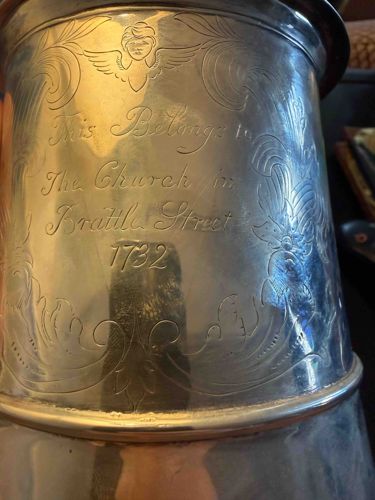
Tankard from Andrew Tyler, 800 grams. Belonged to the church of battle street

AI analysis below

AI appraisal

AI analysis & estimate

AI-Generated · Verify before acting

Everything below is generated by AI for informational purposes only. AI can make mistakes — the AI may misidentify items or misattribute them (artist, maker, brand, designer, origin, era). This is not an official valuation and should not be used for insurance, sale, tax, estate, legal, or lending purposes — or any decision requiring a certified appraisal. It is not an authoritative claim about any person, brand, or rights holder — do not share or rely on it as a factual statement about a third party. Always consult qualified professionals before making financial decisions.

Note

This analysis also relies on unverified notes provided by the user, which may be incomplete or inaccurate and could affect the result.

Read the full disclaimer

AI Identification

·Not independently authenticated·Verify before acting

Early American Coin Silver Tankard by Andrew Tyler for Brattle Street Church

Antique American Silver / Ecclesiastical Metalware

AI Estimated Value

·Not an official valuation·Verify before acting

$60,000 - $80,000

As of June 15, 2026

AI Item Analysis

·AI can make mistakes·Verify before acting
This is a significant early 18th-century American silver tankard, crafted by the renowned Boston silversmith Andrew Tyler (1692–1741). The vessel is constructed of heavy-gauge coin or sterling silver, weighing approximately 800 grams. It features a tapered cylindrical body with a stepped base molding. The face of the tankard is expertly engraved in a period copperplate script with the provenance: 'This Belongs to The Church in Brattle Street 1732.' Above the inscription is a detailed winged cherub or 'soul effigy' common in colonial iconography, framed by elegant acanthus leaf and floral scrollwork. The engraving is deep and exhibits the stylistic flourishes typical of high-quality Boston metalwork from the 1730s. The surface shows a rich, authentic patina with minor surface abrasions, micro-scratching, and some visible tarnishing consistent with age and liturgical use. The craftsmanship reflects the superior skill of Tyler, who was a prominent figure in colonial Massachusetts. The historical association with the Brattle Street Church (founded in Boston in 1698) adds exceptional provenance and cultural value to this piece of colonial ecclesiastical silver. The overall condition appears excellent for its age, retaining sharp definition in the engraved decorative elements.
AI Appraisal Report

·AI can make mistakes·Verify before acting
This Andrew Tyler tankard is an exceptional example of early 18th-century American silver. The 1732 engraving dedicated to the Brattle Street Church places it squarely within the 'Golden Age' of Boston silversmithing. Based on visual inspection, the form is correct for the 1730s, featuring the characteristic tapered body and stepped base molding. The weight of 800 grams indicates a substantial gauge of metal, typical for ecclesiastical commissions. The engraving quality—particularly the soul effigy and copperplate script—appears consistent with period work, showing appropriate wear patterns within the cuts that suggest authenticity rather than a later addition. The patina is rich, with expected micro-scratching consistent with centuries of handling. However, authentication via images alone has strict limitations. To confirm this valuation, I would require physical inspection to verify Andrew Tyler's maker's mark (usually 'AT' with a crown or similar variation) and check for master repairs or alterations to the handle or hinge, which often suffer stress over three centuries. I must also verify the provenance through Brattle Street Church inventories, as many such pieces were deaccessioned in the 19th or early 20th centuries. Provenance is the primary value driver here; ecclesiastical silver with a direct link to a major Boston institution commands a significant premium over domestic pieces. Similar works by contemporaries like Paul Revere Sr. or Jacob Hurd have achieved six-figure sums at auction, though the market has softened slightly from its mid-2000s peak. Assuming the marks are genuine and the provenance holds, this is a museum-quality object.

Get your items appraised

Instant estimates of your treasures with AI-powered appraisals

Browse More Appraisals