Sino-Tibetan Bronze Figure of a Bodhisattva
Asian Antiques / Buddhist Sculpture

Sino-Tibetan Bronze Figure of a Bodhisattva

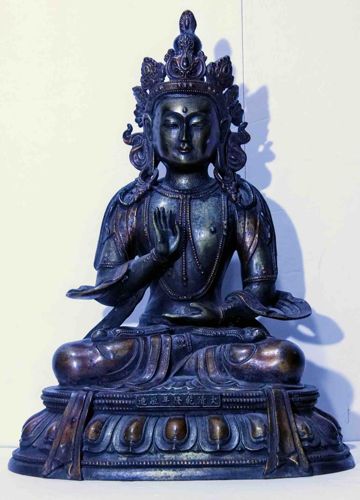
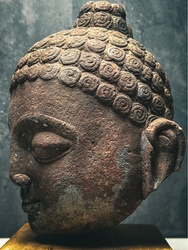
This is a substantial cast bronze sculpture of a seated Bodhisattva, likely depicting Avalokiteshvara or a similar celestial being in the Sino-Tibetan tradition. The figure is depicted in a seated dhyanasana (lotus) position atop a double-lotus pedestal base. The deity's right hand is raised in the abhaya mudra (gesture of fearlessness), while the left hand rests in the lap in the varada mudra. The figure possesses a serene facial expression with downcast eyes, an urna on the forehead, and elongated earlobes adorned with heavy earrings. It wears an elaborate five-pointed foliage crown and is draped in intricate jewelry, including jeweled necklaces and armlets, reflecting high-quality craftsmanship characteristic of the Ming or Qing dynastic styles. The bronze surface displays a deep, multi-toned chocolate brown patina with distinct areas of reddish-verdigris oxidation and lighter wear on the high points of the lotus petals and knees. A notable feature is the horizontal band of Chinese characters inscribed across the front of the lotus base, suggesting a dedicatory or imperial-style marking often seen in the 17th to 19th centuries. The casting is crisp, showing fine detail in the flowing scarves and beaded adornments, with no immediate signs of modern repairs, though there is a heavy accumulation of dust and aged patina consistent with historical indoor display.

Estimated Value

$4,000 - $6,000

Basic Information

Category

Asian Antiques / Buddhist Sculpture

Appraised On

March 23, 2026

Estimated Value

$4,000 - $6,000

Additional Details Provided By Owner

User Provided Information

Unknown Artist, Untitled original artwork

Item Description

This is a substantial cast bronze sculpture of a seated Bodhisattva, likely depicting Avalokiteshvara or a similar celestial being in the Sino-Tibetan tradition. The figure is depicted in a seated dhyanasana (lotus) position atop a double-lotus pedestal base. The deity's right hand is raised in the abhaya mudra (gesture of fearlessness), while the left hand rests in the lap in the varada mudra. The figure possesses a serene facial expression with downcast eyes, an urna on the forehead, and elongated earlobes adorned with heavy earrings. It wears an elaborate five-pointed foliage crown and is draped in intricate jewelry, including jeweled necklaces and armlets, reflecting high-quality craftsmanship characteristic of the Ming or Qing dynastic styles. The bronze surface displays a deep, multi-toned chocolate brown patina with distinct areas of reddish-verdigris oxidation and lighter wear on the high points of the lotus petals and knees. A notable feature is the horizontal band of Chinese characters inscribed across the front of the lotus base, suggesting a dedicatory or imperial-style marking often seen in the 17th to 19th centuries. The casting is crisp, showing fine detail in the flowing scarves and beaded adornments, with no immediate signs of modern repairs, though there is a heavy accumulation of dust and aged patina consistent with historical indoor display.
Get Your Items Appraised

Instant estimates of your treasures with AI-powered instant appraisals

Browse More Appraisals