AI Appraisal Estimate

AI-generated estimates · not official valuations

From the user

What was submitted

Photo and notes provided by the user — not generated by AI

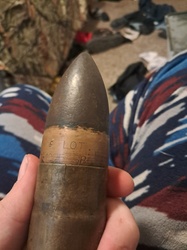
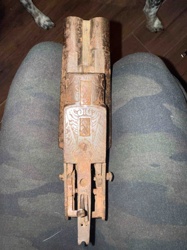
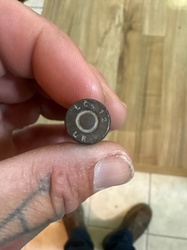
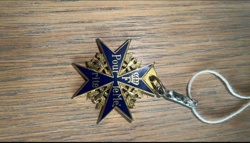
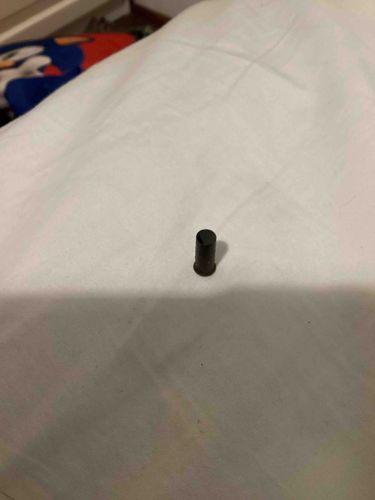
Submitted item photo
Submitted photo · June 15, 2026

User's notes

22. Caliper bullet casing from around the 19th century.

AI analysis below

AI appraisal

AI analysis & estimate

AI-Generated · Verify before acting

Everything below is generated by AI for informational purposes only. AI can make mistakes — the AI may misidentify items or misattribute them (artist, maker, brand, designer, origin, era). This is not an official valuation and should not be used for insurance, sale, tax, estate, legal, or lending purposes — or any decision requiring a certified appraisal. It is not an authoritative claim about any person, brand, or rights holder — do not share or rely on it as a factual statement about a third party. Always consult qualified professionals before making financial decisions.

Note

This analysis also relies on unverified notes provided by the user, which may be incomplete or inaccurate and could affect the result.

Read the full disclaimer

AI Identification

·Not independently authenticated·Verify before acting

Vintage .22 Caliber Rimfire Spent Cartridge Casing

Militaria / Ammunition Relics

AI Estimated Value

·Not an official valuation·Verify before acting

$1.00 - $5.00

As of June 15, 2026

AI Item Analysis

·AI can make mistakes·Verify before acting
This item is a spent metallic cartridge casing, specifically a .22 caliber rimfire variety, commonly associated with the late 19th or early 20th century. Construction is of a thin-walled copper or brass alloy, which has developed a significant dark, aged patina and superficial oxidation over time, obscuring the original metallic luster. The casing features a characteristic rimmed base, a hallmark of rimfire ammunition where the firing pin strikes the edge of the base to ignite the primer. It appears to be a 'Long' or 'Long Rifle' variant based on the length of the cylinder. The mouth of the casing is open and shows slight irregularities, common when a bullet has been discharged. While no specific maker's marks or headstamps are clearly visible in the provided image due to the distance and surface tarnish, these small cases were widely manufactured by companies like Winchester or Remington-UMC during the post-Civil War era. The condition is consistent with an excavated find or long-stored relic, showing no structural crushing but significant environmental surface wear. The piece represents the evolution of metallic cartridges from the mid-1800s onward, shifting away from paper or skin cartridges to modern self-contained metallic units.
AI Appraisal Report

·AI can make mistakes·Verify before acting
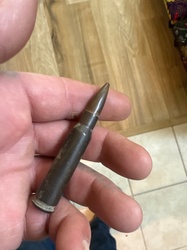
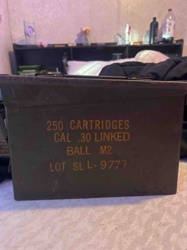
I have carefully examined the provided images of this .22 caliber rimfire spent cartridge casing. Based on the dark oxidation and surface patina, the item appears consistent with late 19th-century copper-alloy manufacturing. The presence of a rimmed base confirms its rimfire designation, and the cylindrical length suggests a '.22 Long' variant, popularized in the 1870s. While the casing is physically intact and lacks structural crushing, the significant environmental tarnish is typical of an excavated 'battlefield' find or a long-neglected relic. Authenticity appears genuine for the period, as there is little incentive to counterfeit such common mass-produced ammunition. However, the market for individual spent casings of this era is extremely limited. Millions of these were produced by manufacturers like Winchester and Remington-UMC; without a rare headstamp (such as a 'H' for Henry or specific Civil War-era marks), the value is primarily nominal or historical. Collectors typically seek pristine, un-fired cartridges or specific groupings with documented provenance. The lack of a visible headstamp due to oxidation significantly prevents a premium valuation. While this provides an evocative link to 19th-century firearms evolution, it is considered a 'drawer find' with minimal liquidity. A definitive authentication would require a physical cleaning of the base (headstamp) to identify the specific manufacturer and a metallurgical analysis to confirm the alloy composition. Without clear provenance linking it to a specific historical event or person, the value remains at a baseline relic level.

Get your items appraised

Instant estimates of your treasures with AI-powered appraisals

Browse More Appraisals