AI Appraisal Estimate

AI-generated estimates · not official valuations

From the user

What was submitted

Photo and notes provided by the user — not generated by AI

Submitted item photo
Submitted photo · May 24, 2026

User's notes

No additional notes provided.

AI analysis below

AI appraisal

AI analysis & estimate

AI-Generated · Verify before acting

Everything below is generated by AI for informational purposes only. AI can make mistakes — the AI may misidentify items or misattribute them (artist, maker, brand, designer, origin, era). This is not an official valuation and should not be used for insurance, sale, tax, estate, legal, or lending purposes — or any decision requiring a certified appraisal. It is not an authoritative claim about any person, brand, or rights holder — do not share or rely on it as a factual statement about a third party. Always consult qualified professionals before making financial decisions.

Read the full disclaimer

AI Identification

·Not independently authenticated·Verify before acting

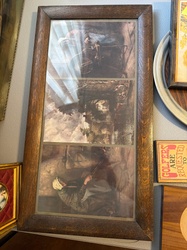
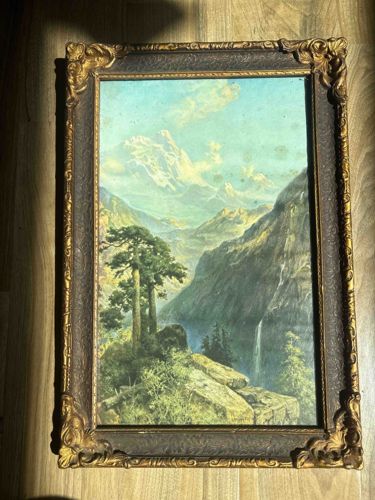
Early 20th Century Alpine Landscape Chromolithograph in Victorian-Style Gilt Frame

Fine Art - Prints & Frames

AI Estimated Value

·Not an official valuation·Verify before acting

$150 - $250

As of May 24, 2026

AI Item Analysis

·AI can make mistakes·Verify before acting
This item is an antique or vintage landscape print, likely a chromolithograph, housed in a highly decorative composite frame. The artwork depicts a dramatic Alpine or mountain scene, featuring snowy peaks in the background, a steep valley with a waterfall on the right, and prominent pine trees in the foreground. The color palette consists of soft blues, greens, and yellows, common in mass-produced prints from the late 19th to early 20th centuries. The frame is a notable feature, exhibiting a dark, textured cove with ornate gilded scrolling acanthus leaf casting at the corners and a beaded inner border. Structurally, the frame appears to be wood with molded plaster or composition ornamentation. Notable scale is rectangular and vertical. Regarding condition, there are visible age spots and foxing throughout the upper sky area of the print, along with slight discoloration or yellowing consistent with acidic paper backing over time. The frame shows some minor wear to the gilding, revealing a darker underlayer (bolus), but the decorative corners remain largely intact. No artist signature is clearly visible at this resolution, though many such works were based on paintings by European landscape artists and distributed by companies like the Taber-Prang Art Co. or similar period publishers.
AI Appraisal Report

·AI can make mistakes·Verify before acting
I have carefully examined the visual evidence of this early 20th-century Alpine landscape chromolithograph. The work is characteristic of decorative mass-produced prints from the period 1890–1920. The Victorian-style frame is particularly noteworthy, featuring ornate composition casting of acanthus motifs and a beaded liner. Upon inspection, the print displays significant foxing and acidity-related yellowing in the sky, which are common results of time and non-archival backing. The frame shows minor losses and 'rubbing' to the gilding, revealing the underlying bole, though it remains structurally sound. The market for these specific landscape prints remains stable but modest, with value primarily driven by the decorative appeal of the frame rather than the print itself. Similar items, often produced by firms like Taber-Prang, frequently appear in local estate auctions and antique malls. Rarity is low, as these were produced in large editions to satisfy middle-class interior design trends of the era. Factors impacting value include the visible foxing, which necessitates professional cleaning and hampers the piece's desirability for collectors. Conversely, the intact ornate frame provides the bulk of the current market value. Please note that this appraisal is based on digital images alone; a definitive authentication of the print medium and a physical assessment of the frame's stability (checking for 'lifting' or brittle composite) cannot be fully realized without in-person inspection. For a full authentication, I would recommend a raking light examination to confirm the printing technique and inspection of the reverse to identify any publisher marks or provenance labels.

Get your items appraised

Instant estimates of your treasures with AI-powered appraisals

Browse More Appraisals