Phra Luang Phor Thuad Powder Amulet
Religious Artifacts / Southeast Asian Amulets

Phra Luang Phor Thuad Powder Amulet

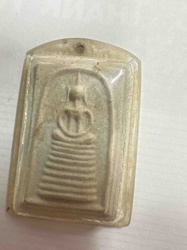
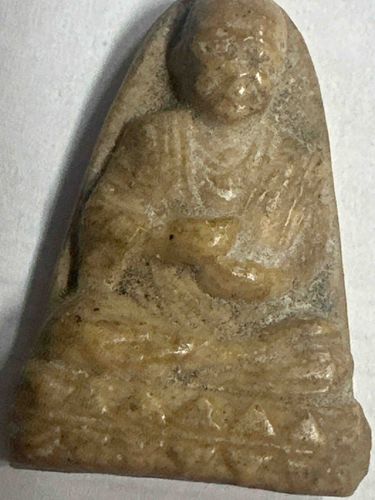
This is a Thai Buddhist votive tablet, or amulet, depicting the esteemed monk Luang Phor Thuad. The object is fashioned in an arched, shield-like shape (Taro shape) and is composed of a pressed sacred powder mixture, likely including 'Nua Wan' (herbal powders) and earth, following the traditional 2497 B.E. (1954) style. The color is a muted beige-tan with visible dark mineral inclusions and specks throughout the matrix. The monk is portrayed in a seated meditation posture (Samadhi) atop a tiered pedestal decorated with lotus petal motifs. Physically, the piece shows significant softening of the original sharp molded features, indicative of natural surface wear and historical handling. The patina is waxy and dense, suggesting an age likely dating to the mid-to-late 20th century. There are no clear maker's marks visible on the front, which is common for these pressed clay/herb artifacts. Condition issues include minor abrasions on the high-relief points of the face and knees, as well as accumulated 'krap' (calcium or surface residue) in the recessed areas of the robes. The craftsmanship reflects traditional temple-press techniques, where the spiritual value of the ingredients is as significant as the visual representation of the monk.
Estimated Value

$600 - $1,200

Basic Information

Category

Religious Artifacts / Southeast Asian Amulets

Appraised On

January 11, 2026

Estimated Value

$600 - $1,200

Item Description

This is a Thai Buddhist votive tablet, or amulet, depicting the esteemed monk Luang Phor Thuad. The object is fashioned in an arched, shield-like shape (Taro shape) and is composed of a pressed sacred powder mixture, likely including 'Nua Wan' (herbal powders) and earth, following the traditional 2497 B.E. (1954) style. The color is a muted beige-tan with visible dark mineral inclusions and specks throughout the matrix. The monk is portrayed in a seated meditation posture (Samadhi) atop a tiered pedestal decorated with lotus petal motifs. Physically, the piece shows significant softening of the original sharp molded features, indicative of natural surface wear and historical handling. The patina is waxy and dense, suggesting an age likely dating to the mid-to-late 20th century. There are no clear maker's marks visible on the front, which is common for these pressed clay/herb artifacts. Condition issues include minor abrasions on the high-relief points of the face and knees, as well as accumulated 'krap' (calcium or surface residue) in the recessed areas of the robes. The craftsmanship reflects traditional temple-press techniques, where the spiritual value of the ingredients is as significant as the visual representation of the monk.
Get Your Items Appraised

Instant estimates of your treasures with AI-powered instant appraisals

Browse More Appraisals