AI Appraisal Estimate

AI-generated estimates · not official valuations

From the user

What was submitted

Photo and notes provided by the user — not generated by AI

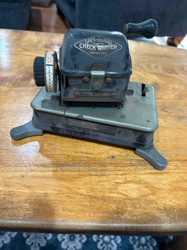
Submitted item photo
Submitted photo · May 26, 2026

User's notes

No additional notes provided.

AI analysis below

AI appraisal

AI analysis & estimate

AI-Generated · Verify before acting

Everything below is generated by AI for informational purposes only. AI can make mistakes — the AI may misidentify items or misattribute them (artist, maker, brand, designer, origin, era). This is not an official valuation and should not be used for insurance, sale, tax, estate, legal, or lending purposes — or any decision requiring a certified appraisal. It is not an authoritative claim about any person, brand, or rights holder — do not share or rely on it as a factual statement about a third party. Always consult qualified professionals before making financial decisions.

Read the full disclaimer

AI Identification

·Not independently authenticated·Verify before acting

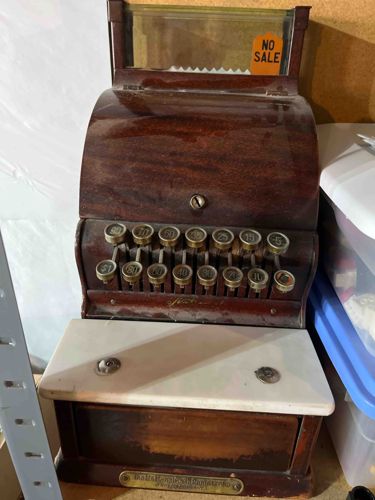
National Cash Register Model 313 Wood Finish 'Candy Store' Register

Antique Business Machinery & Office Equipment

AI Estimated Value

·Not an official valuation·Verify before acting

$450 - $650

As of May 26, 2026

AI Item Analysis

·AI can make mistakes·Verify before acting
This is an early 20th-century mechanical cash register, likely a National Cash Register (NCR) Model 313, finished in a distinctive mahogany wood-grain enamel over cast iron. The unit features two rows of circular 'press-down' keys with brass bezels and white/black numerical inserts, ranging from 5 cents up to 1 dollar. Above the hood, a glass-encased display shows a 'NO SALE' flag, which pops up upon operation. The machine is characterized by its curved top hood, key lock on the faceplate, and a classic white marble coin slab located above the cash drawer. The bottom plate bears a brass manufacturer's tag, typically identifying it as a National Cash Register Co. product from Dayton, Ohio. The finish shows significant signs of age and wear, including heavy surface scuffing, loss of luster, and a high-traffic patina on the metal casing and key levers. The wood-grain paint has darkened and suffered from environmental exposure, particularly visible on the drawer front. The marble slab appears intact but shows potential stains consistent with commercial use. Based on the design and compact size, this model was commonly used in candy stores, barbershops, or general stores between 1910 and 1920. Its mechanical complexity and heavy cast-iron construction are hallmarks of early American industrial craftsmanship.
AI Appraisal Report

·AI can make mistakes·Verify before acting
I have completed a visual examination of the National Cash Register Model 313. Based on the brass serial plate and the specific circular key layout, this appears to be an authentic unit from the 1910s. The Model 313 is highly sought after due to its compact 'candy store' profile; however, this specific specimen bears a mahogany wood-grain enamel finish rather than the more common polished brass. While unique, the condition of this finish is fair to poor, showing significant 'crazing,' loss of luster, and surface oxidation on the metal components. The marble slab remains structurally sound, which is a value-add, as these are often cracked or missing. The 'No Sale' pop-up flag indicates the internal gear system is largely intact, though the heavy patina on the keys suggests a need for mechanical lubrication and professional cleaning. In the current market, fully restored Model 313s can exceed $1,200, but in this 'attic-found' condition, the value is tempered by the high cost of restoration required to stabilize the enamel finish. Note: This appraisal is based solely on visual evidence. A physical inspection is required to verify the integrity of the internal brass gears and to check for 'lead-filling' common in period repairs. Full authentication would require opening the casing to verify matching serial numbers on the drawer and frame. I cannot determine if the lock mechanisms have been replaced or if the original manufacturer’s paper label remains attached to the underside of the cash drawer without a manual inspection.

Get your items appraised

Instant estimates of your treasures with AI-powered appraisals

Browse More Appraisals