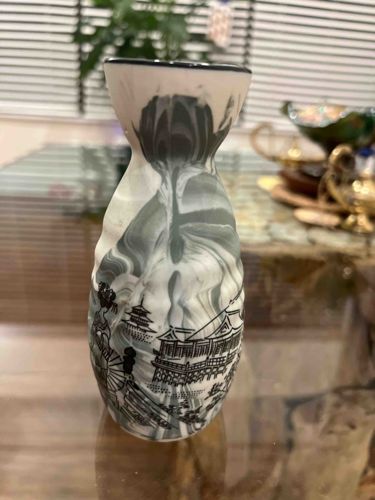
Japanese Takara Sake Decanter (Tokkuri) in Marbleized Ceramic
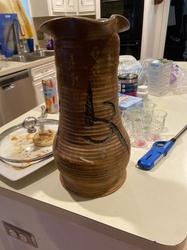
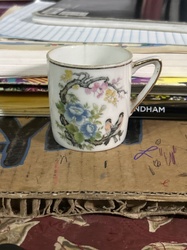
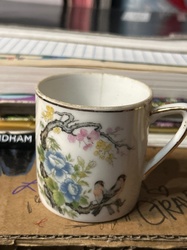
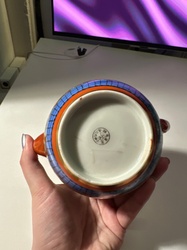
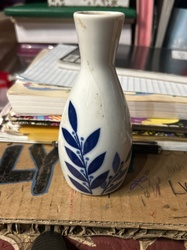
This item is a traditional Japanese sake decanter, known as a tokkuri, featuring a distinctive bulbous body that tapers to a slender neck before flaring into a small spout. The piece is crafted from ceramic with a high-contrast aesthetic. It displays a 'nerikage' or marbleized effect, where grey and white clays have been swirled together to create a fluid, smoke-like background pattern. Over this marbled base, black transfer-print graphics depict a classic Japanese landscape scene, including a woman in traditional kimono (bijin), a multi-tiered pagoda, and architectural pavilions with sloping roofs near water. The rim is finished with a solid black band, providing a clean frame for the organic swirls beneath. The construction suggests a mid-20th-century mass-production origins, likely intended for the export market or commercial use in restaurants. Condition appears excellent with no visible chips or cracks, and the glaze retains a lustrous sheen. The level of detail in the lithographic transfer indicates a moderate level of craftsmanship, typical of Japanese ceramic exports from the 1960s or 70s.
AI-Generated Appraisal Disclaimer
Estimated Value
$45-75
Basic Information
Category
Asian Ceramics and Pottery
Appraised On
February 7, 2026
Estimated Value
$45-75
Item Description
This item is a traditional Japanese sake decanter, known as a tokkuri, featuring a distinctive bulbous body that tapers to a slender neck before flaring into a small spout. The piece is crafted from ceramic with a high-contrast aesthetic. It displays a 'nerikage' or marbleized effect, where grey and white clays have been swirled together to create a fluid, smoke-like background pattern. Over this marbled base, black transfer-print graphics depict a classic Japanese landscape scene, including a woman in traditional kimono (bijin), a multi-tiered pagoda, and architectural pavilions with sloping roofs near water. The rim is finished with a solid black band, providing a clean frame for the organic swirls beneath. The construction suggests a mid-20th-century mass-production origins, likely intended for the export market or commercial use in restaurants. Condition appears excellent with no visible chips or cracks, and the glaze retains a lustrous sheen. The level of detail in the lithographic transfer indicates a moderate level of craftsmanship, typical of Japanese ceramic exports from the 1960s or 70s.
Get Your Items Appraised
Instant estimates of your treasures with AI-powered instant appraisals