Paleolithic Bifascial Chert Scraper/Hand Tool
Prehistoric Lithic Artifacts

Paleolithic Bifascial Chert Scraper/Hand Tool

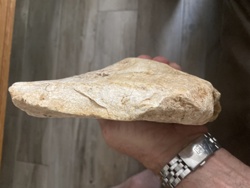
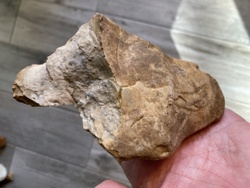
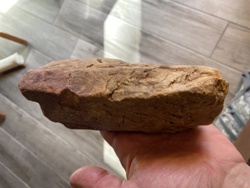
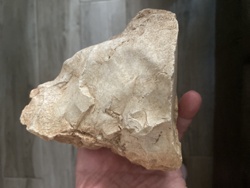
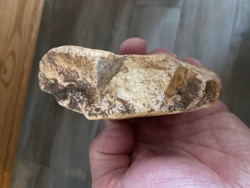
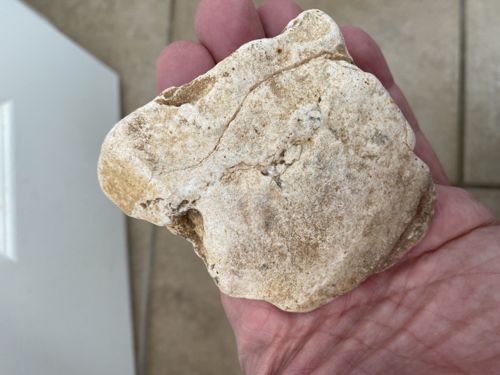
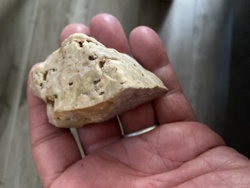
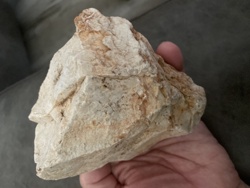
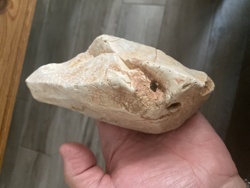
This specimen is a bifacial lithic tool, approximately 4 inches by 3 inches, identified as a scraper or hand-chopper from the Paleolithic era. It is constructed from a light-colored, tan-to-cream chert material characteristic of the Oklahoma region. The tool exhibits intentional percussion flaking along its margins to create a functional working edge. Physically, the item displays a rugged, weathered exterior with significant calcification and mineral patina, suggesting long-term burial or exposure to the elements. Notable features include a slightly asymmetrical, ovate form that fits ergonomically in a human palm. There is evidence of step-fracturing and hinge-fracturing along the edges, common in prehistoric manufacturing where the knapper encountered harder inclusions in the stone. The condition shows heavy environmental wear, with rounded edges that have been smoothed over millennia, though the overall geometric profile remain intact. There are visible stress lines and minor pitting across the flat faces, indicating natural degradation. While there are no maker's marks, as is standard for prehistoric artifacts, the flaking pattern demonstrates a deliberate reduction strategy consistent with Paleo-Indian technocomplexes. The craftsmanship reflects a utilitarian focus, valuing durability and edge retention for tasks such as hide processing or woodworking.
Estimated Value

$40-$85

Basic Information

Category

Prehistoric Lithic Artifacts

Appraised On

February 19, 2026

Estimated Value

$40-$85

Additional Details Provided By Owner

User Provided Information

Paleolithic chert bi face scraper tool found in Guthrie OK 4" x 3"

Item Description

This specimen is a bifacial lithic tool, approximately 4 inches by 3 inches, identified as a scraper or hand-chopper from the Paleolithic era. It is constructed from a light-colored, tan-to-cream chert material characteristic of the Oklahoma region. The tool exhibits intentional percussion flaking along its margins to create a functional working edge. Physically, the item displays a rugged, weathered exterior with significant calcification and mineral patina, suggesting long-term burial or exposure to the elements. Notable features include a slightly asymmetrical, ovate form that fits ergonomically in a human palm. There is evidence of step-fracturing and hinge-fracturing along the edges, common in prehistoric manufacturing where the knapper encountered harder inclusions in the stone. The condition shows heavy environmental wear, with rounded edges that have been smoothed over millennia, though the overall geometric profile remain intact. There are visible stress lines and minor pitting across the flat faces, indicating natural degradation. While there are no maker's marks, as is standard for prehistoric artifacts, the flaking pattern demonstrates a deliberate reduction strategy consistent with Paleo-Indian technocomplexes. The craftsmanship reflects a utilitarian focus, valuing durability and edge retention for tasks such as hide processing or woodworking.
Get Your Items Appraised

Instant estimates of your treasures with AI-powered instant appraisals

Browse More Appraisals