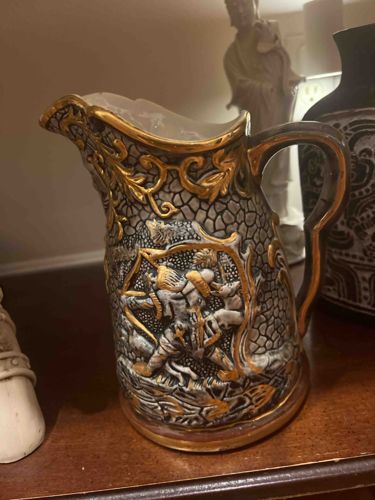
Gabbianelli Medieval Style Ceramic Pitcher
This is a mid-century Italian ceramic pitcher and is likely produced by Gabbianelli or a similar studio in the Mid-Century Modern era. The pitcher features an ornate, high-relief (bas-relief) design depicting a medieval knight in combat with a dragon, a classic 'Saint George and the Dragon' motif. The body is finished in a metallic silver pewter-like base glaze with a textured 'pebble' or honeycomb background. It is heavily embellished with bright gold gilt highlights along the rim, handle, and the raised contours of the figurative scene. The vessel stands approximately 8 to 10 inches tall with a wide spout and an ornate, curved handle. The craftsmanship exhibits typical Italian ceramic techniques from the 1950s-1960s, prioritized by bold, expressive molding. Looking at the condition, there appears to be some minor age-related wear to the gold gilding on the high points and handle, but no major structural cracks or large chips are visible in the provided image. The base rim shows some darkening, consistent with surface contact over time. This style combines historicist themes with the exuberant glazing techniques popular in the post-war Italian export market.
AI-Generated Appraisal Disclaimer
Estimated Value
$150 - $250
Basic Information
Category
Vintage Ceramics & Pottery
Appraised On
February 5, 2026
Estimated Value
$150 - $250
Item Description
This is a mid-century Italian ceramic pitcher and is likely produced by Gabbianelli or a similar studio in the Mid-Century Modern era. The pitcher features an ornate, high-relief (bas-relief) design depicting a medieval knight in combat with a dragon, a classic 'Saint George and the Dragon' motif. The body is finished in a metallic silver pewter-like base glaze with a textured 'pebble' or honeycomb background. It is heavily embellished with bright gold gilt highlights along the rim, handle, and the raised contours of the figurative scene. The vessel stands approximately 8 to 10 inches tall with a wide spout and an ornate, curved handle. The craftsmanship exhibits typical Italian ceramic techniques from the 1950s-1960s, prioritized by bold, expressive molding. Looking at the condition, there appears to be some minor age-related wear to the gold gilding on the high points and handle, but no major structural cracks or large chips are visible in the provided image. The base rim shows some darkening, consistent with surface contact over time. This style combines historicist themes with the exuberant glazing techniques popular in the post-war Italian export market.
Get Your Items Appraised
Instant estimates of your treasures with AI-powered instant appraisals