Vintage Middle Eastern/Ottoman Style Double-Bladed Hidden Dagger
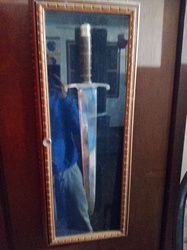
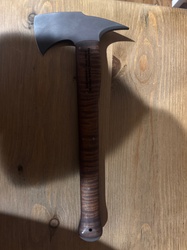
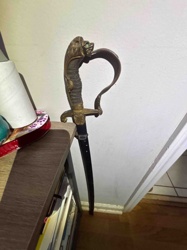
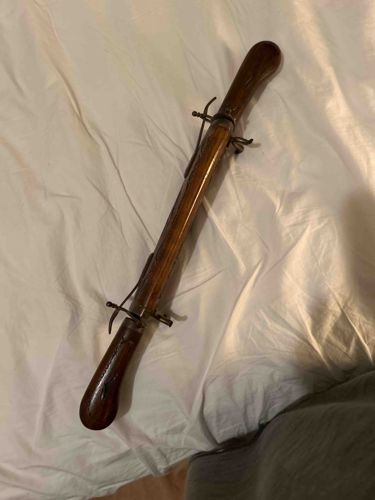
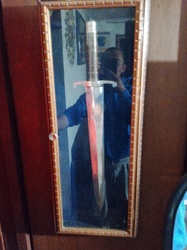
This item is a vintage decorative curiosity, specifically a double-ended hidden dagger set housed within a single wooden sheath. Each end features an ergonomic, carved wooden grip that pulls apart to reveal a blade (concealed). The construction features a central wooden body with metal hardware, including prominent crossguards or 'quillons' and securing rings fashioned from a darkened metal, likely iron or an aged brass alloy. The wood exhibits a dark, polished finish with visible grain and possible hand-carved decorative motifs along the grip. In terms of condition, there is a visible separation or structural gap at one of the joints, indicating possible wear to the friction-fit mechanism or a slight misalignment. Surface patina suggests it is a mid-20th-century piece or a later tourist-market reproduction designed to emulate traditional Ottoman or Persian folding weapons. The craftsmanship is functional but shows minor irregularities common in hand-assembled folk art or souvenir items. The overall length appears consistent with a short baton, making it a unique example of covert-style weaponry usually found in the Middle East or India.
AI-Generated Appraisal Disclaimer
Estimated Value
$150 - $250
Basic Information
Category
Cuttery & Edged Weapons
Appraised On
January 10, 2026
Estimated Value
$150 - $250
Item Description
This item is a vintage decorative curiosity, specifically a double-ended hidden dagger set housed within a single wooden sheath. Each end features an ergonomic, carved wooden grip that pulls apart to reveal a blade (concealed). The construction features a central wooden body with metal hardware, including prominent crossguards or 'quillons' and securing rings fashioned from a darkened metal, likely iron or an aged brass alloy. The wood exhibits a dark, polished finish with visible grain and possible hand-carved decorative motifs along the grip. In terms of condition, there is a visible separation or structural gap at one of the joints, indicating possible wear to the friction-fit mechanism or a slight misalignment. Surface patina suggests it is a mid-20th-century piece or a later tourist-market reproduction designed to emulate traditional Ottoman or Persian folding weapons. The craftsmanship is functional but shows minor irregularities common in hand-assembled folk art or souvenir items. The overall length appears consistent with a short baton, making it a unique example of covert-style weaponry usually found in the Middle East or India.
Related Tags
Explore similar items and categories:
Get Your Items Appraised
Instant estimates of your treasures with AI-powered instant appraisals