Late 17th or early 18th Century Style Carved Oak Trestle-Base Table
Antique Furniture

Late 17th or early 18th Century Style Carved Oak Trestle-Base Table

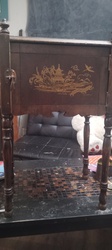
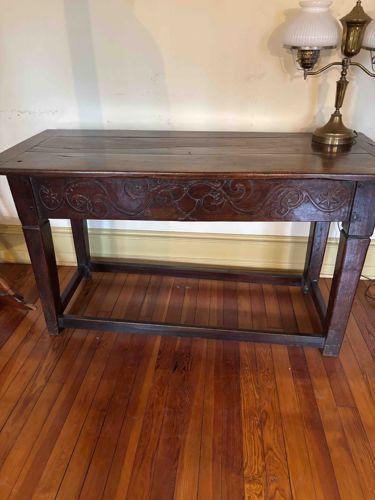
This rectangular table appears to be an antique provincial or rustic oak piece, likely reflecting English Jacobean or William and Mary stylistic influences. The construction features a thick solid-wood top composed of several wide planks. The most distinctive feature is the wide frontal apron, which is decorated with deeply carved foliate scrolls, volutes, and small star motifs, suggesting a vernacular or folk-art craftsmanship. The piece is supported by four square-tapered legs connected by a low box stretcher, which provides structural stability and is characteristic of 17th-century furniture designs. The wood exhibits a dark, rich walnut-toned patina with significant evidence of age and use. Condition issues include visible surface wear, small gouges, and slight separation between the top planks due to shrinkage over time. The pegged joinery is visible on the upper leg posts, reinforcing its hand-built nature. While it captures the 1700s aesthetic, it may also be a high-quality 19th-century revival piece. The overall craftsmanship is sturdy and functional, indicative of rural European cabinetry made to last generations.
Estimated Value

$1,800 - $2,600

Basic Information

Category

Antique Furniture

Appraised On

January 10, 2026

Estimated Value

$1,800 - $2,600

Item Description

This rectangular table appears to be an antique provincial or rustic oak piece, likely reflecting English Jacobean or William and Mary stylistic influences. The construction features a thick solid-wood top composed of several wide planks. The most distinctive feature is the wide frontal apron, which is decorated with deeply carved foliate scrolls, volutes, and small star motifs, suggesting a vernacular or folk-art craftsmanship. The piece is supported by four square-tapered legs connected by a low box stretcher, which provides structural stability and is characteristic of 17th-century furniture designs. The wood exhibits a dark, rich walnut-toned patina with significant evidence of age and use. Condition issues include visible surface wear, small gouges, and slight separation between the top planks due to shrinkage over time. The pegged joinery is visible on the upper leg posts, reinforcing its hand-built nature. While it captures the 1700s aesthetic, it may also be a high-quality 19th-century revival piece. The overall craftsmanship is sturdy and functional, indicative of rural European cabinetry made to last generations.
Get Your Items Appraised

Instant estimates of your treasures with AI-powered instant appraisals

Browse More Appraisals