Japanese Satsuma-style Moriage Tea Set
Antique/Vintage Ceramics and Porcelain

Japanese Satsuma-style Moriage Tea Set

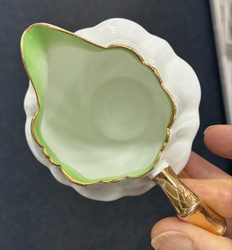
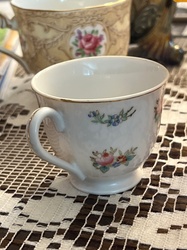
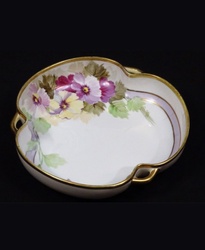
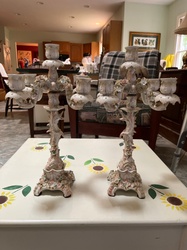
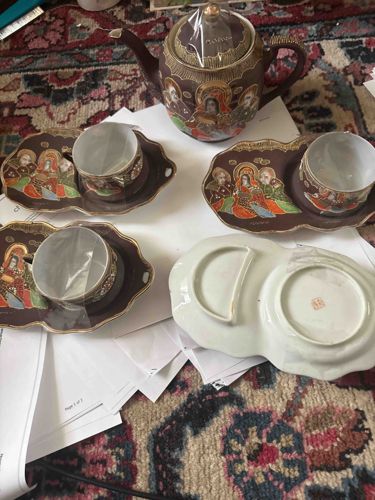
This is a vintage Japanese porcelain tea set composed of a rounded teapot with a lid and several 'snack plates' or duo-trays with matching teacups. The set is decorated in the Satsuma style featuring a dark chocolate-brown matte ground, known as 'black satsuma' or 'chocolate ware.' The primary ornamentation consists of hand-painted 'Immortal' or 'Arhat' figures (rakans) rendered in vibrant enamels. A significant feature is the heavy 'moriage' application, which uses raised slip-trailed clay to create high-relief textures on the garments and halos, often accented with gilding. The teapot features a handle shaped like a dragon or mythical creature, a common motif for mid-20th-century export ware. The undersides of the plates show a white glazed porcelain body with a red four-character maker's mark or stamp, likely identifying it as a 'Satsuma' factory mark from the Taisho or early Showa period (circa 1920s-1950s). The physical condition appears mixed; while the enamel colors remain bright, there is visible chipping on the teapot spout and significant wear to the gilded edges. One plate is inverted to show the base, indicating the pieces are made of fine-grained white porcelain rather than traditional earthenware. The set represents a popular export style that blended traditional Buddhist iconography with functional Western-style serving shapes.
Estimated Value

$150 - $250

Basic Information

Category

Antique/Vintage Ceramics and Porcelain

Appraised On

March 10, 2026

Estimated Value

$150 - $250

Item Description

This is a vintage Japanese porcelain tea set composed of a rounded teapot with a lid and several 'snack plates' or duo-trays with matching teacups. The set is decorated in the Satsuma style featuring a dark chocolate-brown matte ground, known as 'black satsuma' or 'chocolate ware.' The primary ornamentation consists of hand-painted 'Immortal' or 'Arhat' figures (rakans) rendered in vibrant enamels. A significant feature is the heavy 'moriage' application, which uses raised slip-trailed clay to create high-relief textures on the garments and halos, often accented with gilding. The teapot features a handle shaped like a dragon or mythical creature, a common motif for mid-20th-century export ware. The undersides of the plates show a white glazed porcelain body with a red four-character maker's mark or stamp, likely identifying it as a 'Satsuma' factory mark from the Taisho or early Showa period (circa 1920s-1950s). The physical condition appears mixed; while the enamel colors remain bright, there is visible chipping on the teapot spout and significant wear to the gilded edges. One plate is inverted to show the base, indicating the pieces are made of fine-grained white porcelain rather than traditional earthenware. The set represents a popular export style that blended traditional Buddhist iconography with functional Western-style serving shapes.
Get Your Items Appraised

Instant estimates of your treasures with AI-powered instant appraisals

Browse More Appraisals