Vintage Fostoria Green Depression Glass Compote Bowl and Vanity Set
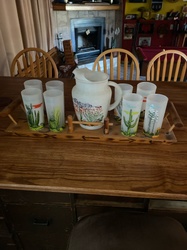
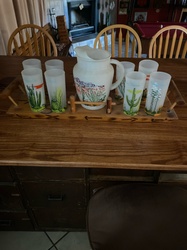
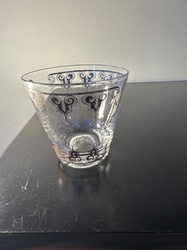
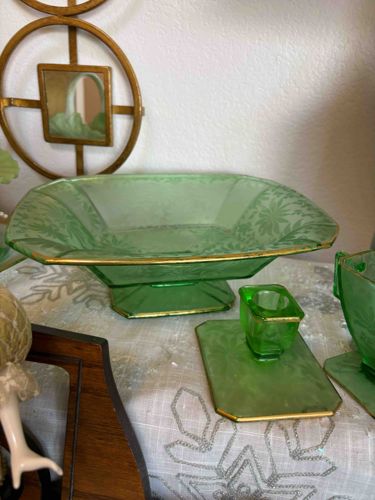
This lot features an elegant green glass compote bowl and matching vanity accessories, likely manufactured by the Fostoria Glass Company during the Depression-era (circa 1920s-1930s). The primary piece is a low, flared octagonal glass compote or console bowl with a matching pedestal foot. The glass is a vibrant lime or 'basil' green, characteristic of uranium glass from the period. It features a finely etched floral and leaf motif across the interior panels, a classic Art Deco decorative touch. The rim of the bowl and the edges of the base are accented with hand-painted gold gilt, which shows significant signs of wear and thinning due to age and handling. Accompanying the bowl is a rectangular glass tray with a small matching glass container, possibly for stamps or jewelry. The construction is pressed glass with subsequent acid etching. While the glass itself appears free of major chips or cracks, the heavy loss of gold gilding is a primary condition issue that impacts the aesthetic value. The craftsmanship reflects the higher-quality glass production common in the early 20th century before mass automation fully standardized glass density.
AI-Generated Appraisal Disclaimer
Estimated Value
$65.00 - $95.00
Basic Information
Category
Vintage Glassware
Appraised On
February 11, 2026
Estimated Value
$65.00 - $95.00
Item Description
This lot features an elegant green glass compote bowl and matching vanity accessories, likely manufactured by the Fostoria Glass Company during the Depression-era (circa 1920s-1930s). The primary piece is a low, flared octagonal glass compote or console bowl with a matching pedestal foot. The glass is a vibrant lime or 'basil' green, characteristic of uranium glass from the period. It features a finely etched floral and leaf motif across the interior panels, a classic Art Deco decorative touch. The rim of the bowl and the edges of the base are accented with hand-painted gold gilt, which shows significant signs of wear and thinning due to age and handling. Accompanying the bowl is a rectangular glass tray with a small matching glass container, possibly for stamps or jewelry. The construction is pressed glass with subsequent acid etching. While the glass itself appears free of major chips or cracks, the heavy loss of gold gilding is a primary condition issue that impacts the aesthetic value. The craftsmanship reflects the higher-quality glass production common in the early 20th century before mass automation fully standardized glass density.
Get Your Items Appraised
Instant estimates of your treasures with AI-powered instant appraisals