Paleolithic-Style Chert/Flint Handaxe and Side Scraper
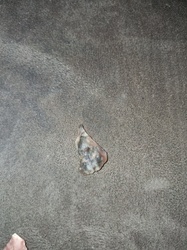
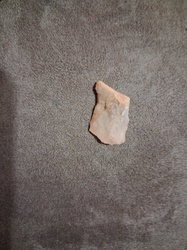
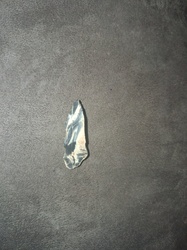
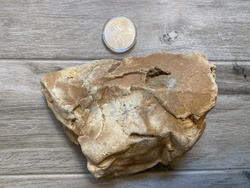
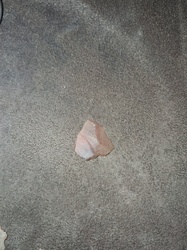
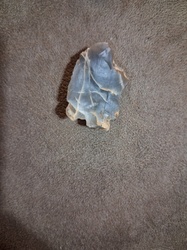
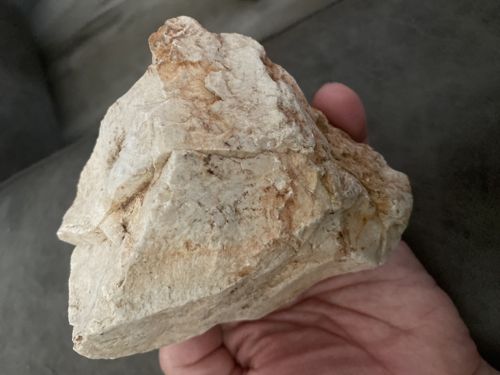
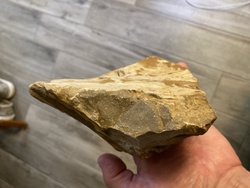
This artifact is a lithic tool measuring approximately 4.5 by 4 inches, originating from Guthrie, Oklahoma. The item is characterized by its sub-triangular, bifacial form, typical of a Paleolithic-style handaxe and side scraper. It is constructed from a light-colored, cream to tan-hued chert or high-quality flint, featuring prominent reddish-brown iron-oxide staining and mineral patina consistent with long-term burial in soil. The construction shows evidence of percussion flaking, with large, shallow flake scars across the broad faces and finer retouching along the lateral edges to create a functional scraping or cutting surface. The base is notably thicker and unworked, providing a comfortable ergonomic grip for the hand, while the working edges taper to a more acute angle. The surface displays significant weathering, with softened edges on the flake scars, indicating considerable age and exposure to the elements. There is no evidence of modern tool marks or mechanical grinding; instead, the tool exhibits the irregular yet purposeful knapping associated with ancient stone tool production. The condition is stable, with scattered micro-chips along the margins consistent with prehistoric use-wear or natural taphonomic processes. The craftsmanship reflects a utilitarian but focused approach to lithic reduction, prioritizing durability and edge maintenance.
AI-Generated Appraisal Disclaimer
Estimated Value
$150 - $300
Basic Information
Category
Prehistoric Lithic Artifacts / Archaeological Tools
Appraised On
February 19, 2026
Estimated Value
$150 - $300
Additional Details Provided By Owner
User Provided Information
Paleolithic era flint handaxe side scraper axe scraper found in Guthrie OK measuring 4.5" x 4"
Item Description
This artifact is a lithic tool measuring approximately 4.5 by 4 inches, originating from Guthrie, Oklahoma. The item is characterized by its sub-triangular, bifacial form, typical of a Paleolithic-style handaxe and side scraper. It is constructed from a light-colored, cream to tan-hued chert or high-quality flint, featuring prominent reddish-brown iron-oxide staining and mineral patina consistent with long-term burial in soil. The construction shows evidence of percussion flaking, with large, shallow flake scars across the broad faces and finer retouching along the lateral edges to create a functional scraping or cutting surface. The base is notably thicker and unworked, providing a comfortable ergonomic grip for the hand, while the working edges taper to a more acute angle. The surface displays significant weathering, with softened edges on the flake scars, indicating considerable age and exposure to the elements. There is no evidence of modern tool marks or mechanical grinding; instead, the tool exhibits the irregular yet purposeful knapping associated with ancient stone tool production. The condition is stable, with scattered micro-chips along the margins consistent with prehistoric use-wear or natural taphonomic processes. The craftsmanship reflects a utilitarian but focused approach to lithic reduction, prioritizing durability and edge maintenance.
Related Tags
Explore similar items and categories:
Get Your Items Appraised
Instant estimates of your treasures with AI-powered instant appraisals