Nupe Tribe Carved African Hardwood Stool
Antique African Furniture / Ethnographic Art

Nupe Tribe Carved African Hardwood Stool

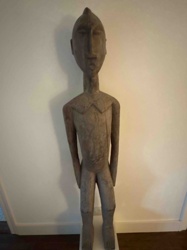
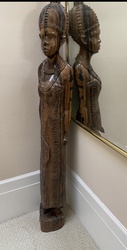
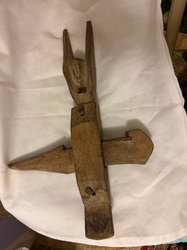
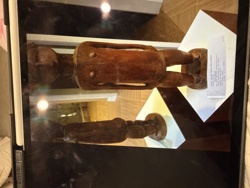
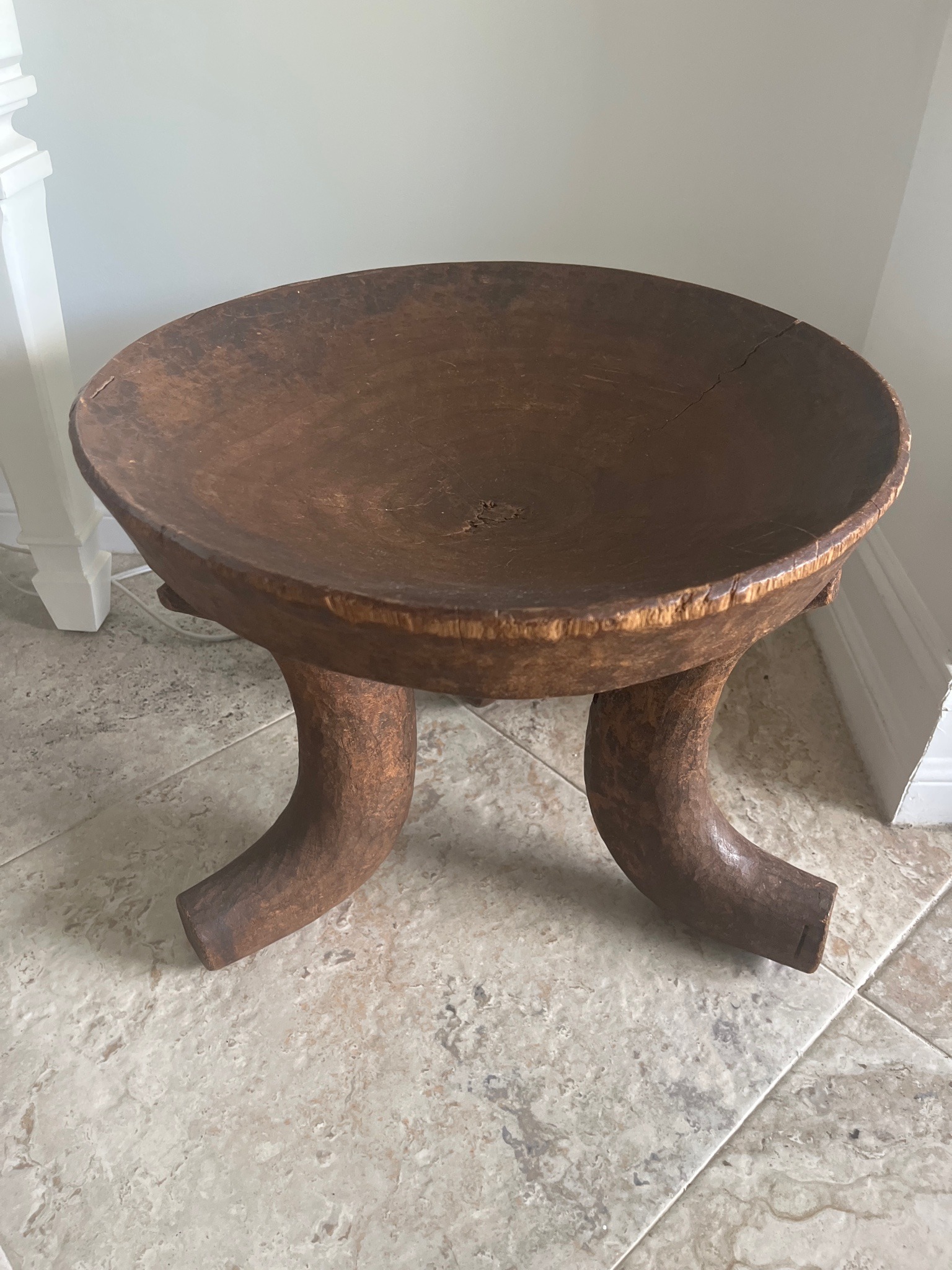
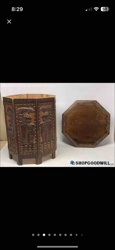
This is a hand-carved ceremonial or domestic stool, typical of the craftsmanship found in the Nupe or Gwari regions of Nigeria. The item is carved from a single, solid piece of dense hardwood, showcasing a deep, earthy brown patina consistent with age and traditional finishing techniques. Its design features a distinctive circular, concave seat with a shallow basin-like indentation, supported by four robust, curved legs that arch outward in a zoomorphic or horn-like fashion. The overall construction is heavy and monolithic, without the use of nails or joints. Notable physical details include hand-hewn tool marks along the rim and legs, indicating authentic artisanal production rather than modern manufacturing. In terms of condition, the stool shows significant age-related wear including multiple stress fractures—most notably a large radial crack extending from the rim toward the center—chipping along the edge of the seat, and a worn central area where the wood grain is pitted and darkened. There are minor losses to the feet and a varied textural surface that suggests decades of handling. These characteristics point to an early-to-mid 20th-century origin. The craftsmanship is high-quality, characterized by symmetrical balance despite its rustic, hand-carved nature, making it a valuable piece of ethnographic furniture.
Estimated Value

$650 - $950

Basic Information

Category

Antique African Furniture / Ethnographic Art

Appraised On

May 15, 2026

Estimated Value

$650 - $950

Item Description

This is a hand-carved ceremonial or domestic stool, typical of the craftsmanship found in the Nupe or Gwari regions of Nigeria. The item is carved from a single, solid piece of dense hardwood, showcasing a deep, earthy brown patina consistent with age and traditional finishing techniques. Its design features a distinctive circular, concave seat with a shallow basin-like indentation, supported by four robust, curved legs that arch outward in a zoomorphic or horn-like fashion. The overall construction is heavy and monolithic, without the use of nails or joints. Notable physical details include hand-hewn tool marks along the rim and legs, indicating authentic artisanal production rather than modern manufacturing. In terms of condition, the stool shows significant age-related wear including multiple stress fractures—most notably a large radial crack extending from the rim toward the center—chipping along the edge of the seat, and a worn central area where the wood grain is pitted and darkened. There are minor losses to the feet and a varied textural surface that suggests decades of handling. These characteristics point to an early-to-mid 20th-century origin. The craftsmanship is high-quality, characterized by symmetrical balance despite its rustic, hand-carved nature, making it a valuable piece of ethnographic furniture.
Get Your Items Appraised

Instant estimates of your treasures with AI-powered instant appraisals

Browse More Appraisals