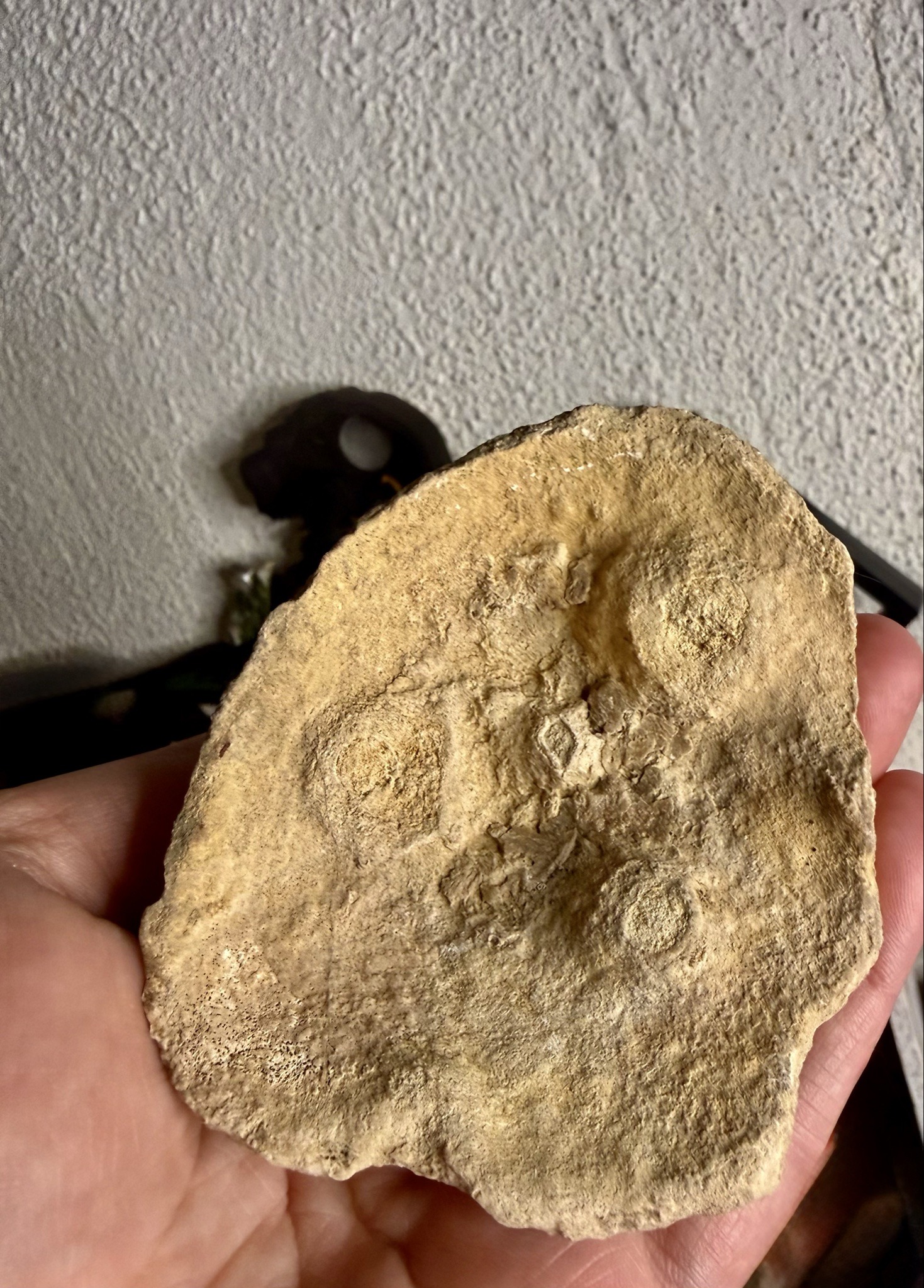
Fossilized Oyster Shell with Three Fossilized Pearl Occurrences
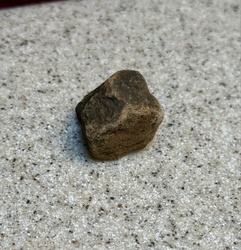
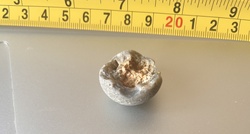
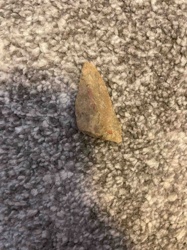
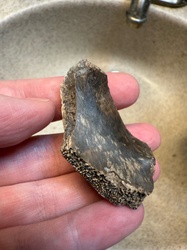
This is a fossilized single valve of an ancient oyster shell, likely dating from the Cretaceous to the Neogene period depending on the specific geological formation. The specimen is characterized by its light beige to tan coloration and prehistoric mineralized texture. The interior of the shell features three distinct, raised circular protrusions that represent fossilized blister pearls. These pearls are integrated into the nacreous layer of the shell and have undergone complete mineralization, losing their original luster but retaining their anatomical form. The shell displays significant calcification and a porous, pitted texture particularly visible near the hinge area. The overall shape is asymmetrical with a rough, weathered edge denoting millions of years of sediment pressure and erosion. There are no modern maker's marks, as this is a natural specimen. The condition is stable for a fossil, though it shows natural fragmentation at the margins and a lack of surface polishing, preserving its authentic 'as-found' geological state. This piece is a rare example of soft-tissue byproduct preservation in the fossil record, exhibiting high quality in terms of the clear definition of the fossilized nacreous growths against the shell background.
AI-Generated Appraisal Disclaimer
Estimated Value
$650.00 - $950.00
Basic Information
Category
Paleontology/Fossils
Appraised On
May 13, 2026
Estimated Value
$650.00 - $950.00
Additional Details Provided By Owner
User Provided Information
Fossil oyster with pearls
Item Description
This is a fossilized single valve of an ancient oyster shell, likely dating from the Cretaceous to the Neogene period depending on the specific geological formation. The specimen is characterized by its light beige to tan coloration and prehistoric mineralized texture. The interior of the shell features three distinct, raised circular protrusions that represent fossilized blister pearls. These pearls are integrated into the nacreous layer of the shell and have undergone complete mineralization, losing their original luster but retaining their anatomical form. The shell displays significant calcification and a porous, pitted texture particularly visible near the hinge area. The overall shape is asymmetrical with a rough, weathered edge denoting millions of years of sediment pressure and erosion. There are no modern maker's marks, as this is a natural specimen. The condition is stable for a fossil, though it shows natural fragmentation at the margins and a lack of surface polishing, preserving its authentic 'as-found' geological state. This piece is a rare example of soft-tissue byproduct preservation in the fossil record, exhibiting high quality in terms of the clear definition of the fossilized nacreous growths against the shell background.
Get Your Items Appraised
Instant estimates of your treasures with AI-powered instant appraisals