Six-Panel Japanese Byobu Screen
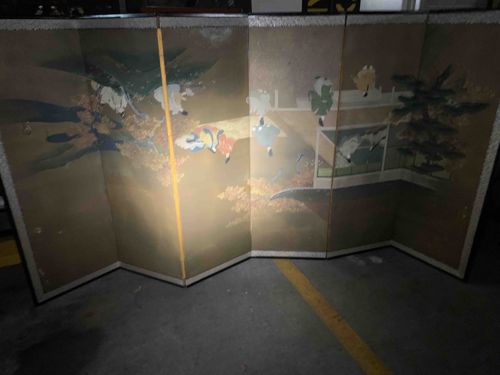
This is a substantial six-panel Japanese folding screen, known as a byobu, featuring hand-painted narrative scenes on a gold-leaf or gold-pigmented paper background. The artwork depicts various figures in traditional Japanese attire, likely from the Edo or Meiji period, set within an architectural landscape featuring a veranda and stylized natural elements like pine trees and cherry blossoms. The construction consists of a wood frame covered in paper, joined by traditional paper hinges that allow the panels to fold in both directions. The perimeter of the panels is finished with a patterned silk or brocade border and a thin lacquered wood frame. The color palette includes muted greens, blues, reds, and whites against the aged gold ground. Regarding condition, the screen shows significant signs of age and wear consistent with a 19th-century or early 20th-century piece. There is visible fading and darkening of the pigments, along with several structural issues including a prominent vertical tear or loss of gilding on the third panel from the left. There is moisture staining or 'foxing' across the top edge and general abrasions to the painted surface. The bottom frame shows some scuffing, and there appears to be general looseness in the hinges. Despite the wear, the complexity of the composition and the use of gold-leaf indicate a high-quality original manufacture, likely produced for an affluent household or for export during the opening of Japan to the West. The style reflects the Tosa or Kano schools’ influence on decorative arts, emphasizing narrative storytelling through meticulous figure placement and flattened perspective.
AI-Generated Appraisal Disclaimer
Estimated Value
$4,500 - $6,500
Basic Information
Category
Asian Antiquities & Furniture
Appraised On
January 11, 2026
Estimated Value
$4,500 - $6,500
Additional Details Provided By Owner
User Provided Information
Age
Item Description
This is a substantial six-panel Japanese folding screen, known as a byobu, featuring hand-painted narrative scenes on a gold-leaf or gold-pigmented paper background. The artwork depicts various figures in traditional Japanese attire, likely from the Edo or Meiji period, set within an architectural landscape featuring a veranda and stylized natural elements like pine trees and cherry blossoms. The construction consists of a wood frame covered in paper, joined by traditional paper hinges that allow the panels to fold in both directions. The perimeter of the panels is finished with a patterned silk or brocade border and a thin lacquered wood frame. The color palette includes muted greens, blues, reds, and whites against the aged gold ground. Regarding condition, the screen shows significant signs of age and wear consistent with a 19th-century or early 20th-century piece. There is visible fading and darkening of the pigments, along with several structural issues including a prominent vertical tear or loss of gilding on the third panel from the left. There is moisture staining or 'foxing' across the top edge and general abrasions to the painted surface. The bottom frame shows some scuffing, and there appears to be general looseness in the hinges. Despite the wear, the complexity of the composition and the use of gold-leaf indicate a high-quality original manufacture, likely produced for an affluent household or for export during the opening of Japan to the West. The style reflects the Tosa or Kano schools’ influence on decorative arts, emphasizing narrative storytelling through meticulous figure placement and flattened perspective.
Related Tags
Get Your Items Appraised
Instant estimates of your treasures with AI-powered instant appraisals