Vintage Casige Toy Sewing Machine
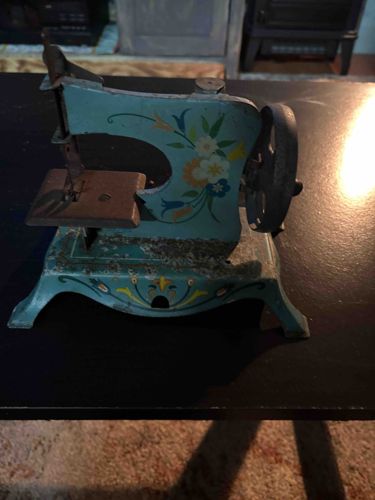
This is a vintage child's toy sewing machine, likely manufactured by Casige in West Germany between the 1940s and 1950s. The machine is constructed from stamped sheet metal and cast iron components, featuring a distinctive light blue or aqua enamel finish. It is decorated with colorful floral lithography, showcasing white, yellow, and blue flowers with green leaves on the main body, and a complementary scrolling motif on the base. The device features a manual hand-crank wheel on the right side and a small needle plate assembly on the left. Measuring approximately 7 to 8 inches in height, the machine sits on a flared, four-footed base designed for stability. Regarding condition, the piece shows significant signs of age and play wear; there is heavy rusting and paint loss centrally located on the base and along the edges of the sewing platform. The metallic components like the needle bar and tension discs show oxidation and a dark patina. Despite the surface corrosion, the lithographic floral patterns remain largely visible, particularly on the upper neck of the machine. These machines were popular post-WWII exports and are known for their simple chain-stitch mechanism, reflecting mid-century industrial toy craftsmanship.
AI-Generated Appraisal Disclaimer
Estimated Value
$45 - $65
Basic Information
Category
Antique Toys & Sewables
Appraised On
January 28, 2026
Estimated Value
$45 - $65
Item Description
This is a vintage child's toy sewing machine, likely manufactured by Casige in West Germany between the 1940s and 1950s. The machine is constructed from stamped sheet metal and cast iron components, featuring a distinctive light blue or aqua enamel finish. It is decorated with colorful floral lithography, showcasing white, yellow, and blue flowers with green leaves on the main body, and a complementary scrolling motif on the base. The device features a manual hand-crank wheel on the right side and a small needle plate assembly on the left. Measuring approximately 7 to 8 inches in height, the machine sits on a flared, four-footed base designed for stability. Regarding condition, the piece shows significant signs of age and play wear; there is heavy rusting and paint loss centrally located on the base and along the edges of the sewing platform. The metallic components like the needle bar and tension discs show oxidation and a dark patina. Despite the surface corrosion, the lithographic floral patterns remain largely visible, particularly on the upper neck of the machine. These machines were popular post-WWII exports and are known for their simple chain-stitch mechanism, reflecting mid-century industrial toy craftsmanship.
Get Your Items Appraised
Instant estimates of your treasures with AI-powered instant appraisals