Glorious Scallop Shell (Mimachlamys gloriosa)
Natural History - Conchology Specimens

Glorious Scallop Shell (Mimachlamys gloriosa)

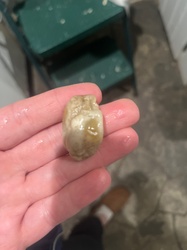
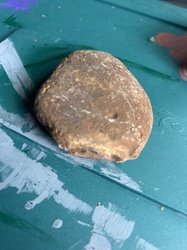
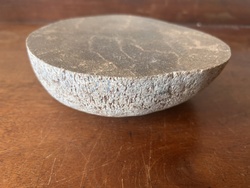
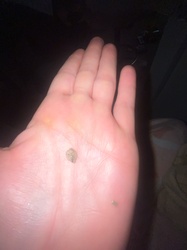
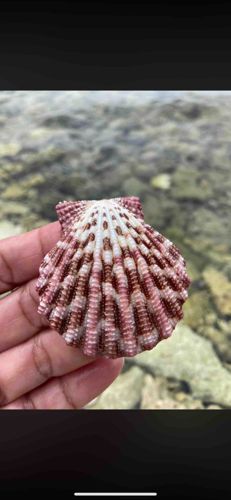
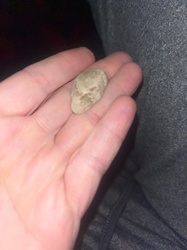
This natural specimen is a single valve of a Glorious Scallop (Mimachlamys gloriosa), a marine bivalve mollusk from the Pectinidae family. The shell measures approximately 2 to 2.5 inches in diameter, held by a hand for scale. It features a fan-shaped profile with a series of bold, radiating ribs that create a distinct corrugated texture. The coloration is vibrant, displaying a base of creamy white at the umbo (beak) transitioning into intense marbling of deep reddish-brown and purplish-pink hues along the ribs. The 'ears' or auricles at the hinge are asymmetrical, a common trait for this species. The condition appears excellent with sharp rib definition and no visible fractures or significant erosion, suggesting it may have been harvested live or found recently deceased. The shell exhibits a natural matte luster typical of the species found in Indo-Pacific tropical waters. As a biological specimen, it possesses no maker's marks but is prized by collectors for its intricate sculptural ridges and vivid, naturally occurring pigments.
Estimated Value

$15.00 - $25.00

Basic Information

Category

Natural History - Conchology Specimens

Appraised On

February 7, 2026

Estimated Value

$15.00 - $25.00

Item Description

This natural specimen is a single valve of a Glorious Scallop (Mimachlamys gloriosa), a marine bivalve mollusk from the Pectinidae family. The shell measures approximately 2 to 2.5 inches in diameter, held by a hand for scale. It features a fan-shaped profile with a series of bold, radiating ribs that create a distinct corrugated texture. The coloration is vibrant, displaying a base of creamy white at the umbo (beak) transitioning into intense marbling of deep reddish-brown and purplish-pink hues along the ribs. The 'ears' or auricles at the hinge are asymmetrical, a common trait for this species. The condition appears excellent with sharp rib definition and no visible fractures or significant erosion, suggesting it may have been harvested live or found recently deceased. The shell exhibits a natural matte luster typical of the species found in Indo-Pacific tropical waters. As a biological specimen, it possesses no maker's marks but is prized by collectors for its intricate sculptural ridges and vivid, naturally occurring pigments.
Get Your Items Appraised

Instant estimates of your treasures with AI-powered instant appraisals

Browse More Appraisals