Persian Indo-Islamic Chased Copper Tea Kettle
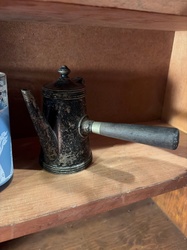
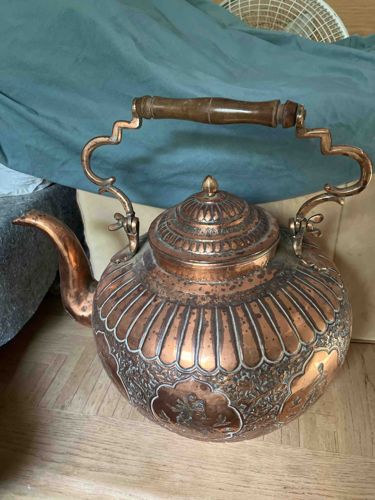
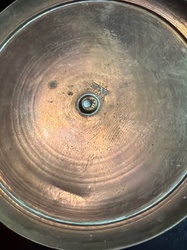
This is a significant antique copper tea kettle featuring elaborate Persian or Indo-Islamic stylistic motifs. The kettle is constructed from hand-hammered copper, showcasing a bulbous body with a highly decorative surface treatment. The upper shoulder is adorned with repoussé ribs or gadrooning, while the primary body features chased and engraved cartouches containing intricate floral and arabesque patterns against a textured background. The lid is domed with concentric bands of ornamentation and a small pointed finial. A notable feature is the fixed brass or bronze swing handle with ornate scrollwork brackets and a turned wooden grip designed for insulation. The craftsmanship indicates a high level of manual skill, likely dating from the late 19th to early 20th century. Condition-wise, the piece shows a heavy aged patina with significant oxidation, dark spotting, and surface verdigris particularly in the recessed areas. There is visible wear on the copper plating, suggesting it may have originally been tinned or silvered. There are no immediate maker's marks visible in the photograph, but the style is characteristic of Qajar or Indian metalwork produced for both domestic use and the colonial export market.
AI-Generated Appraisal Disclaimer
Estimated Value
$450 - $650
Basic Information
Category
Antique Metalware
Appraised On
February 11, 2026
Estimated Value
$450 - $650
Item Description
This is a significant antique copper tea kettle featuring elaborate Persian or Indo-Islamic stylistic motifs. The kettle is constructed from hand-hammered copper, showcasing a bulbous body with a highly decorative surface treatment. The upper shoulder is adorned with repoussé ribs or gadrooning, while the primary body features chased and engraved cartouches containing intricate floral and arabesque patterns against a textured background. The lid is domed with concentric bands of ornamentation and a small pointed finial. A notable feature is the fixed brass or bronze swing handle with ornate scrollwork brackets and a turned wooden grip designed for insulation. The craftsmanship indicates a high level of manual skill, likely dating from the late 19th to early 20th century. Condition-wise, the piece shows a heavy aged patina with significant oxidation, dark spotting, and surface verdigris particularly in the recessed areas. There is visible wear on the copper plating, suggesting it may have originally been tinned or silvered. There are no immediate maker's marks visible in the photograph, but the style is characteristic of Qajar or Indian metalwork produced for both domestic use and the colonial export market.
Related Tags
Explore similar items and categories:
Get Your Items Appraised
Instant estimates of your treasures with AI-powered instant appraisals